

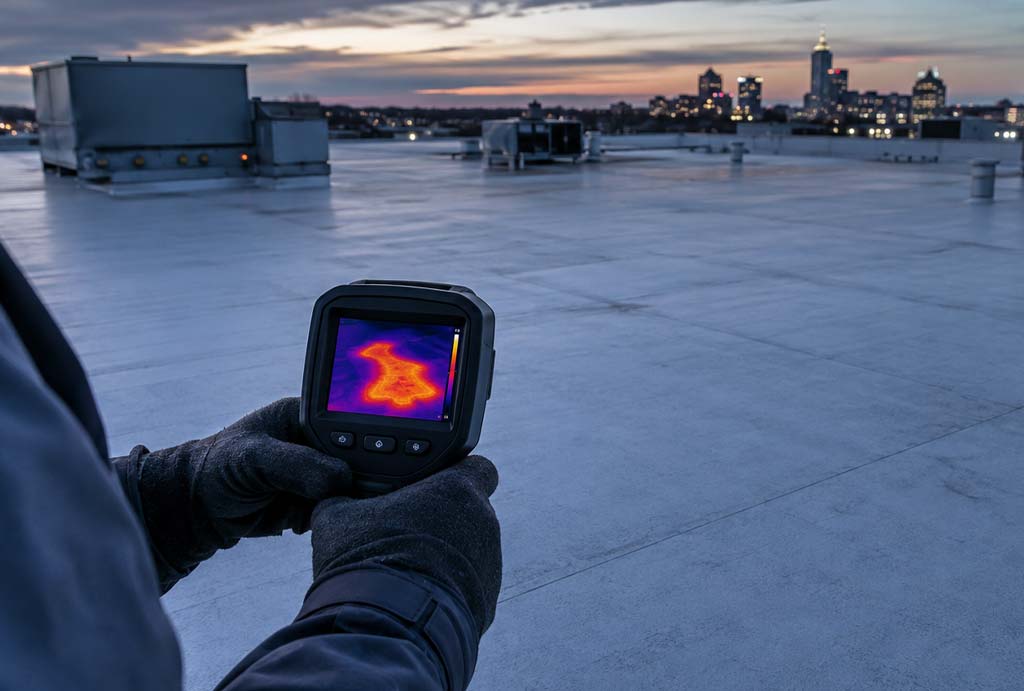
Wet insulation can remain hidden beneath a commercial roof membrane long after the original leak occurs. The surface may look normal, and the ceiling leak may appear far from the actual entry point. By the time water becomes visible inside the building, moisture may have already spread through part of the roof assembly.
For Indianapolis building owners and facility managers, finding the source of a leak is only part of the investigation. It is also important to determine whether the insulation beneath the membrane is dry, locally affected, or wet across a larger area.
How Does Commercial Roof Insulation Get Wet?
Most commercial roofs contain insulation between the structural deck and the exterior roofing membrane. Depending on the building, the membrane may be TPO, EPDM, PVC, modified bitumen, built-up roofing, or another low-slope system.
Moisture can enter this assembly through:
- Open seams or failed membrane welds
- Punctures caused by tools, debris, or rooftop traffic
- Aging sealant around penetrations
- Damaged flashing at walls, curbs, or roof edges
- Overflowing drains and persistent ponding water
- Improperly completed HVAC or equipment work
- Storm damage that was not immediately visible
- Condensation or moisture entering from inside the building
Once water reaches the insulation, it can spread beyond the original opening. Some insulation absorbs water readily, while other materials allow moisture to move between layers or along the roof deck.
This is why repairing the visible membrane defect does not always resolve the entire problem.
What Are the Signs of Wet Roof Insulation?
Wet insulation is often difficult to identify from the roof surface alone. However, several conditions may indicate that moisture has entered the assembly.
Recurring leaks in the same general area
A leak that returns after one or more repairs may mean the original entry point was not found. It may also indicate that trapped moisture or damaged materials remain beneath the membrane.
Soft or uneven areas on the roof
Insulation that has absorbed moisture or lost its strength may feel soft underfoot. However, building owners should not walk across the roof looking for these areas. Commercial roofs can contain concealed hazards, and unnecessary foot traffic may cause additional damage.
Stains, damaged ceiling materials, or indoor odors
Interior water stains, discolored ceiling tiles, peeling finishes, and musty odors can point to an ongoing moisture problem. The location of the interior symptom does not necessarily reveal where water entered the roof.
Unexplained changes in heating or cooling performance
Dry roof insulation helps slow heat movement through the roof assembly. When insulation becomes wet or physically deteriorated, it may no longer perform as intended. Rising energy use can have many causes, but roof moisture may be one factor worth evaluating.
Blisters or surface irregularities
Blisters, raised areas, or other changes in the membrane can sometimes be associated with moisture or trapped air. These symptoms require professional evaluation because similar surface conditions can have different causes.
A scheduled commercial roof maintenance plan can help identify membrane openings, drainage problems, and vulnerable details before substantial moisture spreads beneath the roof.
How Do Professionals Find Wet Insulation?
A visual inspection can locate punctures, loose seams, failed flashing, and other possible entry points. It cannot always show how far moisture has traveled beneath an intact-looking membrane.
Depending on the roofing system and building conditions, a moisture investigation may use one or more methods.
Infrared thermography
Infrared equipment identifies temperature differences across the roof surface. Wet and dry roof areas can heat and cool at different rates, creating thermal patterns that may indicate trapped moisture.
The conditions during testing matter. Wind, recent rain, rooftop equipment, varying materials, and other factors can affect the results. ASTM International’s infrared imaging standard explains that proper equipment, environmental conditions, and interpretation are necessary when locating wet insulation with infrared technology.
Infrared findings show thermal anomalies; they do not automatically prove why moisture is present or identify its entry point.
Electronic moisture scanning
Certain roof assemblies may be evaluated with electronic impedance or capacitance equipment. These tools scan for differences that could indicate moisture beneath the surface. The roofing materials and assembly design determine whether a particular testing method is appropriate.
Test cuts or moisture probes
Small, carefully selected openings may be used to confirm what noninvasive testing suggests. These verification points allow a professional to examine insulation layers, identify moisture, and assess the condition of the deck.
A National Institute of Standards and Technology report available through GovInfo notes that roof construction details and equipment can produce readings that resemble moisture, making knowledgeable interpretation and selected verification important.
The goal is not to open the roof in numerous locations. It is to gather enough reliable information to define the affected area and recommend an appropriate solution.
Can Wet Commercial Roof Insulation Be Dried?
In most conventional commercial roofing situations, saturated or physically damaged insulation should not simply be left beneath a repaired membrane. Even if the surface leak is sealed, trapped moisture may continue affecting insulation performance and nearby roof components.
Whether materials can remain in place depends on:
- The insulation type and amount of moisture
- How long the materials have been wet
- The condition of the membrane and roof deck
- The size and location of the affected area
- Manufacturer and warranty requirements
- The design of the roofing assembly
Drying equipment may be useful for certain building materials or unusual assemblies, but it should not be treated as an automatic substitute for removing compromised roofing components.
Repair Options for Wet Roof Insulation
The correct repair scope depends largely on how much of the assembly is affected.
Localized removal and replacement
When testing shows a limited wet area, the affected membrane and insulation may be removed. The deck can then be examined, damaged materials replaced, and the roof restored with compatible components.
This approach can preserve the remaining dry roof while addressing the complete affected area—not just the visible puncture.
Section replacement
Moisture may extend through a larger roof section while the rest of the system remains serviceable. Replacing the affected section may provide a more reliable result than completing multiple small patches.
Roof replacement
When wet insulation is widespread, the membrane is near the end of its service life, or the deck has deteriorated, replacement may provide better long-term value. The decision should consider moisture findings, existing repairs, drainage, insulation needs, warranty options, and plans for the property.
A roof with trapped moisture is generally a poor candidate for simply covering the existing system. Our guide to commercial roof coating versus replacement explains why the condition of the insulation is an important part of that decision.
Protect the Building Before the Wet Area Expands
Wet insulation is easier and less expensive to address when it remains limited. Waiting for a major interior leak can allow additional insulation, decking, ceilings, equipment, or tenant spaces to be affected.
Stay Dry Roofing provides commercial roofing services for offices, warehouses, multifamily properties, retail buildings, healthcare facilities, churches, industrial properties, and other buildings throughout Indianapolis and Central Indiana.
If your property has a recurring leak or suspected moisture beneath a low-slope roof, we can evaluate the system, identify practical testing options, and explain whether a localized repair, section replacement, or complete replacement makes the most sense.
Frequently Asked Questions
Can commercial roof insulation be wet without an active ceiling leak?
Yes. Moisture can remain trapped inside a roof assembly without immediately reaching the building interior. Water may also travel laterally, making the interior leak appear somewhere other than the entry point.
Does an infrared scan confirm that insulation is wet?
An infrared scan identifies temperature patterns that may indicate moisture. Rooftop equipment, material changes, wind, and other conditions can affect readings, so selected findings may need to be verified with another method.
Can wet insulation cause mold?
Wet roofing materials can contribute to moisture conditions that support microbial growth, especially when water also reaches organic materials or interior building components. Suspected mold or indoor-air concerns may require evaluation by a qualified environmental professional.
Does wet insulation mean the entire commercial roof must be replaced?
Not always. Localized wet areas may be repaired by removing and replacing the affected membrane and insulation. Widespread moisture, deteriorated decking, or an aging membrane may make broader replacement more practical.
Should a commercial roof coating be installed over wet insulation?
Generally, a coating should not be used to conceal trapped moisture or failing roof components. The roof should be evaluated, wet materials addressed, and the existing system confirmed as a suitable coating candidate before restoration begins.