

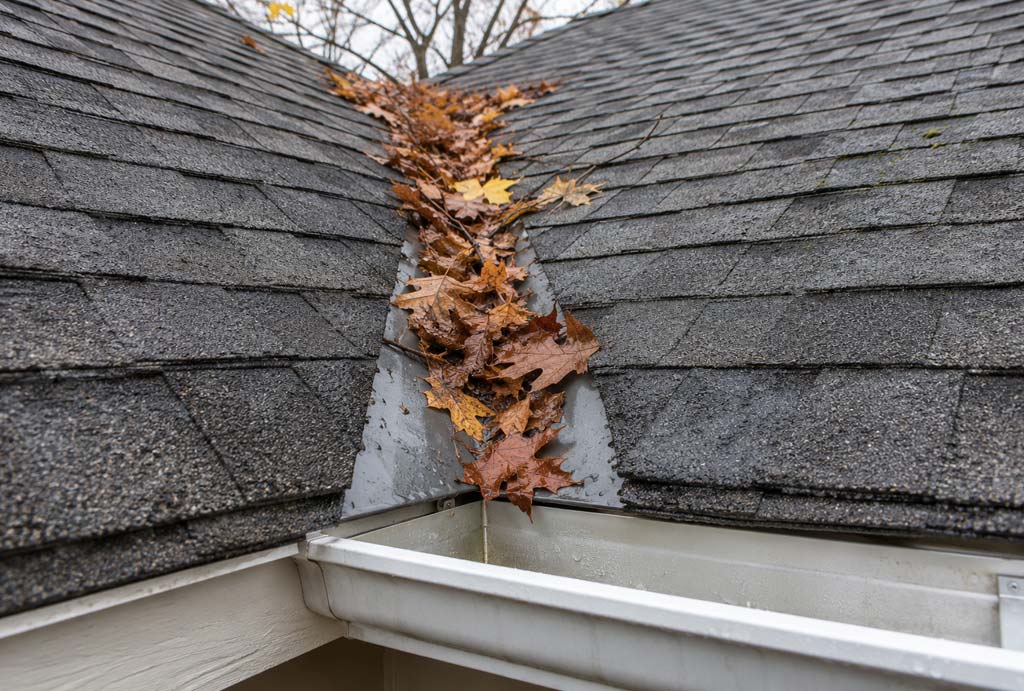
Yes. Leaves packed into a roof valley can contribute to a leak even when the gutters and downspouts are clear. The blockage sits farther up the roof, where it can interrupt runoff and hold moisture against roofing materials.
A few scattered leaves are usually different from a wet pile that stays in the same place after several dry days. For Indianapolis homeowners, early November is a useful time to look for that buildup before winter weather makes the area harder to assess.
At Stay Dry Roofing, we recommend checking the full path water follows. Cleaning the gutter addresses only the last part of that route.
What Is a Roof Valley?
A roof valley is the inward angle where two sloping roof sections meet. Picture the channel beside a dormer or between a main roof and an intersecting gable. Rain falling on both slopes moves toward that shared channel before reaching the roof edge.
Some valleys have exposed metal down the center. Others are covered with shingles. Both depend on correct installation and an unobstructed drainage path.
As GAF explains in its guide to roof valleys, debris can collect at this intersection and create conditions that allow water beneath the shingles.
How Leaves Can Interrupt Roof Drainage
Dry leaves may move with the wind. Once wet, they can settle into the valley, catch on small twigs, and form a compact layer that collects more debris.
That buildup can slow runoff or redirect it toward the sides of the valley. It can also keep the covered area damp after the surrounding shingles have dried.
Leaves do not automatically make a sound roof leak. However, redirected water may expose an existing weakness, such as damaged shingles, deteriorated metal, an exposed fastener, or an improperly detailed joint.
Think of debris as a possible contributor to the problem. An inspection still needs to establish where water entered and whether the materials underneath require attention.
Why Clear Gutters Do Not Rule Out a Valley Problem
A gutter can carry water correctly while a blockage remains several feet above it. Clearing the trough does not necessarily remove leaves caught between intersecting roof slopes.
The same applies to gutter guards. They cover the gutter opening, but they do not stop leaves from landing higher on the roof. Our article on whether gutter guards are worth it for Indianapolis homes explains their benefits and maintenance limits.
If a leak continues after gutter cleaning, tell your roofer exactly what was cleaned. Ask whether the service included the valleys or only the gutters and downspouts. That distinction can prevent an incomplete inspection.
What Can You Notice From the Ground?
You may be able to spot a strip of leaves following the line where two roof sections meet. Binoculars or a phone’s zoom can help you observe an accessible view without climbing.
Pay attention to a pile that remains after nearby areas clear, small branches anchoring debris, or a section that stays visibly damp longer than the adjacent roof.
Inside, note when a stain appears or changes. Does it follow steady rain, a short downpour, or melting snow? Photograph the stain and record the date. These observations give a roofer useful context, although they cannot confirm the source.
The ceiling mark may be offset from the entry point because water can follow framing or decking. A professional roof inspection should connect the interior evidence with conditions above it.
Will Removing the Leaves Fix the Leak?
It depends on what the debris was concealing.
If the roofing materials remain sound and buildup was interfering with drainage, careful removal may resolve the contributing condition. The cleared valley should still be examined.
If shingles are cracked, metal has deteriorated, or the valley was installed incorrectly, cleaning alone will not repair it. A recurring leak may require opening the affected section to evaluate the roofing layers and deck.
We would not recommend covering an unexplained valley leak with a broad strip of roof cement. The repair should address the failed detail and preserve drainage. Depending on the findings, a targeted roof repair may be appropriate without replacing the entire roof.
Address Buildup Before It Is Buried
November leaf fall can refill a valley after an earlier cleaning. Homes beneath mature trees may need another check once most nearby leaves have dropped.
GAF’s guidance on removing leaves from a roof recommends addressing accumulations before snowfall and having roofing professionals handle roof access.
Avoid climbing onto a wet roof or scraping packed debris with a metal tool. Pressure washing can also damage roofing materials. The clearing method should suit the roof’s condition and construction.
If you can see a persistent pile or have a leak that gutter cleaning has not explained, request an evaluation from Stay Dry Roofing. We serve Indianapolis and surrounding communities, including Carmel, Fishers, and Noblesville.
Frequently Asked Questions
Can a roof valley be clogged if it has no exposed metal?
Yes. Shingle-covered valleys can collect leaves and twigs along the intersection. The absence of visible metal does not mean there is no drainage channel to maintain.
How often should roof valleys be checked during fall?
Check from the ground during leaf season and again after the main leaf drop. The need for professional clearing depends on nearby trees, roof geometry, and how quickly debris returns.
Do pine needles cause the same problems as broad leaves?
They can. Pine needles may gather around twigs and form persistent mats. The concern is whether the accumulation obstructs runoff or retains moisture, rather than the type of leaf alone.
Can valley debris cause a leak without overflowing the gutter?
Yes. Water can be redirected beneath vulnerable roofing details before it reaches the gutter. Gutter overflow is not required for a valley-related leak.
Does a leaking roof valley always need new metal flashing?
No. The solution depends on the valley design and the actual failure. Some need debris removal or localized shingle work; others require flashing, underlayment, or decking repairs. Inspection should guide the scope.