

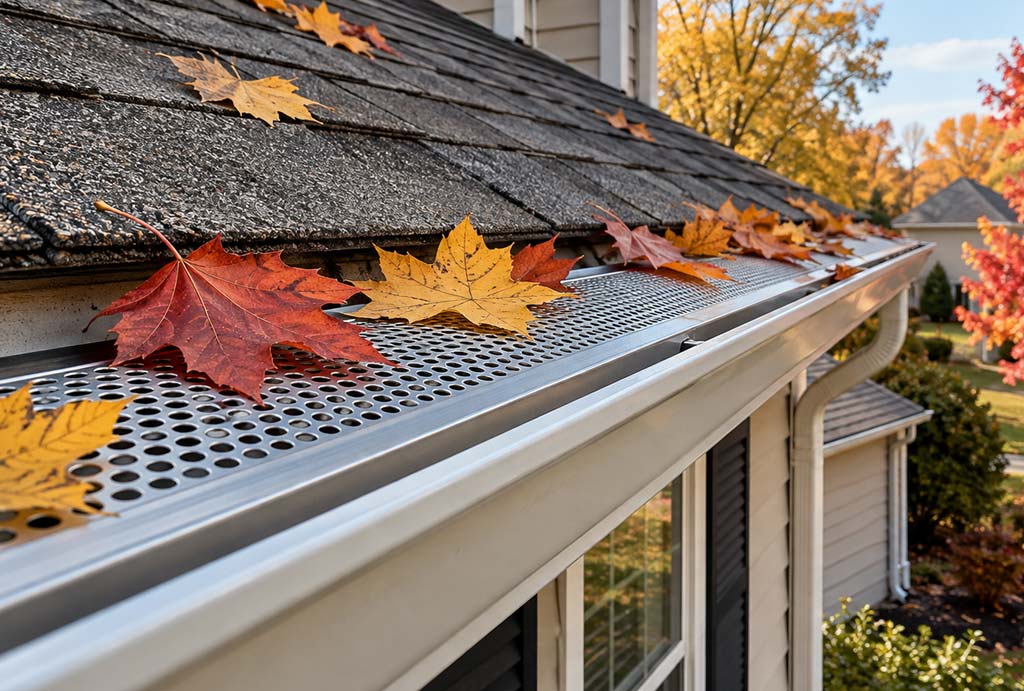
Early October is a good time to look at your gutters in Indianapolis. The trees have started turning, and you can still see how the system performs before a heavier round of leaves and rain puts it to the test. If you have paid for repeat cleanings or watched water spill over a clogged gutter, you may be asking a fair question: Are gutter guards actually worth the investment?
For some homes, yes. Guards can keep much of the larger debris out and reduce how often the gutters need to be cleaned. But they cannot fix a gutter that is undersized, pitched the wrong way, pulling away from the fascia, or connected to a blocked downspout. They also do not make maintenance disappear. The best answer starts with what is causing your particular gutter problem.
When guards tend to earn their keep
A home beneath mature maples or other trees may collect leaves, seed pods, and small twigs several times during the season. If clearing those gutters involves a steep roofline, a second story, or repeated service calls, a properly chosen guard may save considerable effort and reduce exposure to ladder work. It can also keep debris from forming a packed plug near a downspout outlet.
The value is less obvious on a one-story home with few nearby trees and gutters that stay clear after a simple seasonal cleaning. In that case, the cost of a new guard system may buy little practical benefit. Likewise, if water is already running behind the gutter or collecting next to the foundation, inspect the gutter and downspout arrangement before adding a cover.
This is a water-management decision, not just a leaf-management decision. The Insurance Institute for Business & Home Safety recommends keeping gutters and downspouts clear so water can flow away from the home and reduce winter leak and ice-dam risk. Read its winter-weather guidance.
What gutter guards can and cannot do
Most guards place a screen, perforated panel, or hood over the gutter. The goal is to let runoff enter while limiting the leaves and twigs that settle inside. That can make the next cleaning easier and less frequent. It does not mean every leaf blows off on its own, every tiny particle is stopped, or water will never overflow in a hard rain.
Fine debris can collect on or under a guard. Wet leaves may mat over openings. Roof grit and small seeds can still enter some designs. Even a well-performing system should be checked after heavy leaf fall and storms, including the downspout outlets and the ground where they discharge. Consumer Reports has also found meaningful differences in how gutter-guard designs handle leaves and simulated rain, which is why the fit matters more than a blanket “no cleaning ever” promise. See its gutter-guard testing summary.
Choose the guard for the roof and the debris
Start with the kind of material that reaches your gutters. Large leaves, pine needles, seeds, and shingle granules do not behave the same way. Then look at the roof’s slope and the amount of water concentrated at valleys or corners. A guard that works well along one straight eave may need different detailing where a steep roof sends runoff into a short section of gutter.
Also inspect what the guard would attach to. If a gutter is loose, badly pitched, or too small for the roof area, covering it may hide the problem rather than solve it. Ask whether the proposed installation changes the shingle edge, drip edge, or existing gutter hangers, and how the contractor will preserve drainage and access for future service.
Stay Dry Roofing currently offers several gutter-guard systems with different profiles and materials. We can compare those options against your roofline, debris, gutters, and budget instead of assuming one design fits every Indianapolis home.
Guards, cleaning, or new gutters: which comes first?
Here is a practical way to decide:
- Keep cleaning if the gutters are sound, clogs are rare, and the work is easy to schedule safely.
- Consider guards if the gutters drain correctly but repeatedly fill with leaves and twigs.
- Repair or replace the gutters first if they sag, leak at joints, spill water behind the fascia, or fail to send water toward the downspouts.
- Address downspouts and discharge if the gutters are clear but water still pools beside the house.
An estimate should distinguish the price of cleaning or repairing the existing system from the price of guards and any recommended gutter replacement. Compare the expected maintenance, too. Paying more upfront can be worthwhile when it solves a recurring problem; it is less compelling when the underlying gutter still needs work. Our gutter repair and installation page explains how sizing, pitch, and downspouts affect the result.
Get the answer before leaves conceal the problem
You do not have to commit to guards simply because October has arrived. Look for overflowing during rain, staining on fascia or siding, damp soil by the foundation, and sections where debris gathers again soon after cleaning. Those observations give a contractor a better starting point than a sales pitch based only on the number of trees in your yard.
Stay Dry Roofing can evaluate the existing gutter system and explain whether cleaning, repair, guards, or replacement is the sensible next step for your Indianapolis-area home. Schedule a gutter assessment while there is still time to address the problem before more leaves come down.
Frequently asked questions
Do gutter guards eliminate cleaning?
No system should be treated as maintenance-free. Guards can reduce debris inside the gutter, but leaves may collect on top, and outlets and downspouts still need periodic checks.
Are gutter guards worth it if I have no trees close to my house?
Possibly, but the benefit may be smaller. Wind can carry debris from elsewhere, yet a home with little buildup may be better served by routine cleaning and an inspection of drainage.
Can guards stop water from overflowing in heavy rain?
They can help when leaf clogs are the cause. Overflow can also come from an undersized gutter, poor pitch, a clogged downspout, or runoff concentrated at a roof valley. Diagnose the cause before selecting a guard.
Should I clean my gutters before guards are installed?
Yes. Debris already inside the gutters or downspouts should be removed, and the system should be checked for drainage and attachment problems before it is covered.