

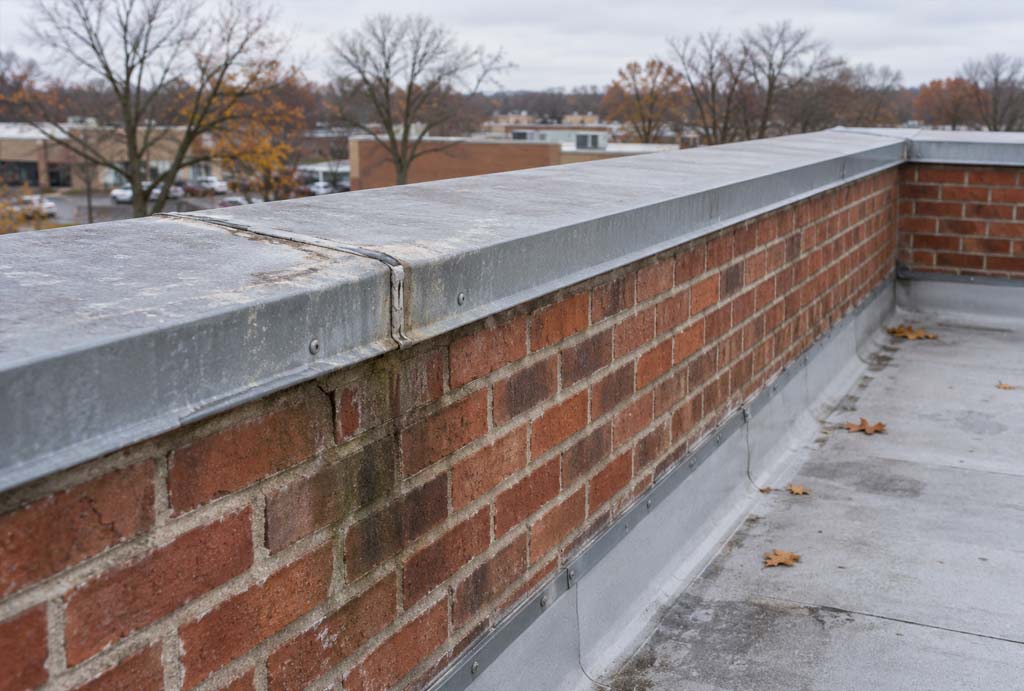
Water running down an interior wall can enter through the roof, but it can also come through the wall above it. On commercial buildings with parapets, possible entry points include open coping joints, damaged wall flashing, and deteriorated masonry.
The stain shows where water became visible. It does not necessarily identify the failed component.
At Stay Dry Roofing, we look at the connection between the roof and wall before recommending a repair. For Indianapolis property managers dealing with recurring perimeter leaks, that connection can explain why patching the roof surface has not solved the problem.
Start With Where and When the Water Appears
A leak near an outside wall deserves a different investigation from a drip in the middle of a building.
Record whether the water appears at the ceiling line, around a window, behind a column, or lower on the wall. Also note whether it follows steady rain, wind from one direction, or a thaw after freezing weather.
For example, an upper-wall stain that returns during wind-driven rain may justify checking the wall face and roof-edge details. A stain around a window may require examining that opening as well.
Leaks unrelated to precipitation may involve plumbing, equipment, or condensation. These patterns help guide an investigation; none confirms the cause by itself.
What Is a Parapet, and Why Can It Leak?
A parapet is the portion of an exterior wall that extends above the roofline. It is common on flat-roofed retail buildings, offices, warehouses, and multifamily properties.
The top is usually protected by coping made from metal, stone, concrete, or another suitable material. On the roof side, flashing connects the roofing system to the wall.
Those components work together. The cap sheds rain, the protection beneath it limits water entry, and the roof-to-wall flashing maintains the connection below.
Building Science Corporation’s explanation of parapet water management emphasizes the importance of coping slope, drip edges, and a waterproof membrane beneath the cap. A metal cover alone is not the entire weather barrier.
Three Places Worth Investigating
The coping and its joints
Coping is assembled in sections, creating joints and transitions along the wall. Problems can develop where sections meet, at corners, around attachments, or where materials have moved.
Water entering at the top may reach concealed wall materials before appearing indoors. Missing protection beneath the coping can make a small opening more consequential.
Inspecting only the metal’s visible upper surface may miss problems below it.
The flashing where the roof meets the wall
Roof flashing must connect properly to the wall and remain secure at its upper edge. Gaps, failed attachments, damaged corners, and poorly integrated repairs can allow water behind that connection.
The International Institute of Building Enclosure Consultants explains why roof and wall water-control layers must remain connected. A repair should preserve that continuity rather than address each material in isolation.
The wall itself
Open mortar joints, cracked finishes, deteriorated masonry, and defective window or wall details can admit rain independently of the roof membrane.
This matters when the roof has been patched repeatedly without a clear diagnosis. A watertight patch on the wrong component will not stop water entering elsewhere.
Some investigations require coordination with a masonry contractor, wall specialist, or building enclosure consultant.
Why a Sound-Looking Roof Does Not Settle the Question
The main roof surface can look serviceable while perimeter details need work. A roof coating or membrane patch does not automatically correct an opening higher on the wall.
The reverse is also possible: water found near a wall may originate farther across the roof. Inspection should follow the evidence instead of assuming every perimeter stain is a coping leak.
If standing water is also present, our guide to ponding water on commercial roofs explains that separate drainage concern. Both conditions can exist on the same building, and resolving one does not establish that the other is sound.
What a Useful Leak Investigation Should Produce
A good investigation connects the interior report with exterior findings. Photographs should show the affected wall, nearby roof details, and any suspected entry points.
Depending on access and conditions, further evaluation may involve moisture readings, limited openings, or controlled water testing. A thermal image can help identify areas for investigation, but it does not independently prove the source of a leak.
Ask for a written explanation of what was found, what remains uncertain, and what work is recommended. Our article on what a commercial roof inspection report should include outlines the documentation that helps owners make informed decisions.
Keep previous repair invoices available. They can reveal whether earlier work repeatedly targeted the same location without checking adjacent components.
Match the Repair to the Entry Point
A confirmed coping defect may require repairing joints, replacing damaged sections, or correcting the protection underneath. A roof-to-wall problem may need new flashing or revised termination details.
Where masonry or wall components are deteriorated, roofing work should be coordinated with those repairs. The sequence matters because one trade’s work can cover another trade’s connection.
Ask whether the proposal includes wet materials, concealed damage, and follow-up verification. Avoid treating interior repainting as evidence that the leak has stopped. Finish repairs should follow correction of the water source and appropriate drying.
Address Perimeter Leaks Before Winter Complicates Repairs
November is a practical time to investigate recurring wall leaks in Central Indiana. Wet masonry can deteriorate through repeated freezing and thawing, while cold or wet conditions can limit some repair materials and testing methods.
If water is entering occupied space, protect contents and keep people away from affected electrical equipment or unstable finishes. Roof-edge access should be handled by trained personnel.
Stay Dry Roofing provides commercial roofing services in Indianapolis and surrounding communities. We can evaluate roofing conditions and explain when related wall concerns need another specialist.
Frequently Asked Questions
Can a parapet leak even when no rainwater is standing on the roof?
Yes. Rain can enter through coping joints or wall defects without ponding on the roof. Clear drains do not rule out a leak above the roof surface.
Does white staining on brick prove that the wall is leaking indoors?
No. White deposits may be efflorescence, which forms when moisture carries salts to the masonry surface. It indicates moisture movement but does not identify an interior leak source by itself.
Can a recently replaced commercial roof still have a wall leak?
Yes. Existing coping, masonry, windows, or wall transitions may have defects separate from the new membrane. Review what the replacement project included before deciding which component failed.
Will adding caulk along the coping stop the leak?
It may help where a failed sealant joint is the confirmed source and the repair suits the assembly. It will not correct missing underlying protection, unstable coping, or unrelated wall defects.
Who should I call first about water near the roofline?
A commercial roofer is a reasonable starting point when the stain appears near the roof perimeter. Explain its location and timing. If findings point to masonry, windows, or concealed wall problems, additional specialists may be needed.