

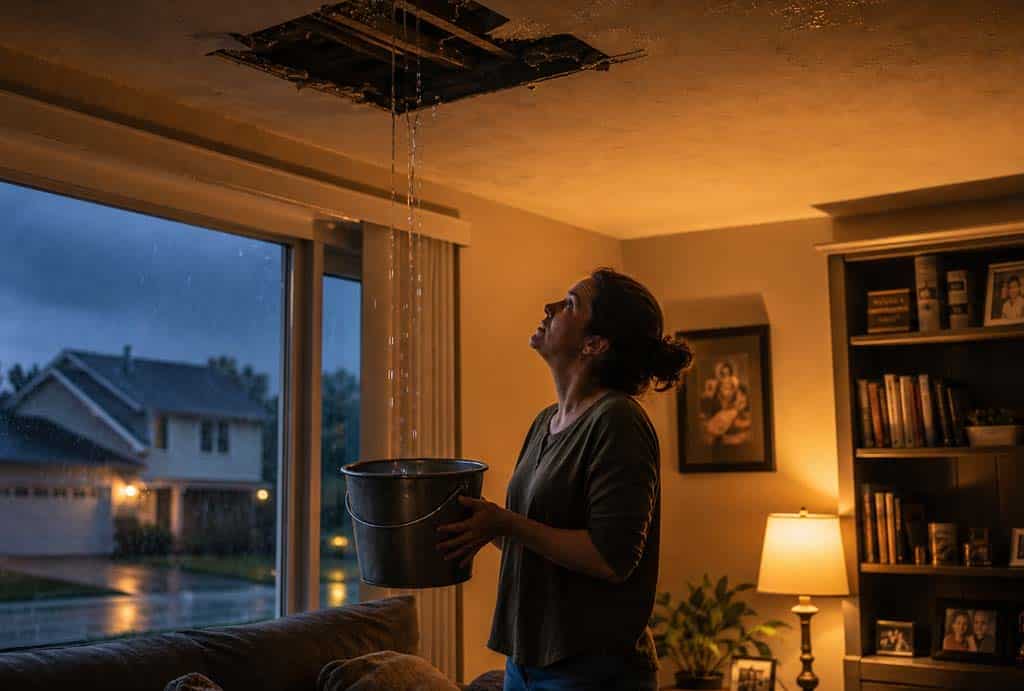
Few things create more stress for a homeowner than discovering water dripping from the ceiling during a summer storm. While many Indianapolis homeowners assume roof leaks are only a winter problem, summer is actually one of the busiest seasons for roof leak repairs. Heavy thunderstorms, high humidity, wind-driven rain, and aging roofing materials can all expose weaknesses that have been developing for months or even years.
At Stay Dry Roofing, we help homeowners throughout Indianapolis and surrounding communities identify the source of roof leaks and prevent minor issues from becoming expensive repairs. If you’ve noticed water stains, damp insulation, ceiling discoloration, or active dripping during a storm, understanding what causes summer roof leaks can help you protect your home and respond quickly.
Why Summer Roof Leaks Are Common in Indianapolis
Indiana summers create a unique combination of conditions that can be hard on roofing systems. Strong thunderstorms, frequent rainfall, hail events, and extended periods of heat place significant stress on asphalt shingles and roofing components.
Many roof leaks that appear during summer actually begin long before homeowners notice them. Small openings around flashing, damaged shingles, or aging sealants can allow water to enter gradually. Then, when a heavy June or July storm arrives, the problem suddenly becomes visible inside the home.
Wind-driven rain is particularly problematic because it can force water underneath shingles that may otherwise appear to be in good condition. Homes that have experienced spring storms or hail damage may be especially vulnerable if repairs were delayed or damage went unnoticed. Indianapolis frequently experiences severe weather events that can loosen shingles, damage flashing, and create leak pathways that worsen over time.
The Most Common Causes of Summer Roof Leaks
Damaged or Missing Shingles
Asphalt shingles are designed to protect your home from water intrusion, but age, wind, and storm activity can weaken them. Missing shingles create direct openings where water can penetrate the roof deck.
Even shingles that remain attached can develop cracks, curling, blistering, or granule loss. During heavy summer rains, these weaknesses may allow moisture to enter the roofing system.
After major storms, homeowners should visually inspect their roofs from the ground and look for obvious signs of damage.
Flashing Failures
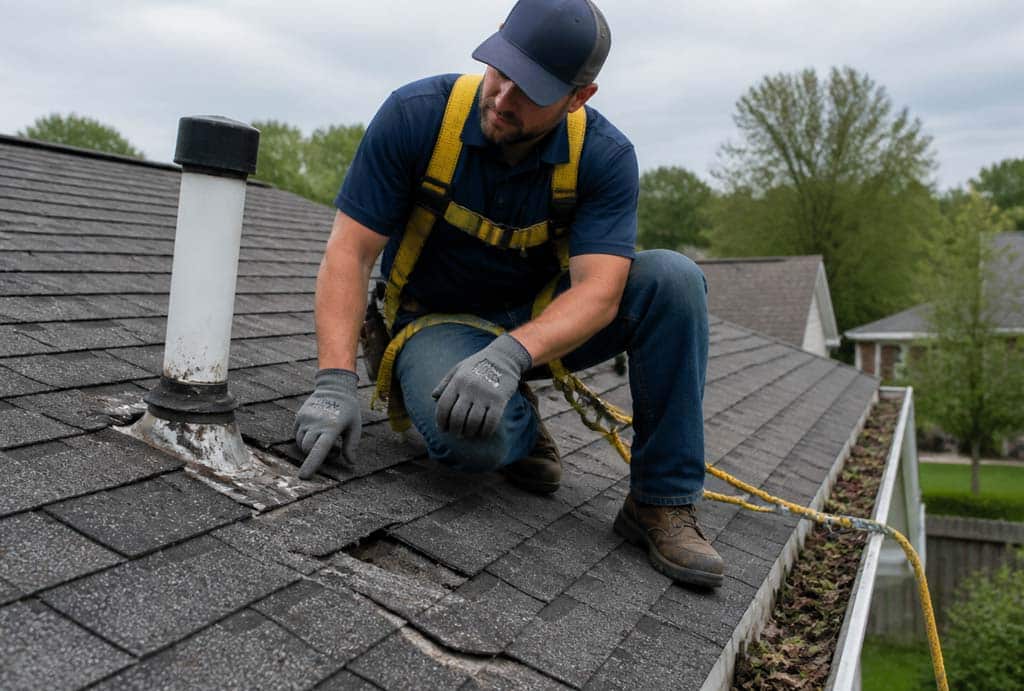
Roof flashing is one of the most common sources of leaks. Flashing is installed around roof penetrations and transitions, including:
- Chimneys
- Skylights
- Plumbing vents
- Furnace vents
- Roof valleys
- Dormers
Over time, flashing can separate, rust, crack, or lose its seal. Once this occurs, water can enter around these vulnerable areas.
Many Indianapolis roof leaks we inspect are ultimately traced back to damaged flashing rather than the shingles themselves. Local homeowners discussing roof repairs frequently mention vent and flashing issues as common leak sources.
Clogged Gutters
Gutters play a major role in keeping water away from your roof and home.
When gutters become clogged with leaves, sticks, and debris, rainwater cannot flow properly. Instead, water backs up onto the roof edge where it can seep beneath shingles and enter the structure.
Summer storms can overwhelm clogged gutters quickly, creating conditions that lead to interior leaks and wood rot.
Storm Damage
Indianapolis homeowners know how quickly severe weather can develop. High winds, hail, and falling branches can damage roofing materials without creating immediately visible leaks.
After a significant storm, it is important to have your roof inspected, even if you don’t notice interior water damage right away. Small storm-related issues often worsen over time and eventually become active leaks. Stay Dry Roofing specializes in identifying storm and hail-related roofing damage throughout the Indianapolis area.
Aging Roofing Materials
Every roofing system has a lifespan. Asphalt shingles typically last between 20 and 30 years depending on installation quality, maintenance, weather exposure, and material quality.
As roofs age, shingles become more brittle and less effective at shedding water. Sealants deteriorate, flashing weakens, and the likelihood of leaks increases significantly.
If your roof is approaching the end of its expected service life, recurring leaks may indicate that replacement should be considered.
Warning Signs of a Roof Leak
Not every roof leak produces a dramatic ceiling drip. In many cases, the warning signs appear gradually. Watch for:
- Water stains on ceilings or walls
- Peeling paint
- Bubbling drywall
- Musty odors
- Mold growth
- Wet attic insulation
- Sagging ceiling areas
- Dark spots around vents or chimneys
Water stains should never be ignored because they often indicate ongoing moisture intrusion that can lead to structural deterioration and mold growth if left unresolved.
What To Do If You Discover a Roof Leak
Protect Your Interior
The first priority is preventing additional damage.
Move furniture, electronics, and valuables away from the affected area. Use buckets or containers to collect dripping water and place towels around the leak to minimize flooring damage.
Relieve Ceiling Pressure
If water is pooling behind drywall, the ceiling may begin to bulge.
In some situations, carefully puncturing the center of the bulge can allow water to drain in a controlled manner rather than causing a larger ceiling collapse. If you’re unsure, contact a professional roofing contractor immediately.
Document the Damage
Take photos of:
- Ceiling stains
- Water intrusion
- Damaged belongings
- Exterior storm damage if visible
Documentation can be useful if an insurance claim becomes necessary.
Check the Attic
If it is safe to do so, inspect the attic for signs of moisture.
Look for:
- Wet insulation
- Water trails on wood framing
- Damp roof decking
- Visible daylight entering through the roof
Remember that water often travels before becoming visible, meaning the leak source may be located several feet away from where the water appears inside.
Schedule a Professional Inspection
Roof leaks rarely resolve themselves. Temporary fixes may stop active water intrusion, but identifying the root cause is essential.
Professional inspections can determine whether the issue involves shingles, flashing, ventilation, storm damage, gutters, or aging roofing materials.
Why DIY Roof Leak Repairs Can Be Risky
Many homeowners are tempted to climb onto the roof after discovering a leak. However, summer roof surfaces become extremely hot and slippery, especially after rainfall.
Additionally, locating the true source of a leak is often more complicated than it appears.
Water can travel along roof decking, rafters, and insulation before becoming visible indoors. What appears to be a leak above one room may actually originate from a flashing issue several feet away.
Professional inspections use experience and systematic evaluation to identify the actual cause rather than simply treating symptoms.
How To Prevent Summer Roof Leaks
Preventive maintenance remains the best defense against costly repairs.
We recommend:
- Annual roof inspections
- Post-storm inspections
- Regular gutter cleaning
- Tree branch trimming
- Prompt repair of damaged shingles
- Flashing inspections around penetrations
- Monitoring attic ventilation
These proactive steps can significantly extend roof life while reducing the likelihood of unexpected leaks.
Trust Stay Dry Roofing for Indianapolis Roof Leak Repairs
At Stay Dry Roofing, we understand how stressful roof leaks can be for homeowners. Whether you’re dealing with an active leak, storm damage, missing shingles, or signs of aging roofing materials, our experienced team provides thorough inspections and honest recommendations.
As a locally owned Indianapolis roofing company, we help homeowners throughout Marion County, Hamilton County, and surrounding communities protect their homes from Indiana’s challenging weather conditions. We specialize in roof repairs, storm damage assessments, leak detection, roof replacements, and emergency roofing services.
If you suspect a roof leak this summer, don’t wait until minor water damage becomes a major repair. A professional inspection today can save thousands of dollars in future restoration costs and help keep your home safe, dry, and protected.