

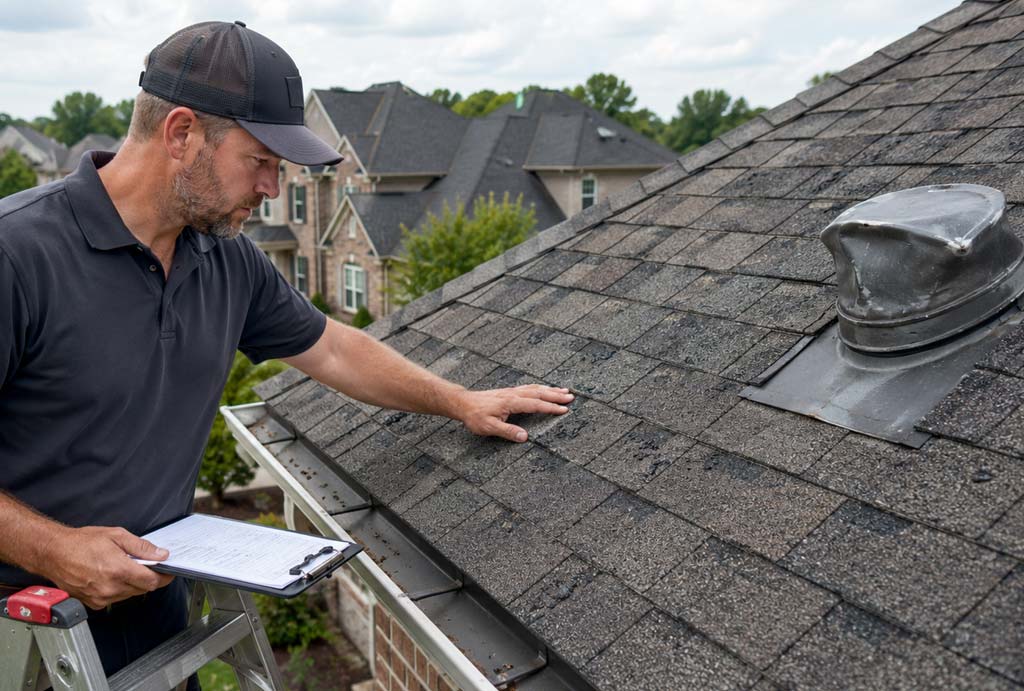
When hail moves through Carmel, Fishers, Noblesville, Westfield, Zionsville, and the surrounding Hamilton County area, your roof can take damage even if everything looks fine from the ground. That is what makes hail tricky. It does not always leave behind obvious missing shingles or a major leak right away.
Sometimes the damage is subtle. A few shingles may lose granules. A vent cap may get dented. Flashing may be loosened. Gutters may show small impact marks. A shingle may be bruised in a way that only shows up during a close inspection.
At Stay Dry Roofing, we help homeowners throughout the Indianapolis area identify hail damage before it turns into a bigger roof problem. If a strong hail storm recently hit your neighborhood, a professional roof inspection can help you understand what happened, what condition your roof is in, and whether any repairs are needed.
Why Hail Damage Is Easy to Miss
Many homeowners expect hail damage to look dramatic. Sometimes it does. Large hail can crack shingles, dent metal vents, damage gutters, and knock roofing materials loose. But not all hail damage is that easy to spot.
Asphalt shingles are built with protective granules on the surface. These granules help protect your roof from sun, rain, and normal weather exposure. When hail strikes the roof, it can knock those granules loose or bruise the shingle underneath. Over time, that damaged area may wear down faster than the rest of the roof.
The problem is that hail damage may not cause a leak immediately. Your roof might seem fine after the storm, then start showing problems weeks or months later during another round of rain.
That is why homeowners in Carmel, Fishers, Noblesville, and nearby communities should not rely only on what they can see from the driveway.
What Should You Check After a Hail Storm?
The safest place to start is on the ground. Do not climb onto your roof after a storm. Wet shingles, loose debris, and hidden damage can make the roof dangerous.
Walk around your home and look for signs that hail hit the property. Check your gutters, downspouts, siding, window screens, outdoor furniture, garage doors, and vehicles. If you see dents or impact marks on those surfaces, your roof may have been hit too.
Next, look for shingle granules around your downspouts or near the edge of your home. A few granules can be normal, especially on an older roof. But if you suddenly notice a large amount after a hail storm, that can be a warning sign.
You should also look for missing shingles, bent flashing, loose roof edges, damaged ridge caps, dented roof vents, or pieces of roofing material in the yard.
Inside the home, check ceilings, attic areas, and upper-level rooms for water stains, musty smells, damp insulation, bubbling paint, or discoloration near vents and chimneys.
Common Signs of Hail Damage on a Roof
Hail damage can show up in several ways. Some signs are visible from the ground. Others require a closer inspection by a trained roofing professional.
Common signs include:
- Missing granules on asphalt shingles
- Dark spots or impact marks on shingles
- Soft bruised areas on shingles
- Cracked or split shingles
- Dented metal vents or flashing
- Damaged gutters or downspouts
- Loose ridge caps
- Water stains inside the home
- Roof leaks after heavy rain
- Debris or roofing material in the yard
The important thing to remember is that hail damage is not always evenly spread across the roof. One slope may take most of the impact while another area looks untouched. The direction of the storm, wind speed, roof pitch, tree coverage, and nearby structures can all affect where damage appears.
Why Carmel, Fishers, and Noblesville Homeowners Should Pay Attention
Hamilton County homes can face strong summer weather, especially during late spring and July storm patterns. Carmel, Fishers, Noblesville, Westfield, and Zionsville have many neighborhoods with mature trees, larger homes, steep rooflines, and roof systems with multiple valleys, dormers, vents, and flashing details.
Those features can add curb appeal, but they also create more areas where storm damage can happen or where leaks can start.
A hail storm does not need to destroy your roof to create a problem. It may only take a few damaged shingles near a valley, vent, chimney, or roof transition to allow water to get underneath the roofing system during the next heavy rain.
That is why a roof inspection after hail is about more than checking for missing shingles. It is about making sure the entire roofing system is still doing its job.

When Should You Schedule a Hail Damage Roof Inspection?
You should schedule a hail damage roof inspection if hail recently moved through your neighborhood and you notice damage around your property. You should also call if your neighbors are having roof inspections or roof repairs done after the same storm.
Even if you do not see a leak, it is still smart to have the roof checked. Hail damage can weaken shingles and shorten the life of the roof. If damage is caught early, the repair may be simpler and less expensive than waiting until water enters the home.
A professional inspection can help answer the questions most homeowners have after a storm:
- Did the hail actually damage my roof?
- Are the shingles still protecting the home?
- Is there damage around vents, flashing, valleys, or gutters?
- Can the roof be repaired, or is replacement something to consider?
- Is there an active leak risk?
At Stay Dry Roofing, we inspect the roof carefully and explain what we find in clear, practical terms.
What Happens During a Stay Dry Roofing Inspection?
A roof inspection should look at the full system, not just one damaged spot. When Stay Dry Roofing inspects a roof after hail, we look for shingle damage, granule loss, bruising, cracked shingles, loose materials, flashing issues, roof vent damage, gutter damage, and leak-prone areas.
We also pay close attention to the parts of the roof where water naturally collects or moves, including valleys, edges, roof penetrations, chimneys, skylights, and transitions.
Our goal is to give you honest information. Sometimes the roof is in good shape. Sometimes a small repair is enough. Other times, hail damage may be widespread enough that replacement needs to be discussed.
Either way, the first step is knowing what is actually happening on the roof.
Should You Repair Hail Damage Right Away?
If your roof has hail damage, it should be addressed as soon as possible. That does not always mean a major project. In some cases, roof repair may involve replacing damaged shingles, sealing vulnerable areas, fixing flashing, or repairing a leak-prone section.
But waiting too long can create more problems. Damaged shingles can lose more granules. Exposed areas can age faster. Small roof openings can allow moisture into the attic or decking. Once water gets inside, the repair may involve more than the roof surface.
A fast inspection gives you control. You know where things stand, and you can make the right decision before the next storm makes the problem worse.
Common Questions About Hail Damage Roof Inspections
How do I know if my roof has hail damage?
You may notice dents on gutters, downspouts, vents, siding, or outdoor surfaces. On the roof, hail damage can include missing granules, bruised shingles, cracked shingles, or dark impact marks. Because many signs are hard to see from the ground, a professional roof inspection is the best way to know.
Can hail damage cause a roof leak later?
Yes. Hail damage may not cause an immediate leak, but it can weaken shingles and expose vulnerable areas of the roof. Over time, heavy rain, wind, heat, and normal weather can turn that damage into a leak.
Should I get my roof inspected even if it is not leaking?
Yes. A roof can have hail damage without leaking right away. An inspection helps catch problems early and gives you peace of mind after a storm.
What areas does Stay Dry Roofing serve for hail inspections?
Stay Dry Roofing serves homeowners throughout Indianapolis and surrounding communities, including Carmel, Fishers, Noblesville, Westfield, Zionsville, Greenwood, Avon, Brownsburg, Plainfield, and nearby Central Indiana areas.
Schedule a Hail Damage Roof Inspection in Carmel, Fishers, or Noblesville
If hail recently moved through your neighborhood, do not wait until a small roof problem becomes an interior leak. Stay Dry Roofing can inspect your roof, identify storm damage, and help you understand the best next step for your home.
Call Stay Dry Roofing today to schedule a hail damage roof inspection in Carmel, Fishers, Noblesville, or the surrounding Indianapolis area.