

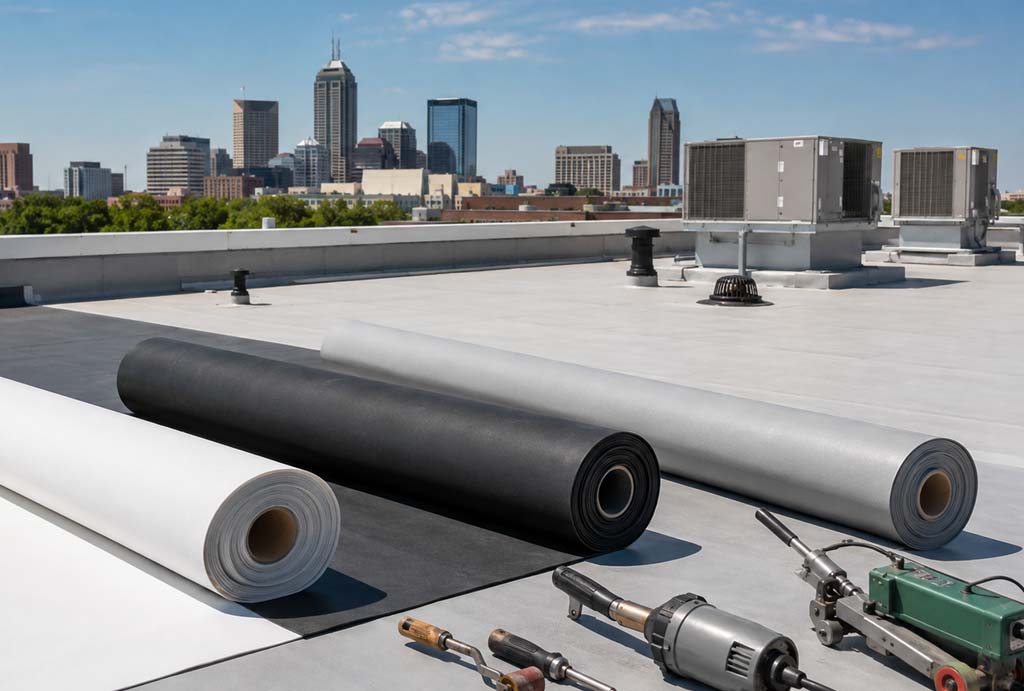
TPO, EPDM, and PVC are three of the most common single-ply roofing systems used on commercial buildings. Each can provide reliable protection, but they are not interchangeable. The right membrane depends on the property’s use, roof design, drainage, exposure risks, energy goals, and maintenance plan.
Indianapolis commercial roofs must handle hot summer sun, heavy rain, high winds, snow, ice, and repeated temperature changes. A system that performs well on a climate-controlled office may not be the best choice for a restaurant, warehouse, manufacturing facility, apartment building, or retail center.
At Stay Dry Roofing, we help owners and property managers compare the entire roof assembly not just the membrane’s price. Insulation, attachment method, flashing, drainage, rooftop equipment, and installation quality can matter as much as the material itself.
What Is the Main Difference Between TPO, EPDM, and PVC?
The short answer is:
- TPO is a reflective thermoplastic membrane that offers a practical balance of cost, energy performance, and durability.
- EPDM is a flexible synthetic rubber membrane with a long performance history and strong resistance to changing temperatures.
- PVC is a thermoplastic membrane known for heat-welded seams and resistance to many oils, fats, chemicals, and industrial contaminants.
For many general commercial properties in Indianapolis, TPO is a strong all-around choice. EPDM may be better when flexibility, cold-weather performance, or budget is the priority. PVC often deserves consideration for restaurants, food-processing facilities, manufacturing buildings, and properties where chemical or grease exposure is a concern.
TPO Roofing: A Versatile Choice for Indianapolis Buildings
Thermoplastic polyolefin, or TPO, is commonly installed on warehouses, offices, retail properties, schools, apartments, and other low-slope buildings. White TPO reflects more sunlight than a traditional black membrane, which may help reduce rooftop temperatures during hot Indiana summers.
The membrane’s seams are joined with hot-air welding. When properly installed, these welded seams create a continuous barrier against water. TPO is also available in different thicknesses, attachment methods, and assembly designs.
TPO may be a good fit when a building owner wants:
- A reflective roof surface
- Heat-welded seams
- A balance between performance and project cost
- Resistance to ordinary UV and weather exposure
- A widely used system for large commercial roofs
Reflectivity should still be considered alongside insulation and building use. The federal government’s guidance on cool roofs and reflective roofing materials explains that these products can reduce roof temperatures and cooling demand, but actual savings depend on the building and climate.
TPO is not automatically the best choice for every roof. Heavy foot traffic, dropped tools, sharp debris, poor drainage, and careless work around HVAC equipment can damage any single-ply membrane. Proper walkway pads and scheduled inspections remain important.
EPDM Roofing: Flexible, Proven, and Repairable
EPDM stands for ethylene propylene diene monomer. It is a flexible rubber membrane commonly recognized by its black surface, although white EPDM products are also available.
Because EPDM remains flexible across a broad range of temperatures, it can perform well through Indianapolis weather changes. That flexibility can be useful on buildings that experience minor movement as temperatures rise and fall.
EPDM may be a good option for:
- Large, open roof areas
- Buildings with limited chemical or grease exposure
- Owners seeking a proven membrane system
- Roofs where flexibility is important
- Projects where initial cost is a major consideration
Unlike TPO and PVC, traditional EPDM seams are generally joined with adhesive or seam tape rather than hot-air welding. Those seams, along with flashing around penetrations and roof edges, require careful installation and ongoing evaluation.
A black EPDM surface absorbs more solar heat than a white membrane. That is not always a disadvantage. Building insulation, winter heating needs, nearby trees, roof configuration, and energy goals should all be considered before choosing a membrane based on color alone.
PVC Roofing: Strong Protection Against Grease and Chemicals
Polyvinyl chloride, or PVC, is another reflective thermoplastic membrane with heat-welded seams. Its ability to resist many oils, fats, chemicals, and industrial contaminants separates it from other common single-ply options.
PVC is often considered for:
- Restaurants and commercial kitchens
- Food-processing facilities
- Manufacturing properties
- Buildings with grease-producing exhaust systems
- Roofs exposed to certain chemicals or industrial byproducts
Grease discharged near an exhaust vent can damage roofing materials that are not designed for that exposure. PVC may provide better protection in these environments, but compatibility must be evaluated against the specific substances present at the property.
PVC frequently carries a higher initial cost than some TPO or EPDM systems. However, the lowest upfront bid is not necessarily the lowest long-term cost. Installing an unsuitable membrane near grease, chemicals, or harsh exhaust may lead to premature deterioration and repeated repairs.
Five Factors That Should Guide Your Decision
1. Building Use and Exposure
Start with what happens inside the property. A standard office building presents different roofing risks than a restaurant, auto-service facility, laboratory, or manufacturing plant.
Document rooftop exhaust, chemical vapors, oils, grease, and any materials that could reach the membrane. This information may quickly eliminate an otherwise attractive option.
2. Drainage and Ponding Water
TPO, EPDM, and PVC are designed for low-slope roofs, but no membrane should be treated as a substitute for effective drainage. Clogged drains, poor slope, damaged gutters, and undersized scuppers can allow water to remain on the roof.
Standing water adds weight and increases stress around seams, penetrations, and repairs. Before selecting a system, determine whether the project also needs tapered insulation, drain improvements, or other corrective work. Our guide to commercial flat-roof leaks and drainage problems explains why drainage problems should be addressed early.
3. Energy and Insulation Goals
White TPO and PVC membranes can reflect sunlight and reduce heat absorption at the roof surface. The U.S. Environmental Protection Agency notes that reflective roofs can reduce heat transfer into buildings and lower air-conditioning demand.
However, membrane color is only one part of energy performance. Insulation thickness, existing moisture, air leakage, HVAC efficiency, and building hours also affect energy use.
4. Rooftop Traffic
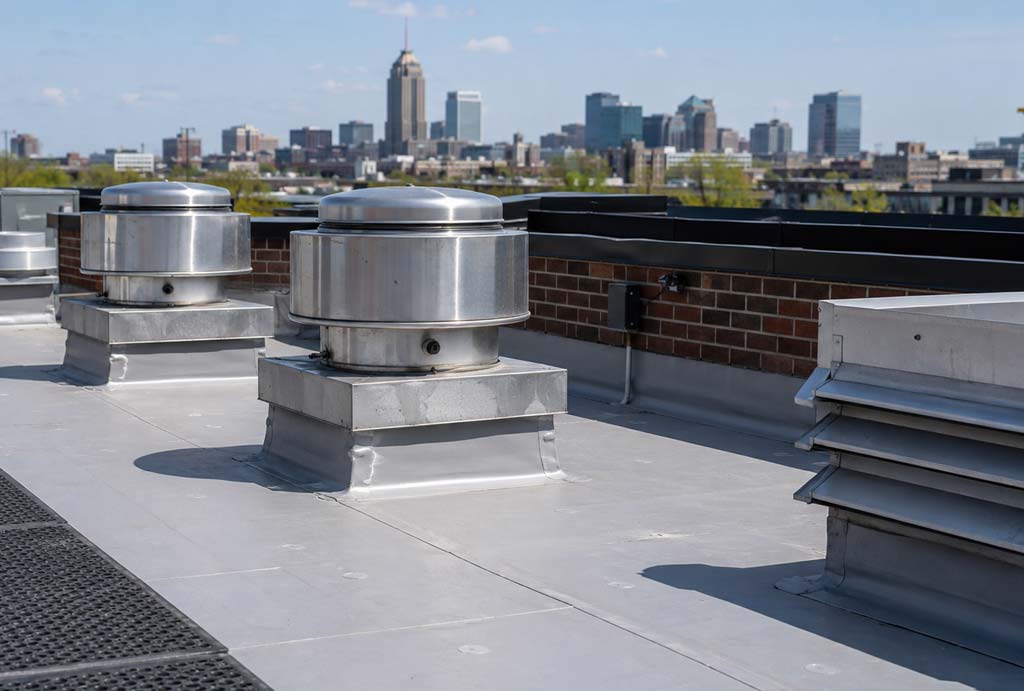
Commercial roofs often support HVAC units, vents, antennas, solar equipment, and other systems. If technicians regularly cross the roof, membrane protection becomes especially important.
Walkway pads, designated access routes, thicker membrane options, and protective details around service areas may help reduce punctures and premature wear.
5. Maintenance and Long-Term Ownership
A well-installed roof still needs inspections and maintenance. Drains must be cleared, flashing checked, debris removed, and damage repaired before moisture spreads into the insulation.
Owners planning to keep a building for many years may place greater value on thicker membranes, stronger warranties, improved insulation, and a formal commercial roof maintenance plan.
Which Commercial Roofing System Is Best?
There is no single winner for every Indianapolis commercial building.
TPO is often the best all-around option for general commercial and multifamily properties seeking reflectivity, welded seams, and balanced cost. EPDM is a strong candidate when flexibility, a proven service history, and affordability are priorities. PVC may be the better investment when the roof is exposed to grease, oils, chemicals, or demanding industrial conditions.
The final decision should follow a professional inspection of the existing membrane, insulation, deck, drainage, penetrations, and perimeter details. Stay Dry Roofing installs and services multiple commercial roofing systems in Indianapolis, allowing us to recommend a system based on the building instead of forcing every property into the same solution.
Frequently Asked Questions About TPO, EPDM, and PVC Roofing
Is TPO or EPDM better for Indiana weather?
Both can perform well in Indiana when properly designed and installed. TPO offers a reflective surface and welded seams, while EPDM provides excellent flexibility during temperature changes. The roof’s drainage, insulation, attachment, and maintenance often matter more than the membrane name alone.
Is PVC roofing worth the additional cost?
PVC may justify its higher initial cost on restaurants, food-processing facilities, and industrial buildings exposed to grease, oils, or certain chemicals. On a standard office or warehouse, TPO or EPDM may provide the needed performance at a lower cost.
Can TPO, EPDM, or PVC be installed over an existing commercial roof?
Sometimes. The existing roof must first be inspected for trapped moisture, damaged insulation, structural concerns, and code limitations. Wet or deteriorated materials may need to be removed before a new system is installed.
How long do commercial single-ply roofing systems last?
Service life varies based on membrane thickness, installation quality, drainage, rooftop traffic, weather exposure, and maintenance. A professionally designed system that receives routine inspections will generally outlast a neglected roof with clogged drains or unrepaired damage.
How do I choose between TPO, EPDM, and PVC?
Begin with a commercial roof inspection. The contractor should evaluate building use, chemical exposure, drainage, insulation, roof traffic, existing conditions, budget, and ownership plans before recommending a membrane. Stay Dry Roofing can evaluate these factors and develop an appropriate plan for your Indianapolis-area property.