

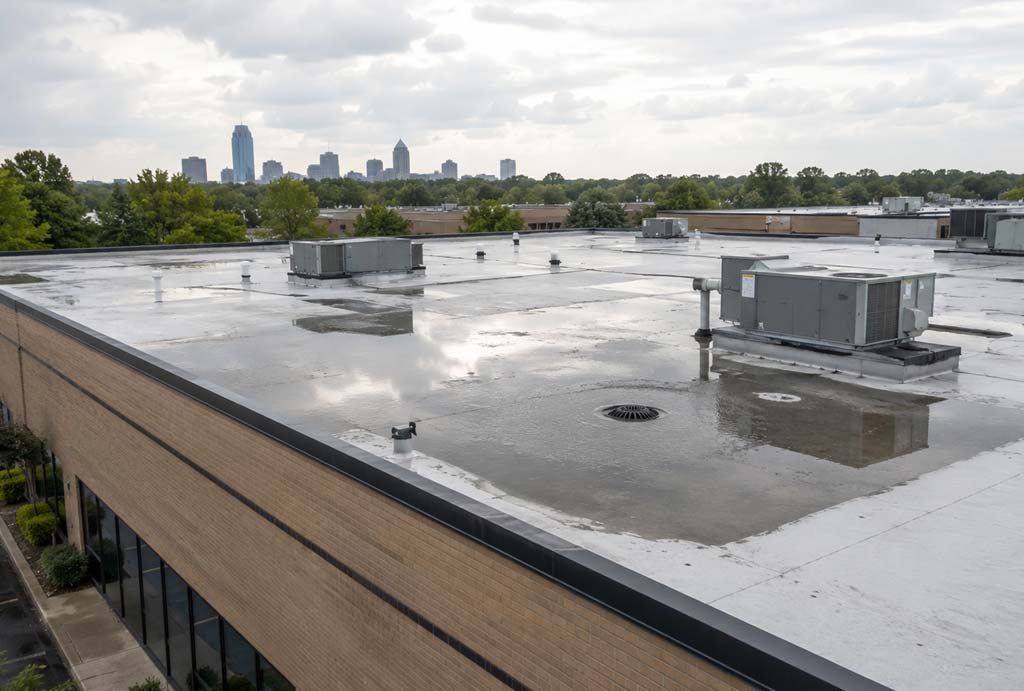
A commercial flat roof leak can create problems fast. One small leak can interrupt business, damage inventory, stain ceilings, affect tenants, create safety concerns, and lead to expensive interior repairs if it is not handled quickly.
In Indianapolis, July weather can make flat roof problems even more urgent. Heavy rain, strong wind, hail, heat, humidity, and sudden storms can all expose weak spots in a commercial roofing system. A roof that seemed fine earlier in the season may start leaking after one hard storm or several days of standing water.
At Stay Dry Roofing, we help property owners, business owners, facility managers, and property managers throughout Indianapolis and the surrounding Central Indiana area with commercial roof repair, flat roof leaks, storm damage, and roof inspections. If your commercial building has a TPO roof, EPDM roof, PVC roof, coated roof, or another low-slope system, fast action can make a big difference.
Why Flat Roof Leaks Need Fast Attention
Flat roofs are built differently than steep-slope residential roofs. Instead of shedding water quickly, a flat or low-slope roof relies on proper drainage, strong seams, sealed penetrations, and a well-maintained membrane.
When one part of that system fails, water can sit on the roof, move under the membrane, or find its way into the building through seams, flashing, drains, HVAC curbs, skylights, vents, or roof edges.
That is why a flat roof leak should not be treated like a minor inconvenience. Even if the leak looks small inside the building, the source may be several feet away from where the water appears. Water can travel under the roofing system before showing up on ceiling tiles, walls, or flooring.
The sooner the roof is inspected, the easier it is to identify the issue and stop the damage from spreading.
Common Causes of Commercial Flat Roof Leaks
Commercial roof leaks can happen for several reasons. Some are caused by age. Others are caused by storms, poor drainage, foot traffic, installation issues, or normal wear and tear.
Common causes include:
- Ponding water after heavy rain
- Open seams in the roof membrane
- Punctures from debris or foot traffic
- Cracked or loose flashing
- Damaged areas around HVAC units
- Clogged roof drains or scuppers
- Loose edge metal
- Hail or wind damage
- Worn coatings or aging membrane areas
A flat roof system should be inspected carefully because many of these issues are not obvious from inside the building. A ceiling stain tells you there is a problem. It does not always tell you where the problem started.
TPO Roof Leaks in Indianapolis
TPO roofing is a common commercial flat roofing option because it is lightweight, reflective, and widely used on low-slope buildings. But like any roof system, TPO can develop leaks when seams open, flashing fails, the membrane is punctured, or drainage problems are ignored.
On TPO roofs, seams are especially important. If a seam begins to separate, water can work its way under the membrane. Areas around rooftop HVAC units, vents, pipes, and roof transitions also need close attention because these are common places for leaks to start.
TPO roof leaks may also appear after hail, wind, or debris damage. A small puncture can be hard to see but still allow water into the system.
If your TPO roof is leaking, it is important to have the membrane, seams, flashing, drains, and roof penetrations inspected before the next storm.
EPDM Roof Leaks and Rubber Roof Problems
EPDM is often called rubber roofing. It has been used on many commercial flat roofs because it is flexible and durable. However, EPDM roofs can still leak as they age or when seams, flashing, or adhesives begin to fail.
EPDM roof leaks often happen around seams, roof edges, drains, penetrations, and patched areas. Over time, the membrane may shrink, pull away from edges, or become more vulnerable in high-traffic areas.
Foot traffic is also a concern. If contractors, maintenance crews, or HVAC technicians regularly walk across the roof, tools and equipment can puncture or damage the membrane. Even a small puncture can let water in.
For Indianapolis commercial buildings with EPDM roofing, regular inspection and quick repair are key to preventing small membrane problems from becoming major leaks.
Drainage Problems Are a Big Deal on Flat Roofs
Drainage is one of the most important parts of any flat roof system. When water does not drain properly, it can sit on the roof and create ponding water.
Ponding water adds weight to the roof, stresses seams, speeds up wear, and can make small weak spots worse. In July, heavy thunderstorms can overwhelm roof drains quickly, especially if debris, leaves, branches, or dirt are blocking the drainage system.
Property managers should pay close attention to:
- Water that remains on the roof after rain
- Clogged drains, gutters, or scuppers
- Staining around drain areas
- Sagging or low spots in the roof
- Interior leaks after heavy rain
- Repeated leaks in the same area
A flat roof does not have to be completely underwater to have a drainage problem. Even shallow ponding in the same areas after every storm can shorten the life of the roofing system.
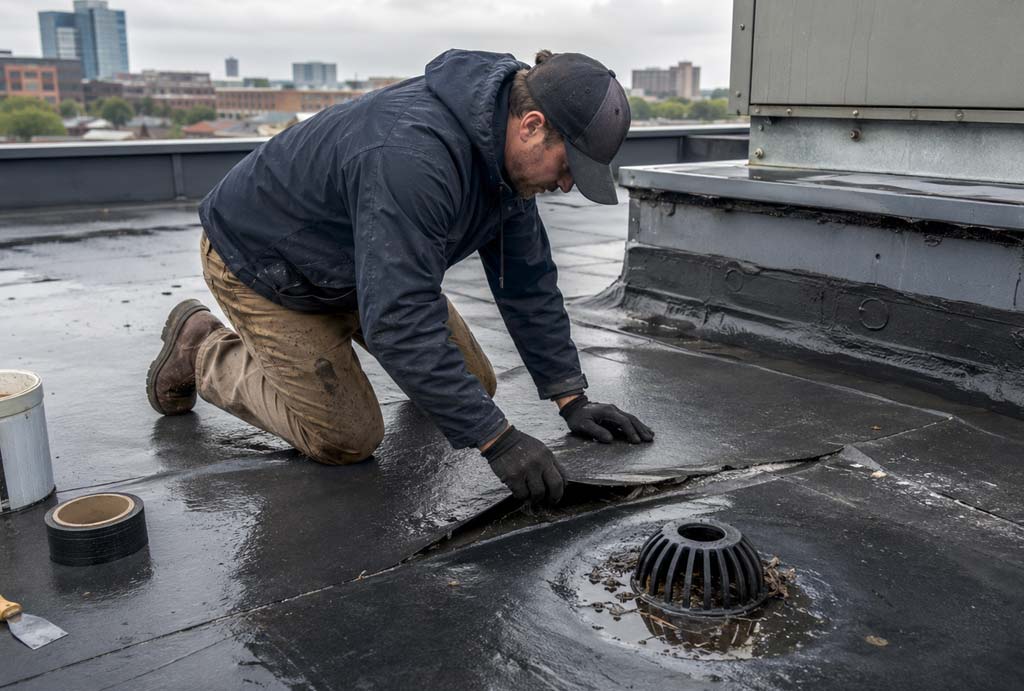
Roof Leaks Around HVAC Units and Penetrations
Commercial buildings often have rooftop HVAC units, vents, pipes, exhaust systems, skylights, and other penetrations. Each one creates a place where the roof must be sealed correctly.
These areas are common leak points because they deal with movement, vibration, flashing details, sealants, and foot traffic from service crews. If flashing cracks, sealant fails, or a curb is damaged, water can enter the building.
After a July storm, it is smart to check for new ceiling stains or water near areas below rooftop equipment. A leak around an HVAC unit may not look serious at first, but it can keep coming back until the roof detail is properly repaired.
How Property Managers Can Reduce Roof Leak Problems
A commercial flat roof should not only be checked when water is dripping inside the building. Preventive maintenance can help property managers avoid emergency leak calls, tenant complaints, and business disruptions.
A few smart steps include scheduling inspections after major storms, keeping drains clear, documenting leak reports, limiting unnecessary roof traffic, and repairing small issues before they spread.
If your building has had repeated leaks, it may also be time to evaluate whether the roof needs targeted repairs, a coating system, drainage improvements, or a larger replacement plan.
When Is Flat Roof Repair Enough?
Not every commercial flat roof leak means the entire roof needs to be replaced. Many leaks can be repaired if the damage is limited and the overall roofing system is still in good condition.
Flat roof repair may be enough if the issue is a small puncture, isolated seam problem, loose flashing, clogged drain, or one damaged roof detail.
However, replacement or a larger restoration plan may need to be discussed if the roof has widespread membrane damage, repeated leaks, major ponding water, saturated insulation, aging materials, or repairs that no longer hold.
The best first step is a commercial roof inspection. Stay Dry Roofing can inspect the roof, identify the problem, and explain whether repair, maintenance, or replacement makes the most sense.
Common Questions About Commercial Flat Roof Leaks
Why is my commercial flat roof leaking after heavy rain?
Heavy rain can expose weak spots in the roofing system, especially around seams, drains, flashing, HVAC units, vents, and low areas where water collects. If your roof only leaks during heavy rain, it still needs to be inspected.
Is ponding water bad for a flat roof?
Yes. Ponding water can add weight, stress seams, speed up membrane wear, and increase the risk of leaks. Water that stays on the roof after rain should be checked by a commercial roofing professional.
Can TPO roof leaks be repaired?
Yes, many TPO roof leaks can be repaired if the damage is limited to seams, punctures, flashing, or specific roof details. A roof inspection will help determine whether repair is enough or if the system has larger issues.
What causes EPDM roof leaks?
EPDM roof leaks often come from seam failure, punctures, flashing problems, shrinkage, roof edge issues, or damage around drains and rooftop equipment. Regular maintenance can help catch these problems earlier.
Does Stay Dry Roofing repair commercial flat roofs in Indianapolis?
Yes. Stay Dry Roofing provides commercial roof repair and flat roof leak help for Indianapolis-area businesses, property owners, and property managers.