

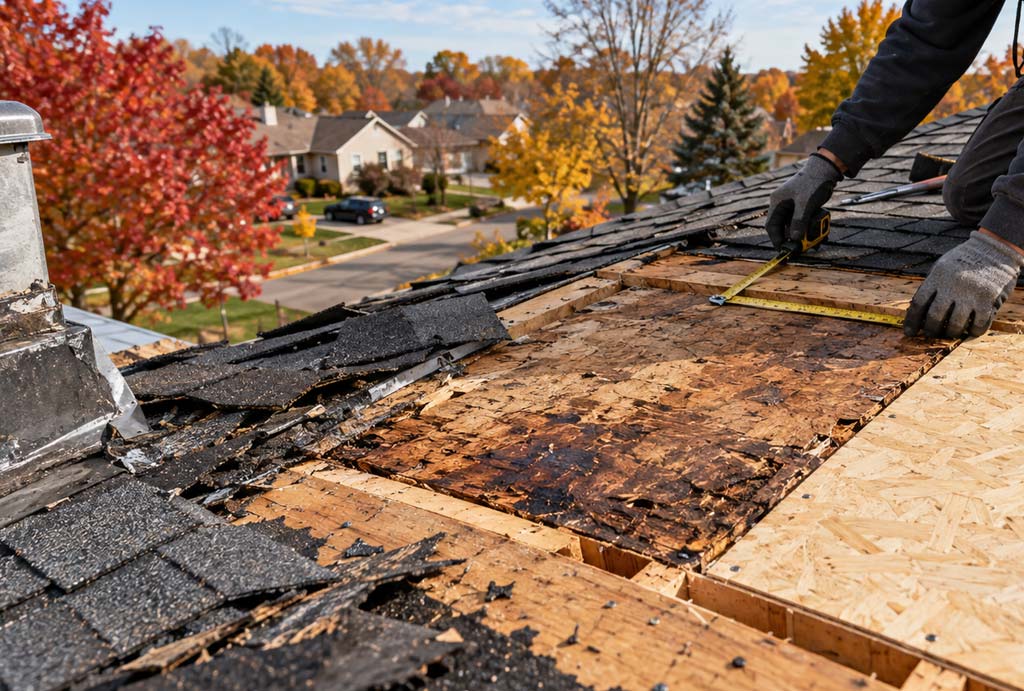
Your roof replacement is underway when the crew calls you over: a section of wood beneath the old shingles is damaged and needs to be replaced. It is an unwelcome change to the budget, especially if the roof looked solid from the driveway. It is also a fairly straightforward decision when the contractor shows you what was found and the estimate already explains how hidden decking work will be priced.
Roof decking, also called sheathing, is the wood layer fastened to the roof framing beneath the underlayment and shingles. It provides the surface that holds the roofing system in place. Because most of it is covered until tear-off, an inspection can identify warning signs without guaranteeing that every panel underneath is sound.
Why the damage may not appear in the original estimate
Before the job, a roofer may see ceiling stains, a soft spot, sagging, or evidence of a long-running leak near a chimney or vent. Those clues can justify a closer look and an allowance in the proposal. Other damaged areas remain hidden beneath shingles and underlayment until removal begins.
Water can weaken a localized panel after a flashing leak. Poor attic moisture control may affect a broader area. An older roof may also have sheathing that does not provide a suitable fastening surface for the new material, even where there is no obvious rot. GAF notes that hidden water-damaged or rotted decking is often discovered only after the old roof covering comes off. Read GAF’s roof-decking explanation.
Discovery during tear-off is not, by itself, proof that the inspection was poor. What matters is whether the contractor documented the condition, explains why replacement is needed, and follows the agreed process for additional work.
Can the crew shingle over damaged wood?
That is usually the wrong shortcut. Shingles need a sound, properly prepared surface that will hold fasteners. Owens Corning’s installation instructions, for example, call for a properly built and supported wood deck with adequate nail-holding capacity and a smooth surface. See the manufacturer’s roof-deck requirements.
A soft or rotted panel should be addressed before it is hidden beneath a new roof. The contractor should remove the affected material, assess the framing and neighboring decking, install suitable replacement sheathing, and then continue with the underlayment and roofing system. The exact scope depends on the condition found—not on a standard number of panels every home must replace.
If a large area appears to have structural damage, the work may require further evaluation beyond routine panel replacement. Ask the contractor to explain what is confirmed and what still needs investigation.
How should the extra cost be calculated?
The most useful price is the unit price in your signed proposal: for example, a specified price per sheet or per defined area of decking replaced. The proposal should say whether that price includes material, labor, removal, disposal, and the associated roofing work. It should also state whether any quantity is already included before an additional charge begins.
A single Internet average will not tell you what your change will cost. The total depends on how much wood is actually removed, where it is located, the material required, roof access, and whether framing or other components need attention. Ask for the count and location of replaced panels, photographs before they are covered, and a written change order or other clear authorization for work beyond the original scope.
This is a narrower question than comparing entire roofing bids. Our roof replacement estimate checklist covers the full proposal; for decking, focus on the allowance, unit price, documentation, and approval process.
Will it delay the roof replacement?
A small, anticipated decking repair may fit within the crew’s planned workday if the right materials are available. Extensive damage or an unexpected framing issue can change the schedule. The crew also has to protect any exposed area if weather interrupts the work.
That matters during an Indianapolis October project, when daylight is shorter and the forecast can change quickly. The contractor should tell you whether the discovery changes the completion date, how the roof will be kept weather-tight overnight, and whether more material must be ordered. Our guide to preparing for roof replacement day explains what to expect from the larger installation process.
Questions to ask before approving the change
You do not need to diagnose roof decking from the ground. You do need enough information to understand the proposed work:
- Where is the damaged decking, and can I see clear photographs?
- Is this isolated to one panel, or has the crew checked adjacent areas?
- What caused the damage, and is that source being corrected as part of the roof work?
- How many panels are included in the original price, and what is the agreed rate beyond that?
- Does the work affect the timeline or the protection plan if rain is forecast?
A contractor who can answer those questions gives you a decision based on the actual roof, rather than asking you to accept a surprise line item on trust.
Stay Dry Roofing can inspect your Indianapolis-area roof, explain visible signs of decking trouble before work starts, and document concealed conditions if they appear during tear-off. Request a roof replacement estimate with the decking terms spelled out before the first shingle comes off.
Frequently asked questions
Does every roof replacement require new decking?
No. Sound decking that meets the roofing system’s requirements can often remain. Damaged or unsuitable sections need to be addressed before new roofing is installed.
Can a roofer know the exact amount of decking damage beforehand?
Sometimes visible or attic-side evidence helps estimate the scope, but covered areas may not be fully assessable until tear-off.
Should I expect photos before extra decking is covered?
Yes. Ask how the contractor documents discovered damage and replaced areas, and how added work is authorized under your agreement.
Is a decking change automatically an insurance claim?
No. The cause of the damage and the terms of your policy matter. Documentation from the roofer can help you discuss a potential claim with your insurer, but it does not establish coverage.