

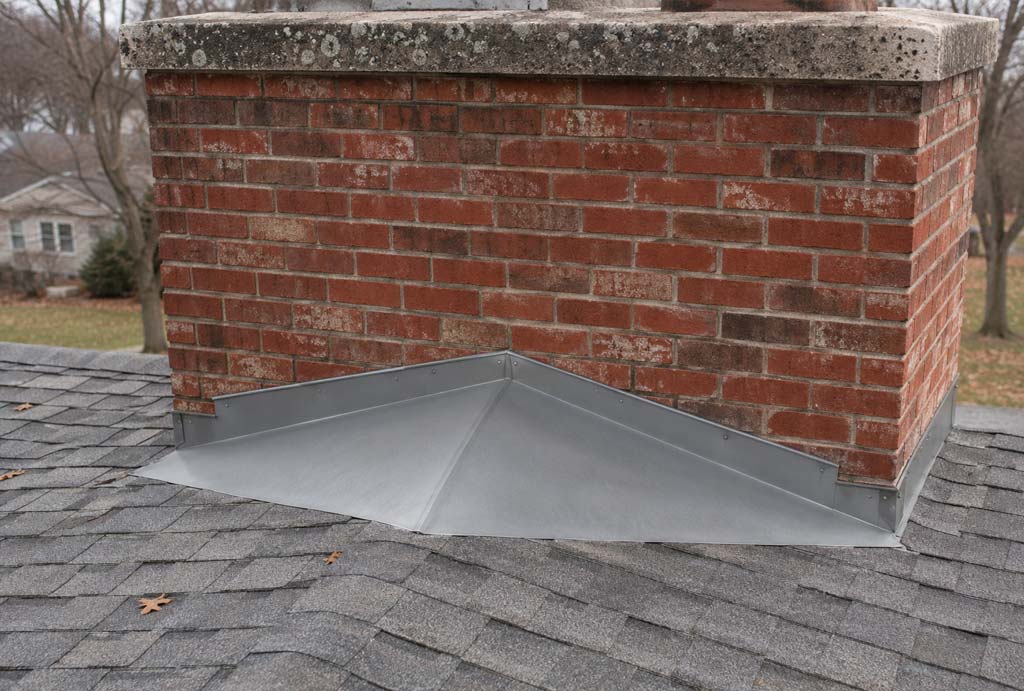
Your chimney may need a roof cricket when its size and position interrupt runoff on the uphill side of the roof. A cricket redirects water around that obstruction instead of allowing it to collect against the chimney.
It is not the answer to every chimney leak. Failed flashing, deteriorated masonry, and problems at the chimney top can require different repairs.
At Stay Dry Roofing, we evaluate drainage behind the chimney along with the surrounding roof details. For Indianapolis homeowners, understanding that distinction can help explain why a recurring leak has survived several rounds of sealing.
What Is a Chimney Cricket?
A roof cricket, also called a chimney saddle, is a small raised structure built on the uphill side of a chimney. Its peaked shape divides approaching runoff and directs it toward either side.
On a sloping residential roof, it is commonly framed and covered with metal or suitable roofing material. Flashing connects the cricket to the chimney and surrounding roof.
GAF’s explanation of roof crickets describes how they divert runoff around roof obstructions. The important feature is the drainage shape, not simply the presence of a metal sheet behind the chimney.
A flat pan and a raised cricket do different jobs. Either detail must be appropriate for the roof’s layout and installed correctly.
Why the Uphill Side Deserves Attention
A chimney interrupts the path water would otherwise follow down the roof. The area behind it receives runoff from the slope above and may also catch leaves and small branches.
A broad chimney can create a larger obstruction. Nearby roof intersections may concentrate additional water into the same location.
Without an effective route around the chimney, debris can remain against the back wall and water can linger at vulnerable joints. That does not mean every chimney without a cricket will leak. It means the drainage arrangement deserves examination.
Late November is a useful time to assess this area after leaf fall and before snow makes it harder to see.
How Do We Decide Whether a Cricket Is Appropriate?
We consider the chimney’s width across the slope, its distance from the ridge, the roof pitch, and the amount of roof draining toward it.
A chimney close to the ridge may receive less runoff from above than one farther down a long slope. A roof valley directing water toward the chimney changes the situation again.
Existing flashing and prior repairs also matter. An uphill area covered with repeated patches may indicate that the original water-management problem was never resolved.
IKO’s guide to chimney crickets explains how a saddle becomes part of the chimney flashing system. The contractor should also confirm applicable local requirements and manufacturer instructions when planning the work.
A Cricket Is Different From a Chimney Cap
A chimney cap sits at the top of the chimney, usually protecting the flue opening. A cricket sits behind the chimney at roof level.
They address different routes for water entry. Installing a cap does not improve drainage behind the chimney, and adding a cricket does not stop rain entering through a defective chimney top.
Our article on how chimney caps help protect against water damage covers that separate component.
This distinction is useful when discussing estimates. Ask which part of the assembly the proposed work addresses and what evidence supports that diagnosis.
Can a Chimney Still Leak With a Cricket?
Yes. A cricket must connect properly to the roof and chimney. Open joints, poorly integrated flashing, damaged roofing, or deterioration beneath the assembly can still admit water.
Water may also enter through masonry above the cricket. Staining near the fireplace does not prove the drainage detail is at fault.
A useful inspection checks the uphill assembly and follows the flashing around the chimney. Where masonry or flue concerns appear, a qualified chimney specialist may need to evaluate those components.
Our guide to flashing problems around chimneys, skylights, and vents explains other vulnerable connections without treating a cricket as a universal fix.
Can One Be Added Without Replacing the Whole Roof?
In some cases, yes. A targeted project may allow a cricket to be added while retaining most of the existing roof.
The work requires access to the surrounding roofing and a sound base for the new assembly. Nearby shingles must be suitable for the necessary removal and integration. Concealed damage can expand the scope.
If roof replacement is already planned, review the chimney detail before installation begins. That allows the cricket, underlayment, roofing, and flashing to be coordinated as part of the project.
Ask whether the proposal includes any required decking repairs and how the new detail will join the existing chimney flashing.
What Should You Do About Recurring Chimney Leaks?
Keep records of earlier repairs and note when the leak returns. Photographs of debris behind the chimney or staining indoors can help, but avoid climbing onto the roof to investigate.
A professional roof inspection should determine whether water is being managed correctly around the chimney and identify what needs closer examination.
Stay Dry Roofing serves Indianapolis, Carmel, Fishers, Noblesville, and surrounding communities. If the same area keeps leaking after surface repairs, request an evaluation to discuss whether the drainage detail needs to change.
Frequently Asked Questions
Are a chimney cricket and a chimney saddle the same thing?
Yes. Both terms commonly describe the raised roof detail that redirects water around the uphill side of a chimney.
Does every chimney need a roof cricket?
No. The need depends on the chimney’s dimensions, roof configuration, drainage conditions, and applicable requirements. An inspection should establish whether the existing detail is appropriate.
Does a cricket have to be covered with metal?
Not always. Some crickets use suitable shingles or other roofing materials. The covering, slope, underlayment, and flashing must work together according to the design and product requirements.
Will a cricket prevent all snow and ice buildup behind a chimney?
No. A cricket improves the drainage route, but it cannot guarantee that snow, ice, or leaves will never collect. The area still needs appropriate maintenance and inspection.
Can I tell whether my chimney has a cricket from the ground?
Sometimes, but the uphill side may be hidden by the roof slope or chimney itself. Do not assume a cricket is missing because you cannot see it. A roofer can document the area during an inspection.