


If your roof leaks only during heavy rain, the problem is usually a small opening that ordinary rainfall cannot reach. Wind-driven rain, a high volume of water, or water flowing in an unusual direction may expose damaged flashing, loose shingles, failing roof penetrations, or drainage problems.
An occasional leak does not mean the issue is harmless. It often indicates a weakness that has not yet grown large enough to leak during every storm. Finding it early may help you avoid damaged insulation, stained drywall, wood rot, and mold.
Indianapolis regularly experiences thunderstorms with heavy rain and strong wind. The National Weather Service in Indianapolis tracks local storms involving damaging winds, hail, and heavy rainfall throughout Central Indiana. These conditions can reveal roofing problems that remain hidden during lighter rain.
Why a Roof May Leak During Heavy Rain but Not Light Rain
A roof is designed to shed water downward. During a light shower, shingles, flashing, and roof penetrations may still direct water away from vulnerable areas.
Heavy or wind-driven rain behaves differently. Strong gusts can push water sideways or uphill beneath shingles and flashing. Large amounts of rain can also overwhelm roof valleys, gutters, and other drainage areas. Water may then enter through an opening that stays dry under normal conditions.
The direction of the wind can matter, too. A leak may appear only when rain blows toward a particular chimney, wall, vent, or section of the roof.
Common Causes of Roof Leaks During Heavy Rain
Damaged or Improperly Installed Flashing
Flashing protects the areas where your roof meets a chimney, wall, skylight, or another surface. If the metal is loose, corroded, bent, or improperly sealed, wind-driven rain can enter beneath it.
Step flashing along sidewalls and counterflashing around chimneys are frequent trouble spots. These problems may not leak during gentle rainfall because the water flows straight down the roof. When wind changes the water’s direction, however, even a narrow gap can become an entry point.
Loose, Cracked, or Missing Shingles
A damaged shingle does not always create a steady leak. The underlayment beneath it may provide temporary protection during light rain. Heavy rainfall can send enough water beneath the shingle to reach a nail hole, seam, or damaged area in the underlayment.
High winds can also lift shingle edges without completely removing them. From the ground, the roof may appear normal even though water can enter during a severe storm. Our Indianapolis roof repair services address missing shingles, storm damage, leaks, and other localized roofing problems.
Worn Pipe Boots and Roof Vents
Plumbing vents, exhaust vents, and other roof penetrations require seals that keep water out. Rubber pipe boots can crack with age and temperature changes. Metal vent flashing can loosen, corrode, or separate from nearby shingles.
During heavy rain, water may collect around these penetrations faster than the damaged seal can redirect it. The resulting leak may appear near a bathroom, kitchen, hallway, or utility area, but the visible stain is not always directly below the opening.
Chimney and Sidewall Problems
A chimney contains several possible water-entry points, including flashing, mortar joints, the chimney cap, and the masonry itself. Heavy rain can expose a defect in any of these areas.
Water may also enter where a roof connects to a dormer or exterior wall. Missing kick-out flashing can allow roof runoff to flow behind siding instead of into the gutter. In some cases, what appears to be a roof leak is actually water entering through siding, a window, or another part of the building envelope.
Clogged Gutters and Poor Roof Drainage
Gutters do not cause every roof leak, but clogged or overflowing gutters can contribute to water intrusion near the eaves. Leaves, granules, and debris may prevent water from moving away from the roof quickly enough during a downpour.
Roof valleys can experience a similar problem. If debris blocks a valley or its flashing is damaged, a large volume of water may move beneath nearby shingles. Keeping drainage paths clear is especially important before Indianapolis fall storms and winter weather.
Skylight Leaks
Skylights may leak because of damaged flashing, failed seals, cracked components, or condensation. A leak that appears only during wind-driven rain often points to a flashing problem around the skylight rather than the glass itself.
The water may travel along framing before reaching the ceiling, making the stain appear several feet away from the actual source.
Why the Ceiling Stain May Not Identify the Leak
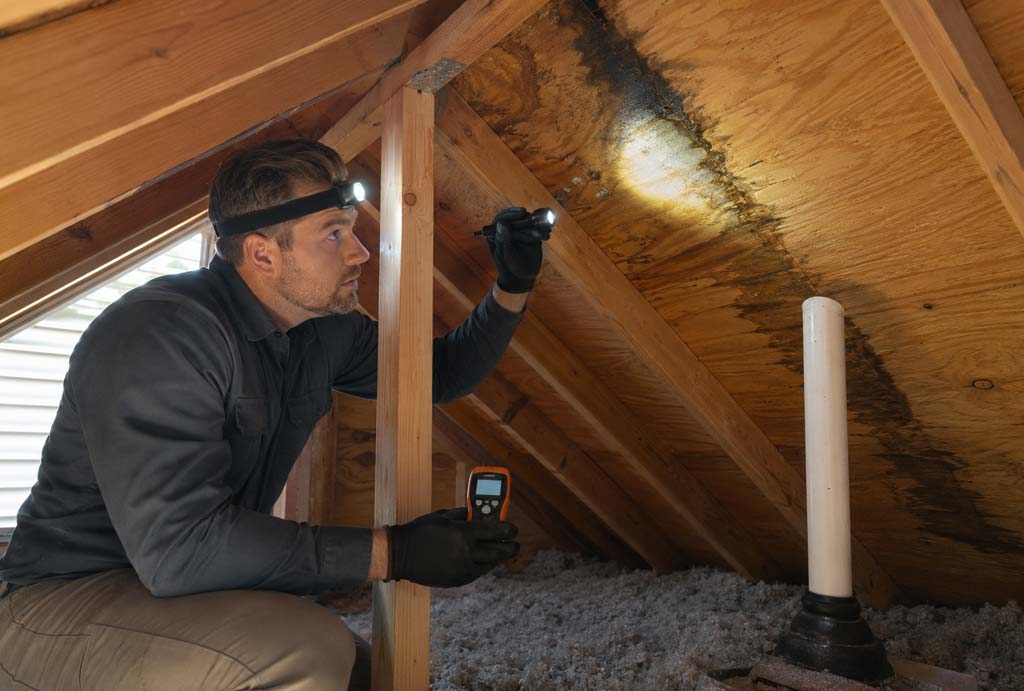
Water rarely travels in a straight line once it enters a roofing system. It can follow roof decking, rafters, nails, wiring, or insulation before dripping onto the ceiling.
That is why sealing the area directly above a stain may not solve the problem. A complete diagnosis may require examining the shingles, flashing, penetrations, attic, and interior damage together. Our guide to what happens during a roof inspection explains what homeowners can expect during an evaluation.
What Should You Do When the Leak Appears?
Place a container beneath the drip and move furniture or belongings away from the wet area. Take photos or video of the leak while it is active, noting the wind direction and how long the storm had been underway. This information can help identify the source later.
Do not climb onto a wet roof. Wet shingles are slippery, and active thunderstorms may include lightning and strong wind. If water is near an electrical fixture, avoid the area and contact an appropriate professional.
Dry wet materials as quickly as possible. The U.S. Environmental Protection Agency’s moisture guidance recommends drying wet or damp areas within 24 to 48 hours to reduce the chance of mold growth.
Once conditions are safe, schedule a professional inspection. At Stay Dry Roofing, we evaluate the full roofing system instead of assuming the ceiling stain is directly below the problem. If you are dealing with an intermittent leak in Indianapolis or a nearby Central Indiana community, contact Stay Dry Roofing to request help.
Frequently Asked Questions
Why does my roof leak only when rain is heavy and windy?
Wind can push rain beneath loose shingles, damaged flashing, vents, or roof-to-wall connections. The roof may remain dry during light rain because water is not reaching the vulnerable opening from the same direction.
Can clogged gutters cause a roof leak during heavy rain?
Yes. Clogged gutters can overflow and allow water to reach the fascia, soffit, or roof edge. They may also slow drainage enough for water to back up beneath roofing materials near the eaves.
Does an intermittent roof leak require immediate repair?
Yes. A leak that occurs only during certain storms still means water is entering the home. Delaying an inspection can lead to wet insulation, damaged drywall, rotted decking, or mold.
How do roofers find a leak that is not currently active?
Roofers inspect shingles, flashing, valleys, vents, pipe boots, chimneys, skylights, and roof-to-wall connections. They may also examine the attic for stains, damp insulation, rusted nails, or water trails that lead back toward the entry point.
Does a heavy-rain leak mean I need a new roof?
Not always. A limited problem involving flashing, shingles, or a pipe boot may be repairable. Replacement may be considered when the roof is old, widespread damage is present, the decking is deteriorated, or previous repairs are no longer effective.