

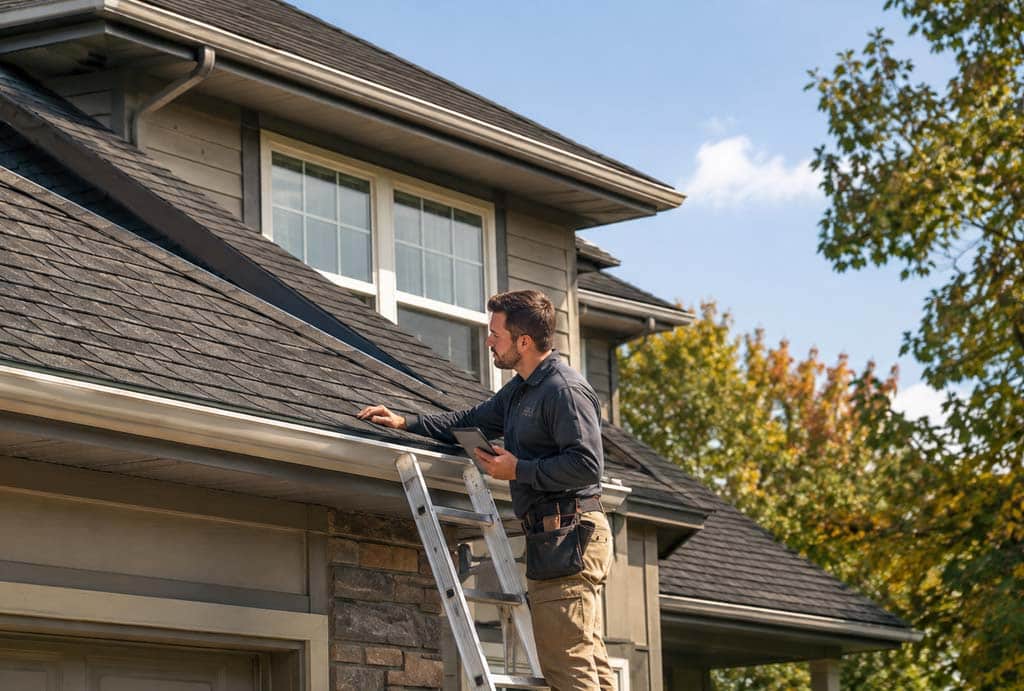
A professional roof inspection evaluates the visible roofing materials, flashing, roof penetrations, drainage system, roof edges, structural warning signs, and accessible attic areas. The goal is to identify existing damage, developing problems, and maintenance needs before they result in a leak or more expensive repair.
For Indianapolis homeowners, early fall is an especially valuable time to schedule an inspection. Summer thunderstorms, hail, wind, heat, and heavy rain can leave damage behind. Finding those problems in September provides time to complete necessary work before freezing temperatures, snow, and repeated freeze-thaw cycles arrive.
Why Schedule a Fall Roof Inspection in Indianapolis?
A roof does not need to be actively leaking to have a problem. Lifted shingles, loose flashing, deteriorated pipe boots, exposed fasteners, and clogged gutters can allow water to enter once conditions worsen.
During a professional roof inspection, we look at the roofing system as a whole. That is important because the location of a ceiling stain does not always identify where water entered. Water can travel along roof decking, rafters, insulation, and other building materials before becoming visible inside your home.
A fall inspection gives you an opportunity to address small problems while the weather is still favorable for repairs.
Roofing Materials and Shingle Condition
The roof surface is one of the first areas evaluated. On an asphalt-shingle roof, an inspector looks for:
- Missing, cracked, lifted, or curled shingles
- Areas with significant granule loss
- Exposed or improperly placed fasteners
- Nail pops that are lifting shingles
- Uneven wear or possible storm damage
- Previous repairs that may be failing
- Moss, algae, or debris that may be holding moisture
Some wear is normal as shingles age. The purpose of the inspection is to determine whether a condition is cosmetic, limited to one repairable area, or part of a larger pattern of deterioration.
Flashing, Chimneys, Vents, and Other Penetrations
Many roof leaks begin at transitions rather than in the middle of the shingles. Chimneys, skylights, plumbing vents, valleys, dormers, and wall-to-roof connections all require flashing or another method of directing water away from the opening.
An inspector checks these areas for rust, movement, gaps, cracked sealant, loose metal, and deteriorated pipe boots. Even a small opening can become a leak during wind-driven rain or when snow and ice remain on the roof.
Professional home-inspection standards also identify roofing materials, drainage, flashing, skylights, chimneys, and penetrations as important roof components to evaluate. The American Society of Home Inspectors’ Standards of Practice provides a useful overview of these areas.
Gutters, Downspouts, and Roof Edges
Your gutters are part of the roof’s water-management system. During a fall inspection, we look for debris, sagging sections, loose attachments, improper drainage, damaged fascia, and signs that water has been overflowing or backing up at the roof edge.
This is particularly important as Indianapolis moves into leaf season. Clogged or damaged gutters can allow water to collect near the eaves, soak fascia boards, and contribute to winter ice buildup.
The inspection should also include the soffits, fascia, drip edge, and other visible roof-edge components. Deterioration in these areas may indicate long-term moisture exposure or ventilation problems.
Roofline and Structural Warning Signs
A professional inspection includes reviewing the overall roofline for visible dips, waves, or sagging areas. These conditions may be related to deteriorated decking, moisture damage, framing movement, excessive weight, or an older installation.
Not every uneven area represents an immediate structural emergency, but it should not be ignored. If we identify a concern that requires additional evaluation, we explain what was observed and what the appropriate next step should be.
Attic, Insulation, and Ventilation
When the attic is safely accessible, it can provide valuable information that is not visible from outside. An attic evaluation may identify:
- Water stains or active moisture
- Darkened or deteriorated roof decking
- Wet or compressed insulation
- Mold-like growth or musty odors
- Daylight entering through an opening
- Inadequate or blocked ventilation
- Bathroom or dryer exhaust terminating inside the attic
Insulation, ventilation, and air sealing work together to control heat and moisture. The U.S. Department of Energy’s Consumer Guide to Durable Attics explains how roof leaks, failed flashing, indoor moisture, and improper ventilation can affect attic durability.
If the attic has uneven temperatures, moisture, or inadequate insulation, Stay Dry can also evaluate your home’s attic insulation and roof ventilation.
What Should You Receive After the Inspection?
A useful inspection should leave you with a clear understanding of the roof’s condition. You should know what was found, which issues require attention, what can be monitored, and whether the recommended work involves maintenance, roof repair, or eventual roof replacement.
One damaged component does not automatically mean the entire roof needs to be replaced. Likewise, a roof that looks acceptable from the ground may still have problems around flashing, penetrations, or in the attic.
At Stay Dry Roofing, our goal is to explain the evidence and help you make an informed decision without creating unnecessary pressure.
Schedule Your Indianapolis Fall Roof Inspection
September is a practical time to find out how your roof handled summer and whether it is ready for another Indiana winter. An inspection can identify repairable problems, support future budgeting, and help reduce the possibility of an unexpected winter leak.
Stay Dry Roofing provides professional roof inspections throughout Indianapolis and surrounding communities, including Carmel, Fishers, Noblesville, Brownsburg, Greenwood, and Plainfield. Contact our team to schedule an inspection and receive clear recommendations based on your roof’s actual condition.
Frequently Asked Questions
Should I have my roof inspected even if it is not leaking?
Yes. Many roofing problems begin before water becomes visible inside the home. An inspection may identify lifted shingles, damaged flashing, deteriorated sealants, drainage problems, or early moisture evidence.
When should Indianapolis homeowners schedule a roof inspection?
A roof should generally be inspected after severe weather, when visible damage appears, before buying or selling a home, or when an aging roof’s condition is uncertain. Early fall is also a useful time to prepare for winter.
Does a roof inspection include the attic?
It should include accessible attic areas when conditions allow safe entry. The attic may reveal moisture, damaged decking, inadequate ventilation, wet insulation, or other conditions that are not visible from outside.
Can an inspection determine whether I need repair or replacement?
An inspection provides the information needed to make that decision. Isolated damage may be repairable, while widespread deterioration, recurring leaks, damaged decking, or an aging roofing system may make replacement more practical.