

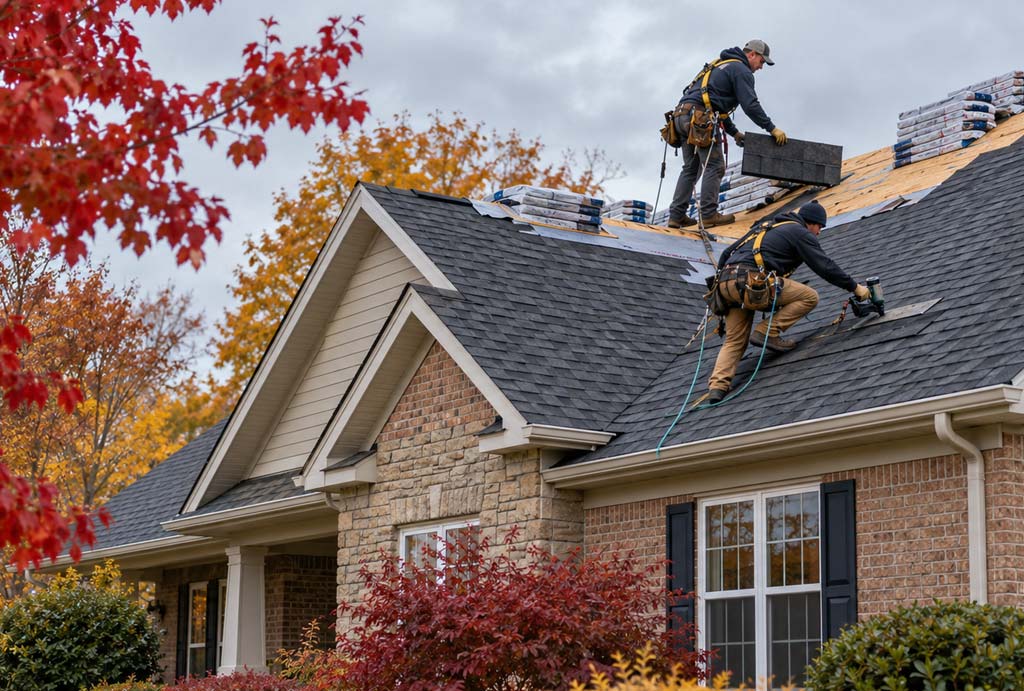
If you are planning a roof replacement this October, you may be wondering how long the installation window really lasts. The short answer is that an asphalt shingle roof can be replaced in late fall in Indianapolis when conditions allow and the crew follows the material manufacturer’s instructions. The date on the calendar does not decide whether an installation is sound. The condition of the roof deck, the forecast, the specific products, and the installation plan do.
That distinction matters in central Indiana. The National Weather Service lists October 26 as the average first freeze date for Indianapolis. Some years turn cold earlier; others offer usable installation days well into November. A contractor should evaluate the actual conditions for your home, not promise that every late-fall day will work. See the Indianapolis climate records from the National Weather Service.
What changes when shingles go on in cooler weather?
Asphalt shingles are designed to be installed as part of a complete roof system, but cool weather changes how the crew handles them. Shingles can become stiffer after sitting in the cold. Their factory-applied sealant strips also may not bond promptly without enough warmth and sunlight. A shingle that has been nailed in place is not necessarily sealed yet.
For that reason, the installer should check the instructions for the exact shingle and ridge-cap products being used. GAF, for example, recommends additional precautions for cool-weather work, including appropriate material storage and hand-sealing when the sealant cannot activate promptly. Its guidance says to aim for at least 40°F for shingle installation, while work below that temperature calls for specific precautions. That is product guidance, not a universal cutoff for every brand or every layer of the roof. Read GAF’s cool-weather installation guidance.
The roof deck must also be clean and dry. Frost, ice, dew, or a wet surface can interfere with the installation of roofing components. Underlayment and self-adhering leak barriers may have their own temperature and adhesion requirements. A responsible crew may start later in the morning, adjust the work sequence, or move the job to a better day rather than cover a damp deck.
What should your roofer explain before scheduling?
Ask for a plan that addresses the whole roof system, not just whether a nail gun will work in October. The conversation should cover:
- The forecast and stopping point. What happens if rain, frost, or an early cold snap arrives during the job? How will exposed areas be protected at the end of each day?
- The materials. Which shingles, ridge caps, underlayment, and leak barriers are specified, and what do their installation instructions require in cool weather?
- Sealing. When is hand-sealing needed, and how will the crew confirm that vulnerable shingles and ridge caps are secured?
- The deck. How will damaged decking be handled if the old roof reveals soft or rotted wood?
- The schedule. Shorter daylight and a delayed morning start can change the timeline. How many workable days are expected for your roof?
These questions are particularly useful if you have two estimates that look similar on price. An itemized proposal should make the materials and scope clear; our roof replacement estimate checklist explains what else to compare.
Should you wait until spring instead?
Sometimes waiting is reasonable. If the roof is generally sound, has no active leaks, and a targeted repair can address a small issue, you may have time to plan a replacement for another season. An inspection can help distinguish normal aging from a problem that needs action now.
Waiting becomes harder to justify when water is already entering the home, shingles are missing across several areas, repairs keep failing, or the roof deck may be deteriorating. Another season of rain and freeze-thaw weather could increase the repair scope. In that situation, the choice is not simply “replace now or ignore it.” A roofer can assess whether a permanent repair, temporary protection, or a properly planned late-fall replacement makes the most sense. Our earlier guide on whether to replace a roof before winter covers the condition-based decision in more detail.
A good installation day is more important than an early date
You do not need to rush into the first available appointment because a forecast shows a few cold nights. You do need a contractor willing to make a weather call and explain it. A dry, workable day with the right material handling is more useful than a calendar deadline that pressures a crew to install over frost or hurry through the details.
At Stay Dry Roofing, we can inspect your roof, explain whether repair or replacement is warranted, and provide a written proposal for your Indianapolis-area home. If late-fall replacement is appropriate, we will discuss the materials, weather window, and schedule before work begins. Request a roof inspection or estimate so you can make the decision with the condition of your roof in front of you.
Frequently asked questions
Is October too late to replace a roof in Indianapolis?
No. October can offer suitable installation days. The crew still needs a dry deck, a workable forecast, and an installation approach that follows the instructions for the chosen products.
Will new shingles seal if the weather is cool?
Factory sealant may take longer to activate without sufficient warmth and sunlight. Depending on the product and conditions, the manufacturer may call for hand-sealing rather than relying on the sun to do the work immediately.
Does a late-fall installation void a shingle warranty?
Cool weather by itself does not automatically void a warranty. Installation must follow the applicable manufacturer’s instructions, including any cool-weather procedures. Ask your contractor to identify the products and warranty terms in the proposal.
What if frost appears on the morning of installation?
The crew should not install roofing materials over a frosty or wet deck. A later start or rescheduled workday may be necessary so the surface is dry and the installation conditions meet product requirements.