

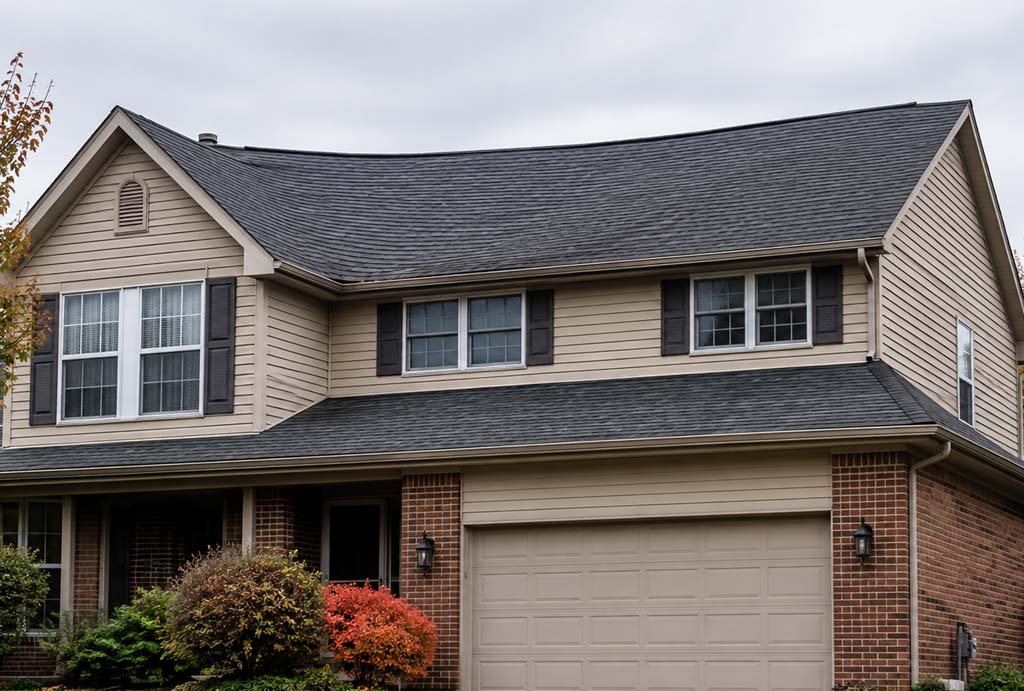
A sagging roof is more than a cosmetic concern. It can indicate damaged roof decking, weakened framing, prolonged moisture exposure, or excessive weight on the structure. Some conditions develop gradually, while others can worsen quickly after heavy rain, snow, ice, or storm damage.
Not every uneven-looking roof is structurally unsafe. Older homes may have minor variations in their rooflines, and shingles can sometimes create the appearance of waviness. However, a new or growing dip should always be professionally evaluated.
Indianapolis homeowners should pay particular attention to sagging before winter because snow and ice can add weight to a roof that may already be weakened.
What Does a Sagging Roof Look Like?
A roof may sag in one localized area or across an entire plane. The shape and location of the dip can help identify which part of the roofing system may be affected.
Possible warning signs include:
- A ridge line that curves instead of remaining straight
- A visible dip between the ridge and eaves
- A sunken area surrounding a chimney, vent, or valley
- Wavy or uneven sections of asphalt shingles
- Roof edges that appear to droop
- Soft, bowed, or stained decking visible from the attic
- Ceiling cracks or changes directly below the affected area
Homeowners may first notice the condition while standing in the yard or viewing the house from across the street. Comparing current photographs with older images of the home may help determine whether the roofline has changed.
Do not climb onto a roof to test a sagging section. Added weight could cause further movement, and weakened decking may not safely support a person.
What Causes a Residential Roof to Sag?
Several problems can produce a sagging roofline. A professional investigation should determine whether the concern begins with the roof covering, decking, framing, or another part of the home.
Long-term water damage
A small roof opening can allow water to reach the wood decking beneath the shingles. If the leak continues, the decking may swell, delaminate, decay, or lose its ability to remain flat.
Moisture can also affect rafters, trusses, fasteners, and other structural components. The visible dip may not appear until the wood has been exposed for an extended period.
This is why timely roof repair matters even when an interior leak seems minor.
Damaged or deteriorated roof decking
Roof decking creates the solid surface beneath the roofing materials. Sections can weaken because of leaks, poor attic moisture control, age, improper spacing, or previous installation problems.
A localized dip between two rafters or trusses may indicate that the decking has lost strength. Replacing shingles over weakened decking will not correct the underlying problem.
Framing problems
Rafters and engineered trusses transfer roof loads to the home’s bearing walls. The roofline may change when a framing member is cracked, undersized, improperly installed, or altered during remodeling.
Cutting a truss to create room for storage, ductwork, or mechanical equipment can change how forces move through the structure. Removing a wall or support below the roof can also contribute to movement if the work was not properly designed.
Structural framing concerns may require evaluation by a qualified structural engineer in addition to a roofing contractor.
Excessive or uneven weight
Roof structures are designed to carry expected loads, but unusual or concentrated weight can create stress. Possible sources include:
- Heavy or drifting snow
- Ice accumulation
- Multiple layers of roofing materials
- Equipment installed without proper structural planning
- Water collecting because of drainage problems
- Construction materials stored on the roof
The Building America Solution Center’s snow-load guidance advises homeowners to watch for bowing, sticking doors, cracking sounds, and changes in walls or ceilings during heavy snow events.
Movement elsewhere in the house
Roof movement can sometimes be connected to shifting walls, damaged supports, or foundation settlement. Cracks in interior finishes, doors that suddenly bind, and changes across multiple areas of the home may point to a broader structural issue.
A roofing inspection can evaluate the roof system, but concerns extending beyond it may require additional evaluation by an engineer or foundation professional.
Is a Slightly Wavy Roof Always Dangerous?
No. Minor unevenness can have less serious explanations, including older decking, visible transitions between materials, or shingles lying differently as they age.
A roof may have also settled slightly over many years without continuing to move. However, homeowners should not assume an uneven roof is harmless simply because the home is older.
The condition deserves closer attention when:
- The sag is new or becoming more noticeable
- The area is soft, wet, or stained
- Shingles are cracked or displaced
- Interior ceilings have started to bow
- Doors or windows suddenly stick
- Framing members appear split or distorted
- The change occurred after a storm or heavy snow
A professional roof inspection can help distinguish surface irregularities from damaged decking or framing.
When Is a Sagging Roof an Emergency?
A gradual roofline change should be inspected promptly. Sudden sagging accompanied by other structural warning signs requires a more immediate response.
Leave the affected area—and evacuate the home if necessary—when a sag develops during a heavy snow or ice event and is accompanied by:
- Popping, cracking, or creaking noises
- A visibly bowing ceiling
- New cracks in walls or ceilings
- Doors or windows that suddenly will not open
- Split framing members
- A severe active leak
- Rapidly changing roof movement
FEMA’s Snow Load Safety Guidance recommends prompt evacuation and evaluation by a local building authority or qualified design professional when signs of structural overstress are observed.
Do not attempt to remove heavy snow by walking on a roof that may be unstable. Emergency snow removal should be performed by qualified professionals using methods appropriate for the structure.
Can a Sagging Roof Be Repaired?
Many sagging roofs can be repaired, but the scope depends on the cause and how much of the structure has been affected.
A localized repair may involve removing shingles, replacing a damaged section of decking, correcting the leak, and restoring the roofing materials. When rafters or trusses are damaged, the repair may require an engineered plan to reinforce or replace structural members safely.
Broader work may be necessary when:
- Several decking sections have deteriorated
- Moisture damage has spread across the attic
- Multiple framing members are affected
- The roof has several aging layers
- The shingles are already near the end of their service life
- Correcting the structure requires removing a large portion of the roof
In these cases, a roof replacement may be coordinated with decking or structural repairs. Replacing the shingles alone will not straighten or strengthen damaged components underneath them.
Have a Changing Roofline Checked Before Winter
A sagging roof does not automatically mean the home is close to collapse or that the entire roof needs replacement. It does mean the roof is no longer maintaining its expected shape, and the reason should be identified.
Stay Dry Roofing evaluates roof coverings, flashing, decking, attic conditions, and signs of water entry for homeowners throughout Indianapolis, Carmel, Fishers, Greenwood, Noblesville, and surrounding Central Indiana communities.
If you notice a dip, curve, or newly uneven section, schedule an evaluation before snow and ice place additional demands on the roof.
Frequently Asked Questions
Can a sagging roof be repaired without replacing the entire roof?
Yes. If the problem is limited to one section of damaged decking or a correctable framing issue, a localized repair may be possible. Widespread deterioration may require more extensive work.
Is a small amount of roof sag normal in an older home?
Some older homes have minor roofline variations that remain stable for years. A new, worsening, wet, or sharply defined sag should not be dismissed as normal aging.
Will wet roof decking straighten after it dries?
Drying does not guarantee that swollen, delaminated, or decayed decking will regain its original shape or strength. Damaged decking should be evaluated and replaced when it can no longer provide a sound roofing surface.
Does homeowners insurance cover a sagging roof?
Coverage depends on the cause and the policy. Sudden damage from a covered storm event may be treated differently from deterioration caused by age, neglected maintenance, or a long-term leak. Document the condition and contact the insurer for a coverage decision.
Who should inspect a sagging roof?
A qualified roofing contractor can examine the shingles, decking, flashing, leaks, and attic conditions. If damaged rafters, trusses, bearing walls, or other structural components are suspected, a structural engineer may also be needed.