

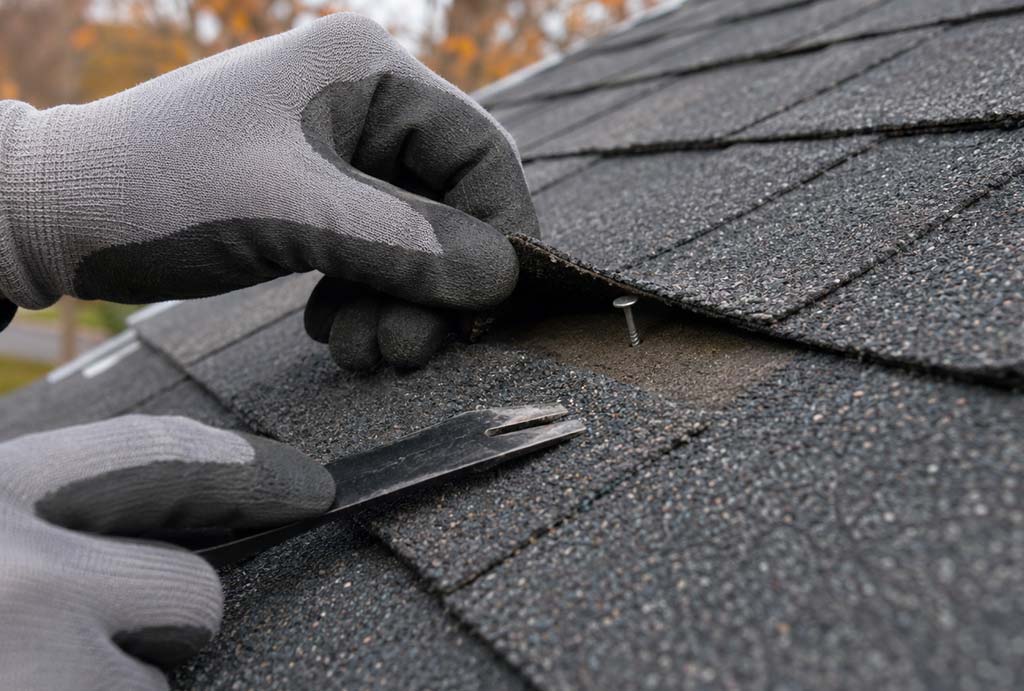
A roofing nail pop occurs when a fastener rises above the roof deck or was never driven flush during installation. As the nail moves upward, it can lift the asphalt shingle above it, break the shingle’s seal, or eventually puncture the shingle.
Although one raised nail may look minor, it can create an entry point for water and make nearby shingles more vulnerable to wind. Addressing the problem early may prevent damaged decking, wet insulation, and interior leaks.
What Does a Roof Nail Pop Look Like?
From the ground, a nail pop may resemble a small bump beneath a shingle. In other cases, homeowners notice a raised shingle edge, a circular wear spot, or an exposed nail head.
Common warning signs include:
- A small, localized bump in an otherwise flat roof surface
- A shingle tab that no longer lies flush
- An exposed or rusty nail head
- Cracking or granule loss above a raised fastener
- A recurring ceiling stain after wind-driven rain
Not every lifted shingle is caused by a nail pop. Wind damage, poor sealing, installation problems, and aging shingles can produce similar symptoms. A professional roof inspection can identify what is actually happening without relying on appearances alone.
Why Do Roofing Nails Back Out?
Roofing nails can rise for several reasons. Finding the cause matters because simply pushing the nail back down may not provide a lasting repair.
The nail was underdriven or installed crooked
A properly installed roofing nail should sit flush with the shingle without cutting through it. An underdriven or angled nail may leave space beneath its head from the beginning.
The GAF Steep-Slope Pro Field Guide explains that underdriven nails and improper fastener placement can interfere with how shingles lie and reduce their ability to remain secure.
The fastener did not penetrate the decking properly
A nail that is too short may not develop enough holding strength in the roof deck. Problems can also occur when a nail lands in a decking gap, damaged wood, or an area that cannot hold the fastener securely.
As the roof experiences normal movement, the poorly secured nail may gradually work upward.
The roof decking is moving or deteriorating
Wood decking expands and contracts as temperature and moisture levels change. Normal seasonal movement does not automatically produce nail pops, but it can reveal a weak fastener or deteriorated section of decking.
If several nails are backing out in the same area, the underlying wood may need to be examined for moisture damage, delamination, or inadequate fastening.
The shingles were fastened in the wrong location
Manufacturers specify a nailing zone for each shingle. Nails driven too high or outside the designated area may fail to secure both shingle layers properly. This is different from a classic nail pop, but it can lead to loose shingles and reduced wind resistance.
Quality installation is especially important for architectural asphalt shingles, which depend on correct placement and fastening to perform as designed.
Can a Raised Roofing Nail Cause a Leak?
Yes. A nail pop can contribute to a leak in several ways.
The fastener may push against the shingle above it until the shingle cracks or develops a hole. A raised nail can also prevent a shingle from lying flat, allowing wind-driven rain beneath the lifted edge. If the nail becomes exposed, water may travel along the fastener and into the decking.
InspectAPedia’s guidance on shingle nail pops also notes that raised fasteners can damage overlying shingles and increase their exposure to water and wind.
A leak may not appear immediately. Water can move along decking or framing before reaching a visible ceiling, so the interior stain may not be directly below the damaged nail.
Should You Hammer a Nail Pop Back Down?
Hammering the nail down and covering it with roof cement may look like an easy solution, but it often fails to address the cause.
The nail may rise again if it is loose, improperly positioned, or driven into damaged decking. Hammering it down can also leave an existing hole, crack the shingle, or conceal damage that should be repaired.
Walking on a sloped roof creates an additional fall risk and can damage shingles, especially when they are cold, wet, or brittle. It is safer to have a qualified roofer determine whether the issue is limited to one fastener or part of a broader pattern.
How Do Professional Roofers Repair Nail Pops?
The appropriate repair depends on the condition of the shingle, nail, and roof deck. A professional repair may include:
- Carefully accessing the affected fastener without unnecessarily damaging nearby shingles.
- Removing the loose, crooked, or misplaced nail.
- Examining the decking for deterioration or a failed fastening point.
- Replacing a punctured, cracked, or badly worn shingle.
- Installing a new fastener in the correct location and sealing the repair according to the roofing system’s requirements.
- Checking the surrounding area for additional raised nails or loose shingles.
If the problem is isolated, a targeted roof repair may be all that is necessary. Multiple nail pops across several slopes may justify a more complete evaluation of the installation, decking, and remaining roof life.
They do not automatically mean the entire roof must be replaced. The roof’s age, shingle condition, leak history, and extent of the fastening problem should guide that decision. If damage is widespread, Stay Dry Roofing can explain whether repair or roof replacement offers better long-term value.
Have a Raised Shingle Checked Before Winter
September is a good time for Indianapolis homeowners to address raised shingles and suspected nail pops. Completing repairs before colder weather arrives can help prevent a small opening from becoming a winter leak.
Stay Dry Roofing serves homeowners throughout Indianapolis and surrounding communities. If you notice a roof bump, exposed fastener, or unexplained water stain, schedule an inspection before attempting to repair it yourself.
Frequently Asked Questions
Can a single nail pop cause a roof leak?
Yes. One raised nail can puncture the shingle above it, leave a fastener hole exposed, or lift a shingle enough for wind-driven rain to enter. However, not every nail pop will leak immediately.
Do nail pops mean my roof was installed incorrectly?
Sometimes, but not always. Underdriven nails, improper placement, and short fasteners can be installation problems. Decking deterioration or movement can also cause a correctly installed fastener to lose its grip.
Can roof sealant permanently fix a nail pop?
Sealant alone is usually not a complete repair. It may temporarily cover the area, but it does not correct a loose fastener, damaged shingle, or weak section of decking.
Do multiple nail pops mean I need a new roof?
Not necessarily. A roofer should evaluate how many areas are affected, the roof’s age, the condition of the shingles, and whether the decking is sound. Localized problems may be repairable, while widespread fastening failures may require a broader solution.