

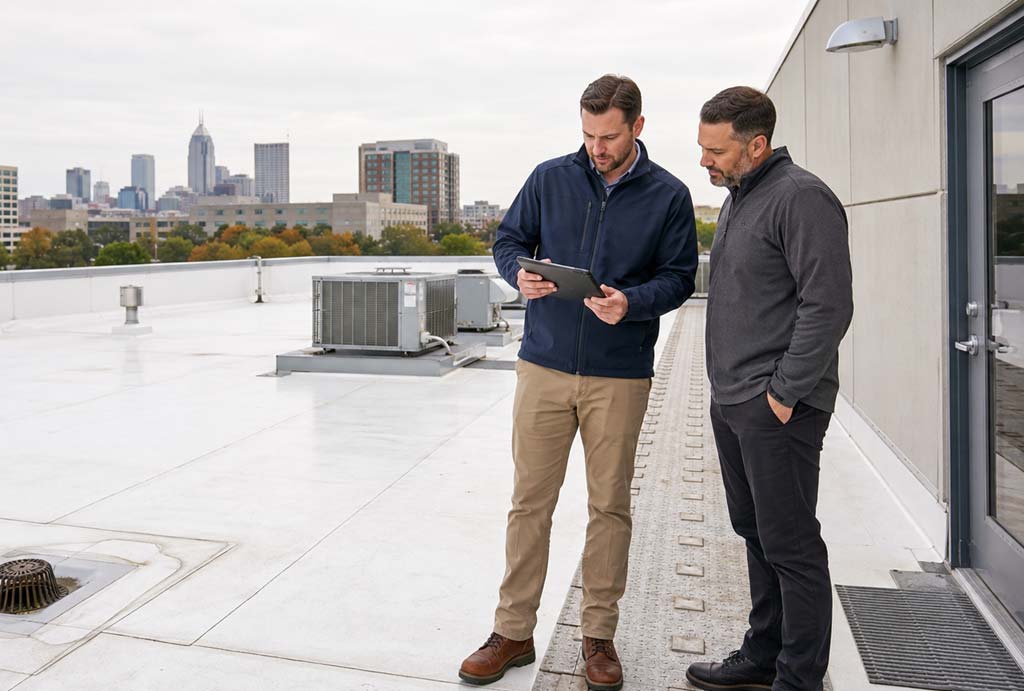
A commercial roof inspection report should identify the roofing system, document visible conditions with photographs, explain drainage and moisture concerns, rank recommended actions by urgency, and provide practical guidance for repairs, maintenance, or replacement planning.
For building owners and property managers, the report should be more than a list of roofing terms. It should provide information that can be used to approve work, prepare budgets, track developing conditions, support warranty compliance, and communicate with association boards or other decision-makers.
Why the Inspection Report Matters
A commercial roof may cover thousands of square feet and contain multiple drains, seams, roof sections, equipment curbs, penetrations, and previous repairs. A verbal summary given at the end of an inspection is easy to misunderstand or forget.
A written report creates a record of the roof’s condition on a specific date. When reports are retained over time, they can show whether a condition is stable, worsening, or returning after previous work.
Industry guidance from the National Roofing Contractors Association emphasizes scheduled inspection and maintenance programs as important tools for keeping single-ply roofs watertight and performing properly.
1. Basic Roof and Building Information
The beginning of the report should identify what was inspected. This normally includes:
- Property address and building identification
- Inspection date and weather conditions
- Roof system or membrane type
- Approximate roof area
- Number of roof sections or elevations
- Known installation date or estimated age
- Inspector’s name and company
- Areas that could not be safely accessed
This information prevents confusion on multifamily, industrial, retail, or institutional properties with several buildings or roof sections.
2. A Roof Plan or Organized Location System
A useful report should make it easy to locate each finding. On a smaller building, photographs and written location descriptions may be enough. Larger roofs may require a roof plan divided into sections or marked with drains, HVAC units, entrances, elevations, and other reference points.
Instead of stating that an open seam was found “near an HVAC unit,” the report should identify the roof section and equipment location. Accurate locations make future repairs faster and help teams determine whether a recurring leak is connected to a previously documented condition.
3. Findings for Major Roofing Components
The report should explain the condition of the components that control water movement and protect the building. Depending on the roofing system, this may include:
- TPO, EPDM, PVC, modified bitumen, built-up roofing, coatings, or metal
- Seams, fasteners, and membrane attachment
- Wall flashing, coping, and roof edges
- HVAC curbs, vents, pipes, skylights, and other penetrations
- Roof drains, scuppers, gutters, and downspouts
- Pitch pans, sealants, and previous repair areas
- Walkway pads and areas exposed to regular foot traffic
Stay Dry Roofing offers commercial roofing services for all major low-slope and steep-slope systems used throughout Indianapolis.
4. Clear Photographic Documentation
Photographs should show both the overall location and the condition being discussed. A close-up photograph of a damaged seam has limited value if no one can determine where that seam is located.
Captions should explain what the photograph shows, why it matters, and whether action is recommended. Photographs also establish a condition baseline that can be compared with later inspections.
5. Drainage and Ponding-Water Concerns
A commercial roof inspection report should document whether water is moving toward drains and scuppers as intended. It should identify clogged drains, debris, staining, low areas, deteriorated drain seals, or evidence that water remains on the roof.
Drainage findings are particularly important during fall in Indianapolis. Leaves and debris can obstruct roof drainage before freezing temperatures arrive. A commercial roof maintenance plan can address recurring debris, drainage, seam, and flashing concerns before they become emergency leaks.
6. Visible Findings Versus Suspected Hidden Conditions
A visual inspection cannot always determine what is happening beneath the membrane. Soft areas, recurring leaks, surface staining, open seams, or widespread repairs may suggest moisture within the roof assembly, but additional testing may be needed to establish its extent.
The report should clearly separate confirmed observations from suspected concealed conditions. It may recommend infrared thermography, another non-destructive moisture survey, test cuts, or core samples when the result would affect a repair, coating, or replacement decision.
The International Institute of Building Enclosure Consultants explains that visual reviews, infrared thermography, moisture surveys, and electronic leak detection can serve different purposes when evaluating roof performance. Not every inspection requires advanced testing, and the report should explain why a particular method is or is not recommended.
7. Prioritized Recommendations and Planning Guidance
Recommendations should be organized by urgency rather than presented as one undifferentiated repair list. A helpful report separates:
- Conditions requiring immediate attention
- Repairs that should be completed before winter
- Routine maintenance items
- Areas to monitor during future inspections
- Longer-term restoration or replacement needs
The report should also explain the reasoning behind each recommendation. An isolated puncture may require a focused repair, while widespread wet insulation, seam failure, or deteriorated flashing may require broader action.
For roofs approaching the end of service, inspection findings can also support commercial roof replacement budgeting. Building owners should receive a realistic planning direction, not an unsupported promise about the roof’s exact remaining life.
Turn the Report Into a Roof Management Record
Keep each report with roof warranties, repair invoices, maintenance records, leak histories, photographs, and information about rooftop equipment work. Together, these documents create a useful history for future budgeting, warranty questions, property transactions, and contractor evaluations.
Stay Dry Roofing helps commercial property owners, facility managers, churches, associations, and multifamily communities throughout Indianapolis understand what their roofs need now and what can be planned for later. Contact us to schedule a commercial roof inspection and receive clear, practical recommendations based on the building’s actual condition.
Frequently Asked Questions
What records should I provide before a commercial roof inspection?
Provide available warranties, previous reports, repair invoices, leak records, roof plans, installation information, and records of HVAC or other rooftop work. These documents help the inspector understand the roof’s history.
Does every commercial roof inspection include a moisture scan?
No. A standard inspection is generally visual. Moisture scanning or physical testing may be recommended when hidden moisture is suspected or when the results would affect a major repair, coating, or replacement decision.
Can an inspection report be used for a warranty or insurance claim?
It can provide valuable documentation, but it does not automatically establish coverage. Warranty administrators and insurance carriers may require specific forms, testing, photographs, timelines, or inspections by an approved party.
Should multiple buildings be included in one report?
They can be, but every building and roof section should be clearly identified. Findings, photographs, and recommendations must be assigned to the correct location so owners can budget and authorize work accurately.