

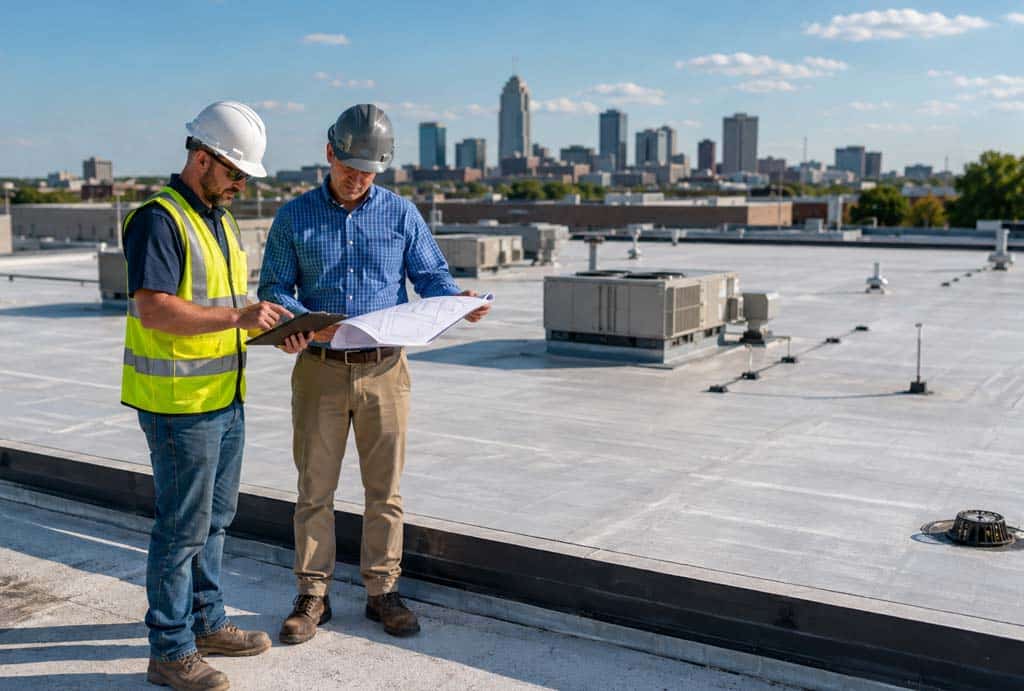
A commercial roof replacement can be one of the largest capital expenses a property owner faces. Starting the planning process early gives you time to understand the roof’s condition, compare appropriate systems, secure funding, and avoid rushed decisions after a major leak.
For Indianapolis-area businesses, churches, associations, and property management companies, a reliable 2027 roof budget should cover more than membrane and labor costs. It should also account for insulation, drainage, rooftop equipment, permits, warranties, and possible damage hidden beneath the existing roof.
Here is how we recommend building a realistic commercial roof replacement budget.
1. Begin With a Professional Roof Inspection
Do not base your budget only on the roof’s age or the price paid for its last repair. Two commercial roofs of the same age can have very different conditions depending on installation quality, maintenance, drainage, storm exposure, and building use.
A professional commercial roof inspection should evaluate:
- Membrane seams, punctures, cracks, and surface deterioration
- Flashing around walls, curbs, vents, and HVAC equipment
- Roof edges, coping, and termination points
- Drains, scuppers, gutters, and ponding-water areas
- Insulation and signs of trapped moisture
- Previous repairs and recurring leak locations
- The condition of the roof deck, when accessible
The inspection should help determine whether replacement is necessary in 2027 or whether repairs and maintenance could safely extend the roof’s service life.
2. Confirm the Roof’s Actual Size and Complexity
Commercial roof estimates are often calculated partly by square footage, but size alone does not determine the final price. A simple, open warehouse roof may cost less to replace than a smaller roof filled with equipment and penetrations.
Budget considerations include roof height, access, material staging, safety requirements, occupied spaces, and the number of HVAC units, pipes, vents, skylights, drains, and adjoining walls.
Ask whether the project will require cranes, special equipment, temporary access routes, or work scheduled around tenants, worship services, customers, or manufacturing operations. These details can affect both labor costs and the project timeline.
3. Compare the Right Roofing Systems
Your preliminary budget should be based on a roofing system that fits the building—not simply the least expensive material available.
Stay Dry Roofing installs several commercial roofing systems for low-slope and flat buildings. The right recommendation may depend on drainage, foot traffic, chemical exposure, insulation requirements, expected ownership period, and the roof’s existing construction.
A complete proposal should clearly identify the membrane or system, insulation, fastening or attachment method, flashings, accessories, and warranty. This makes it easier for financial decision-makers to understand what the proposed investment includes.
4. Account for Insulation and Energy Requirements
Insulation is a major part of many commercial roof replacement budgets. Its condition may not be fully visible until the existing roofing system is removed or tested for moisture.
Replacing wet or damaged insulation can increase the project cost, but covering it can trap moisture and reduce the performance of the new roof. Depending on the project, additional insulation may also be required to meet applicable energy standards.
The U.S. Department of Energy explains that certain cool roofing products may reduce roof surface temperatures and cooling demands. However, expected savings depend on the building, insulation, roof color, HVAC system, and local climate.
Indiana requirements and local enforcement can also affect the project. The state’s Code Enforcement Section works with local building departments on construction and fire-safety requirements. Your roofing contractor should identify likely permit and code considerations before work begins.
5. Include Drainage and Rooftop Equipment
A new membrane cannot correct every underlying problem. If water regularly ponds because of poor slopes, clogged drains, undersized drainage components, or settled insulation, those conditions may need to be addressed during replacement.
The budget may also need to include:
- Drain or scupper modifications
- Tapered insulation to improve water flow
- New curbs beneath rooftop equipment
- Removal of abandoned penetrations
- Sheet-metal coping or edge replacement
- Coordination with HVAC, electrical, or plumbing contractors
Identifying these items early reduces the chance of last-minute change orders.
6. Establish a Contingency Fund
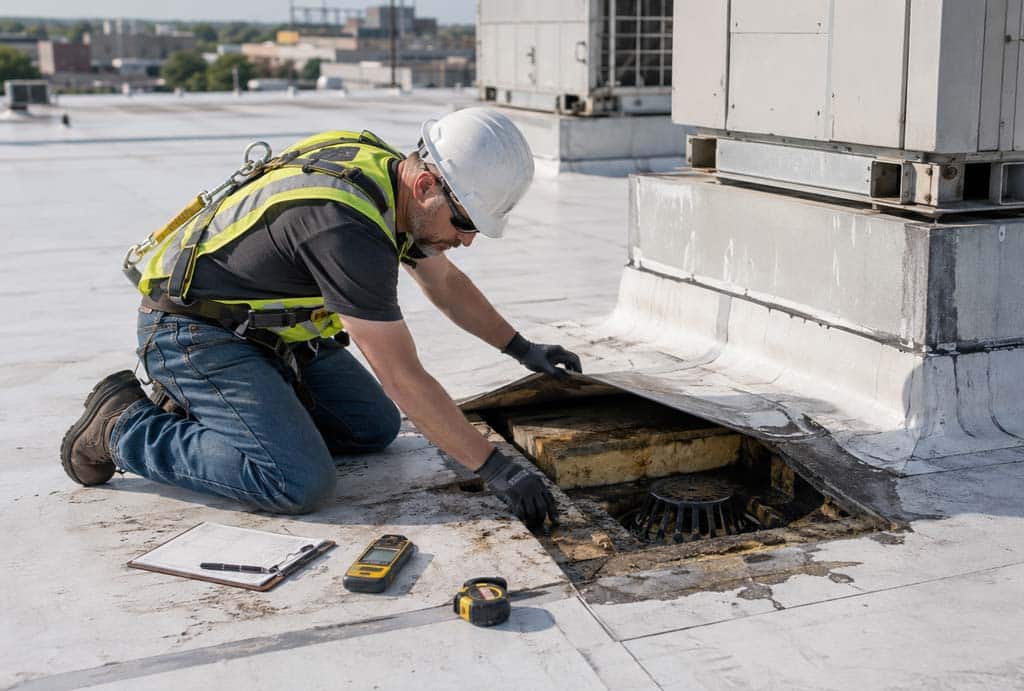
Even a thorough inspection cannot always reveal every condition beneath an existing commercial roof. Wet insulation, damaged decking, concealed structural deterioration, or multiple roofing layers may only become clear after work starts.
Consider setting aside a contingency of approximately 10% to 20%, depending on the roof’s condition and how much information is available. Older roofs with limited records or a history of leaks may justify a larger reserve.
Your contractor should explain how unexpected conditions will be documented, priced, and approved during the project.
7. Plan the Timing and Funding Strategy
Planning during the 2026 capital-budget season gives your organization more flexibility for a 2027 project. It creates time to review proposals, obtain board approval, evaluate financing, coordinate tenants, and choose an appropriate installation period.
Continue following a documented commercial roof maintenance plan while waiting for replacement. Preventive work may reduce emergency leaks and protect the interior until construction begins.
If the roof is already leaking, do not postpone an evaluation solely because replacement is scheduled for next year. Follow these commercial roof leak response steps and arrange an inspection before water damage spreads.
Build Your 2027 Commercial Roofing Budget With Better Information
A dependable commercial roof replacement budget starts with evidence. You need to know the roof’s condition, system options, insulation needs, drainage concerns, access requirements, and possible hidden costs.
Stay Dry Roofing helps commercial property owners, facility managers, churches, associations, and management companies throughout Indianapolis and nearby Indiana communities plan roof projects with greater clarity. Contact our team to schedule an inspection and begin preparing your 2027 commercial roofing budget.
Frequently Asked Questions
How much should I budget for a commercial roof replacement in 2027?
The cost depends on roof size, system type, insulation, access, drainage, penetrations, tear-off requirements, and deck condition. A site-specific inspection is the best way to establish a useful planning figure.
How far in advance should I plan a commercial roof replacement?
Begin planning six to twelve months before the preferred installation period. Large, occupied, or multi-building properties may require additional time for approvals, financing, engineering, and tenant coordination.
Should my roof replacement budget include a contingency?
Yes. A contingency of approximately 10% to 20% can help cover wet insulation, damaged decking, or other concealed conditions. The appropriate percentage depends on the roof’s history and available inspection information.
Can a commercial roof be repaired instead of replaced?
Possibly. Repairs may be appropriate when damage is limited and the roof remains serviceable. Widespread deterioration, saturated insulation, recurring leaks, or extensive seam failure can make replacement the better long-term option.
What documents should I request for capital-budget approval?
Request an inspection report, roof measurements, photographs, proposed scope, system specifications, warranty information, projected schedule, exclusions, and allowances for uncertain conditions. These documents help decision-makers compare the full scope of each proposal.