

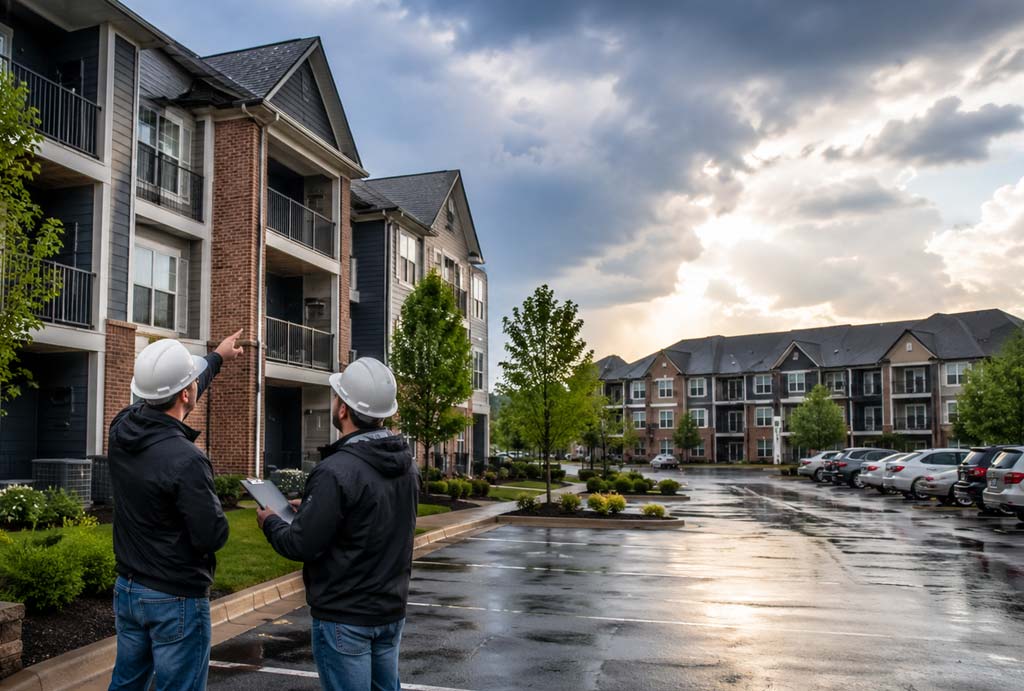
Summer storms can be tough on any roof, but multifamily properties have even more at stake. When an apartment building, condo community, senior living property, or HOA-managed building has roof damage, the problem can affect more than one unit, more than one tenant, and more than one part of the property.
A small roof leak can turn into ceiling stains, resident complaints, damaged insulation, wet drywall, mold concerns, common-area repairs, and emergency maintenance calls. For property managers and board members, that means more stress, more coordination, and more pressure to get the issue handled quickly.
At Stay Dry Roofing, we help multifamily property owners, HOAs, condo associations, apartment managers, and commercial property teams throughout Indianapolis and Central Indiana protect their buildings with roof inspections, roof repair, storm damage repair, flat roof repair, shingle roof repair, and roof replacement when needed.
July is a smart time to pay close attention to roof maintenance. Heavy rain, wind, hail, heat, humidity, and clogged drainage systems can all expose weak spots. The sooner those issues are found, the easier they usually are to fix.
Why Multifamily Roof Maintenance Matters in July
July storms in Indianapolis can move through fast. Wind can lift shingles, hail can damage the roof surface, and heavy rain can find small openings around flashing, vents, roof edges, and drainage areas.
For multifamily buildings, one small issue can spread quickly. A leak over one unit may travel behind walls or across attic spaces before showing up somewhere else. A flat roof drainage problem may affect multiple interior areas. A missing shingle on one building may be a sign that other buildings in the community were damaged too.
That is why summer roof maintenance is not just about fixing what is already leaking. It is about staying ahead of damage before residents start calling.
Start With a Post-Storm Roof Inspection
After a strong summer storm, property managers should schedule a roof inspection as soon as possible, especially if hail, high winds, or falling branches were reported in the area.
You do not need to wait until water is dripping into a unit. In fact, waiting for a leak is usually the expensive way to find out something is wrong.
A roof inspection should check for:
- Missing, lifted, curled, or damaged shingles
- Hail marks, granule loss, or bruised shingles
- Loose or damaged flashing
- Cracked pipe boots or vent seals
- Damaged gutters, downspouts, and roof edges
- Flat roof ponding water or membrane damage
- Debris from tree limbs or storm winds
- Soft spots, sagging areas, or signs of trapped moisture
For apartment communities, condos, and HOAs, it is also smart to inspect more than one building. If one roof was hit by hail or wind, nearby buildings may have damage too.
Pay Attention to Resident Leak Reports
Resident reports are often the first sign that a roofing problem exists. A tenant may notice a ceiling stain, a damp smell, bubbling paint, or water near a window, vent, or closet.
Do not ignore small reports. Even if the stain looks minor, the source may be larger than it appears. Water can travel through insulation, framing, attic spaces, and walls before it becomes visible inside a unit.
Property managers should document each report carefully. Note the unit number, building number, room location, date, weather conditions, and whether the issue happened during heavy rain, wind, or after a storm.
This information helps the roofing team narrow down possible leak sources and determine whether the issue is isolated or part of a larger roofing problem.
Check Gutters, Downspouts, and Drainage Areas
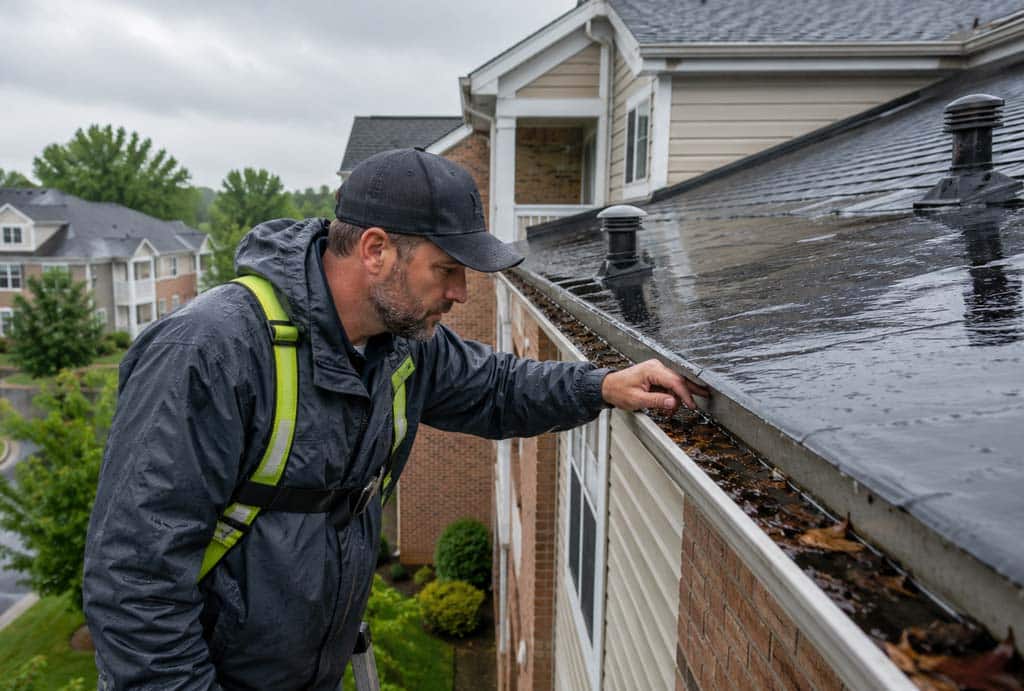
Drainage is one of the most important parts of multifamily roof maintenance. When gutters, downspouts, scuppers, or roof drains are clogged, water can back up and create roof leaks, fascia damage, siding damage, foundation issues, and ice-related problems later in the year.
In July, gutters and drainage systems can clog with leaves, twigs, roofing granules, storm debris, and debris from nearby trees.
For multifamily properties, drainage problems are common around:
- Long gutter runs
- Flat roof drains
- Downspout exits
- Common-area buildings
- Clubhouses and leasing offices
- Garage buildings and carports
- Roof valleys and low-slope sections
If water is spilling over gutters, pooling near the building, or sitting on a flat roof after rain, the drainage system should be inspected.
Do Not Forget Flat Roof Areas
Many multifamily properties have a mix of roof types. Some buildings may have asphalt shingles, while clubhouses, garages, breezeways, office areas, or commercial sections may have flat or low-slope roofing.
Flat roof areas need special attention after summer storms. Unlike pitched roofs, flat roofs rely heavily on proper drainage, sealed seams, flashing, and roof membrane condition.
Common flat roof maintenance issues include ponding water, open seams, punctures, damaged flashing, clogged drains, and leaks around rooftop equipment. These problems can get worse fast if water sits on the roof after every storm.
If your multifamily property has TPO, EPDM, PVC, modified bitumen, roof coatings, or another low-slope system, it should be inspected regularly and especially after heavy rain or hail.
Look Closely at Flashing and Roof Penetrations
Many roof leaks start around details, not in the middle of the roof. Flashing, vents, chimneys, skylights, pipe boots, exhaust fans, and roof-to-wall transitions all create places where water can enter if materials are loose, cracked, or worn.
On multifamily properties, these areas can be repeated across many buildings. If one pipe boot or flashing detail is failing, others may be aging in the same way.
This is where preventive maintenance can save a lot of time. Replacing a cracked pipe boot or repairing flashing is much easier than dealing with damaged drywall, wet insulation, and resident complaints later.
Keep a Roof Maintenance Log
A roof maintenance log is one of the simplest ways property managers can stay organized. It does not need to be complicated. The goal is to track what happened, where it happened, and what was done about it.
A good roof maintenance log should include:
- Inspection dates
- Storm dates
- Leak reports by building and unit
- Photos of roof damage or interior stains
- Completed repairs
- Areas that need follow-up
- Gutter or drainage maintenance
- Notes from roofing professionals
This helps property managers, HOA boards, and ownership groups make better decisions. It also helps identify repeat problem areas before they become major repair projects.
When Roof Repair May Be Enough
Not every multifamily roofing issue requires full roof replacement. Many problems can be repaired when they are caught early.
A roof repair may be enough if damage is limited to a small section, a few shingles, one flashing area, one vent, one leak source, or a manageable flat roof issue. Quick repairs can help extend the life of the roof and reduce resident disruption.
However, larger action may be needed if there are repeated leaks, widespread hail damage, aging shingles, failing flat roof seams, major drainage problems, soft decking, or multiple buildings with similar roof issues.
The best first step is a professional inspection. Stay Dry Roofing can help determine whether repair, maintenance, or replacement makes the most sense for the property.
Why Local Roofing Help Matters
Multifamily roofing requires organization, communication, and experience. Property managers need a roofing company that understands scheduling, resident disruption, common areas, multiple buildings, storm damage, and ongoing maintenance needs.
Stay Dry Roofing works throughout Indianapolis and surrounding areas, including Carmel, Fishers, Noblesville, Greenwood, Avon, Brownsburg, Plainfield, Westfield, Zionsville, and nearby Central Indiana communities.
We help property teams understand the condition of their roofs, prioritize repairs, and plan ahead so small problems do not turn into larger expenses.
Common Questions About Multifamily Roof Maintenance
How often should a multifamily property have the roof inspected?
A multifamily property should have the roof inspected at least once a year and after major storms. Properties with older roofs, flat roof areas, large trees, or repeated leak reports may need more frequent inspections to stay ahead of damage.
What are the most common roof problems for apartments and condos?
Common problems include missing shingles, damaged flashing, clogged gutters, poor drainage, flat roof ponding water, cracked pipe boots, hail damage, wind damage, and leaks around vents or rooftop equipment. These issues can affect one unit or multiple areas of a property.
Should property managers inspect every building after a storm?
Yes, especially if the property has multiple buildings close together. If hail, wind, or falling debris damaged one building, nearby roofs may have similar damage. A full property inspection helps prevent missed issues.
Is a small ceiling stain a serious roof problem?
It can be. A small stain may be the first visible sign of a larger leak above the ceiling or inside the wall. Property managers should document the issue and schedule a roof inspection before the damage spreads.
Does Stay Dry Roofing help HOAs and property managers?
Yes. Stay Dry Roofing helps multifamily properties, condos, HOAs, apartments, and commercial buildings with roof inspections, roof repair, storm damage repair, flat roof repair, and roof replacement in Indianapolis and surrounding Central Indiana areas.
Schedule Multifamily Roof Maintenance in Indianapolis
If your apartment community, condo association, HOA, senior living property, or multifamily building needs roof maintenance after summer storms, Stay Dry Roofing is here to help.
We can inspect your roofs, identify storm damage, check drainage systems, repair leaks, and help you plan the best next step for your property.
Call Stay Dry Roofing today to schedule multifamily roof maintenance or a roof inspection in Indianapolis or the surrounding Central Indiana area.