

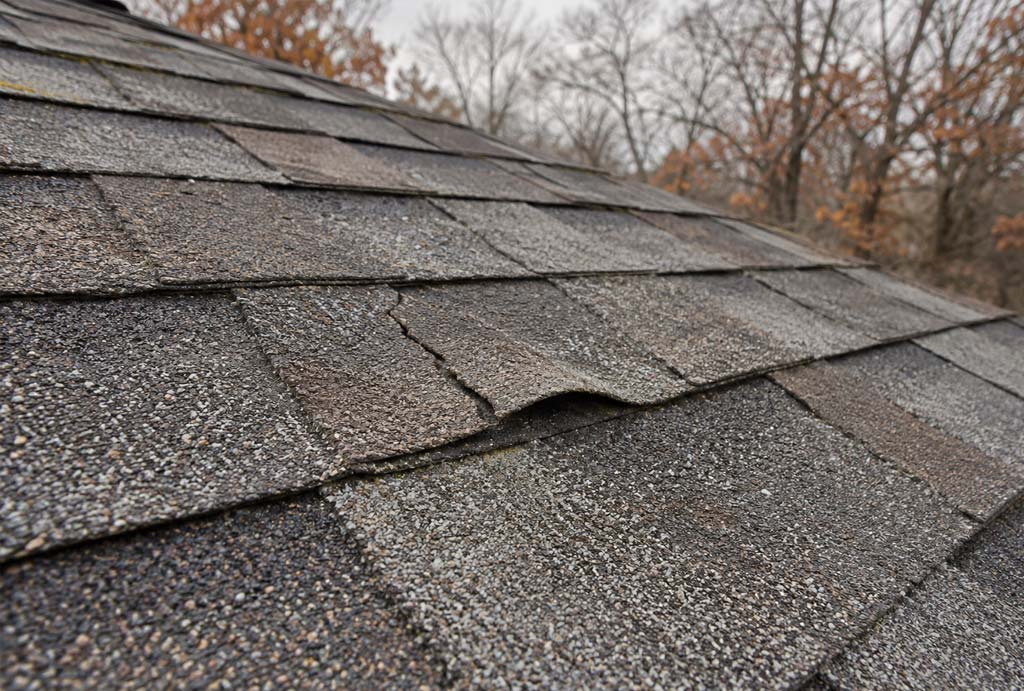
Sometimes, but a successful repair depends on more than replacing the visibly damaged shingle. The surrounding shingles must tolerate the work needed to remove fasteners, install the replacement, and restore the seals.
If adjacent shingles crack or tear during that process, the repair area can grow. On an otherwise sound roof, localized damage may still be repairable. Widespread deterioration can make a larger replacement more practical.
At Stay Dry Roofing, we evaluate how the existing roof can be worked on before recommending a repair. For Indianapolis homeowners making that decision in November, both material condition and weather matter.
What Does It Mean When Shingles Are Brittle?
Brittleness describes a loss of flexibility. A brittle shingle may crack, crease, or tear when moved instead of bending enough to allow necessary repair work.
Asphalt shingles change with age and exposure. Sunlight, weathering, and the loss of protective granules can contribute to deterioration. However, roof age alone does not tell us whether a particular area can be repaired.
Two slopes on the same house may have different conditions because of sun exposure, drainage, previous work, and other factors. A roof that looks fairly uniform from the driveway may not behave uniformly during repairs.
Visible cracking and curling deserve attention, but a photograph cannot establish repairability by itself.
Cold Stiffness and Age-Related Deterioration Are Different
A shingle that is difficult to handle on a cold morning is not necessarily at the end of its useful life. Asphalt becomes less flexible as temperatures fall, which can increase the risk of damage during handling.
GAF’s technical guidance on temperature extremes and asphalt shingles explains that very cold conditions can cause shingles to crack, break, or separate into layers when bent.
That is why the conditions during an assessment matter. A roof should not be labeled beyond repair simply because a shingle was forced upward in unsuitable weather. Conversely, a warmer afternoon cannot reverse existing cracks or restore deteriorated material.
Scheduling work for better conditions may help with handling. It does not guarantee an aged roof will become repairable.
Why Replacing One Shingle Involves Its Neighbors
Shingles overlap in courses. Removing a damaged piece commonly requires carefully separating sealant bonds and accessing fasteners beneath the shingles above it.
The replacement then has to fit into that existing assembly. Nearby shingles must remain intact, fasteners must be restored correctly, and disturbed seals need attention.
GAF’s bulletin on replacing storm-damaged shingles specifically addresses replacing removed fasteners and hand-sealing surrounding shingles during individual replacements.
This explains why a small visible defect does not always produce an equally small repair. The work area extends beyond the damaged tab you can see.
What Should a Repairability Assessment Consider?
An assessment should answer a practical question: Can the damaged area be repaired while leaving a dependable roofing assembly around it?
We consider the condition of neighboring shingles, their attachment, the extent of cracking, and evidence of previous repairs. Where moisture damage is suspected, the decking and underlying materials may also need evaluation.
Replacement material matters, too. The shingle’s dimensions, thickness, exposure, and installation requirements must suit the repair. Finding a similar color is only part of the decision.
Any handling assessment should be controlled and documented. Repeatedly bending shingles to demonstrate that they break can create damage without providing a useful repair plan. Homeowners should not lift tabs or attempt a brittleness test themselves.
A professional roof inspection can establish the conditions that support or limit a repair.
When Is a Localized Repair Reasonable?
A targeted repair may make sense when damage is limited, surrounding shingles remain workable, and the supporting roof components are sound.
For example, one damaged shingle on a serviceable slope may be replaceable if adjacent courses can be accessed without cracking them. The proposal should identify what will be replaced and how the disturbed area will be secured and sealed.
A limited roof repair is less convincing when every attempt to access a fastener breaks another shingle. That creates a moving boundary instead of a stable repair area.
Ask your roofer what happens if hidden deterioration or additional breakage appears. Agreeing on that possibility before work starts helps avoid surprises.
When Does Replacement Become the Better Option?
Replacement deserves consideration when deterioration is widespread, multiple areas need work, or the shingles around a proposed repair cannot remain intact.
That does not automatically mean replacing the whole roof. Depending on the layout and condition, replacing an affected slope may be an option. Connections to neighboring roof sections still need to be planned carefully.
Our guide to replacing part or half of a roof discusses that broader decision. Here, the key issue is whether the existing shingles can support a lasting repair.
A recommendation should explain the extent of deterioration and the limits of patching. “The roof is old” is not enough information on its own.
What If Repairs Need to Wait for Better Weather?
An active leak needs attention even if permanent shingle work must be postponed. A roofer can determine whether temporary protection is appropriate and explain its limitations.
Keep the temporary work separate from the permanent scope. Ask when the roof should be reassessed, what weather conditions are needed, and how the temporary materials will be removed.
For Indianapolis, Carmel, Fishers, and Noblesville homeowners, November is a useful time to resolve these questions before winter complicates access. Contact Stay Dry Roofing for an evaluation and a clear explanation of your repair options.
Frequently Asked Questions
Can shingles be too brittle to repair even if they are not leaking?
Yes. A roof may still shed water while its shingles cannot tolerate the lifting needed for a localized repair. Leak status and repairability are related, but they are not the same assessment.
Does a brittle shingle mean the entire roof is worn out?
No. Conditions can differ between slopes and individual sections. A broader inspection should establish whether the problem is isolated or reflects widespread deterioration.
Will waiting until spring make brittle shingles repairable?
Warmer conditions can improve flexibility caused by cold stiffness. They cannot undo age-related deterioration. Waiting may change the handling conditions without changing the roof’s underlying condition.
Can a cracked shingle just be glued back together?
Sealant does not restore a shingle’s original structure. A surface patch may provide limited temporary protection in some situations, but the permanent solution depends on the damage and manufacturer’s requirements.
Is there a specific roof age when repairs should stop?
No. Age provides context, but material condition, repair access, installation, and the extent of damage should guide the decision. A younger deteriorated roof may be harder to repair than an older roof in better condition.