

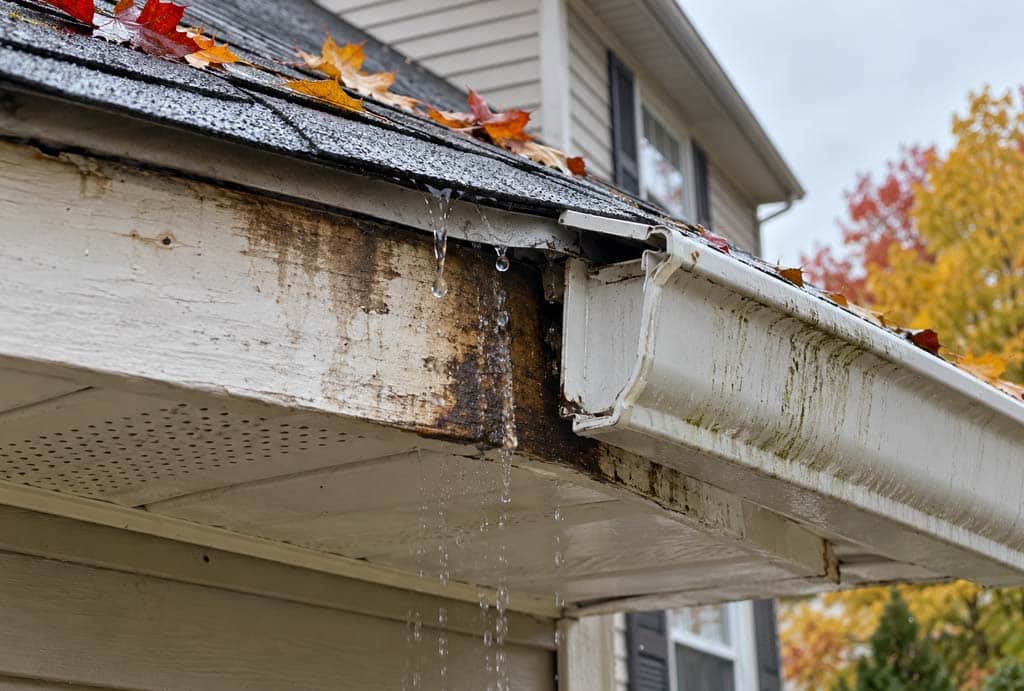
It is easy to spot water pouring over the front of a gutter during a storm. Water slipping down the wall behind the gutter is harder to notice. You may first see a dark streak on the fascia, peeling paint under the eave, or a wet line on the siding after the rain stops.
If this is happening at your Indianapolis home in October, fallen leaves may be part of the story, but cleaning the gutter is not always the fix. Water behind a gutter can come from a clog, a gutter pulling away from the house, damaged fascia, or a gap where the roof edge should direct runoff into the gutter. Identifying the path matters because each problem calls for a different repair.
Follow the water from the roof to the ground
During a rain, watch the affected section from a safe spot on the ground. Does water fill the gutter and spill over its front? Does it run down the back of the gutter even when the channel is not full? Is the problem limited to one corner or spread across a long roof edge? A short phone video can help a contractor see what happens when the system is actually under load.
Then check where the downspout releases water. An obstruction can back up an otherwise sound gutter. A blocked outlet often causes overflow near the downspout; a gutter with the wrong pitch may hold water toward the opposite end. Neither observation proves the cause by itself, but it gives the inspection a useful starting point.
Do not climb onto a wet roof or lean over a ladder to diagnose this. The roof-edge parts that matter most are difficult to see safely from above, and a wet gutter can be surprisingly unstable.
If the gutter has pulled away
Look along the roofline for a section that sags or sits farther from the fascia than the sections beside it. Loose or poorly anchored hangers can open a gap behind the gutter. Water leaving the shingles may then land between the gutter and the house instead of inside the channel.
The repair might be straightforward if the fascia is sound and the gutter is otherwise in good shape: resecure the section, correct its pitch, and check how water enters it. If the gutter is bent, repeatedly comes loose, or is too small for the roof area, a replacement section or a different gutter layout may be more dependable. Stay Dry Roofing’s gutter repair and installation services address the entire drainage path, including downspouts.
If the fascia is soft or stained
The fascia is the trim board along the roof edge that commonly supports the gutter. Repeated wetting can damage the wood behind a painted or metal-wrapped surface. Peeling paint, dark staining, a soft spot, or a fastener that no longer holds can signal more than a cosmetic issue.
Simply screwing a loose gutter back into weakened wood will not restore a secure attachment. The affected trim may need repair or replacement, followed by a check of the roof-edge flashing and the gutter position so the new material does not get wet the same way. GAF explains that water reaching soffits and fascia can indicate a damaged or ineffective drip edge, even where one is present. Read GAF’s guidance on roof-edge trim damage.
If the roof edge is sending water the wrong way
The drip edge is a narrow metal flashing at the edge of the roof. Its job is to help shed water away from the roof deck and fascia and toward the gutter. If it is missing, bent, poorly positioned, or no longer overlaps the gutter as intended, runoff can curl underneath and wet the wood behind the gutter. The Insurance Institute for Business & Home Safety describes drip edge as a component that diverts water away from roof edges and walls. See its roof-component guide.
A roofer should check the lower shingle edge, drip edge, underlayment transition, and gutter position together. This is particularly important if the symptom began after a roof or gutter replacement. Adding a bead of caulk along the back of the gutter may conceal the path briefly while leaving the roof-edge detail unchanged.
Which repair should happen first?
The sequence depends on what the inspection finds:
- Restore drainage. Clear a blocked gutter or downspout so water is not backing up while other work is planned.
- Check the supporting wood. A gutter cannot stay properly attached to damaged fascia.
- Correct the roof-edge transition. Runoff should shed into the gutter without traveling behind it.
- Set the gutter position and pitch. Confirm the repaired system carries water to the downspout and away from the house.
Ask the contractor to show you photos of the problem before approving a full gutter replacement. Some homes need a localized roof-edge or fascia repair; others have a failing gutter system along multiple elevations. Our gutter repair versus replacement guide explains that broader decision.
Catch the leak while it is still visible
By mid-October, leaves can obscure the gutter opening while repeated rain reveals exactly where water is going. If you notice a wet fascia or siding streak, record it during the next rain rather than waiting for the paint to dry and guessing later. Water that repeatedly reaches wood trim can expand a small repair into a larger one.
Stay Dry Roofing can inspect the gutter, fascia, and roof edge together and explain which part needs attention. Request an assessment for your Indianapolis-area home if water is running behind the gutter or the roofline appears to be separating.
Frequently asked questions
Why does water run behind my gutter even when it is clean?
A gap between the gutter and fascia, improper gutter position, or a damaged or poorly placed drip edge can let runoff miss the gutter. The roof edge and attachment need to be checked together.
Will gutter guards fix water leaking behind a gutter?
Only if a debris clog is the actual cause of overflow. Guards do not repair loose hangers, damaged fascia, or roof-edge flashing.
Is a wet fascia board an emergency?
Active water entering the home or a loose gutter that could fall needs prompt attention. Staining without those conditions still deserves a timely inspection because repeated wetting may damage the supporting wood.
Can I seal the gap with caulk?
Caulk alone is unlikely to correct a loose gutter or misdirected roof runoff. Identify and repair the attachment or flashing detail causing the water path first.