

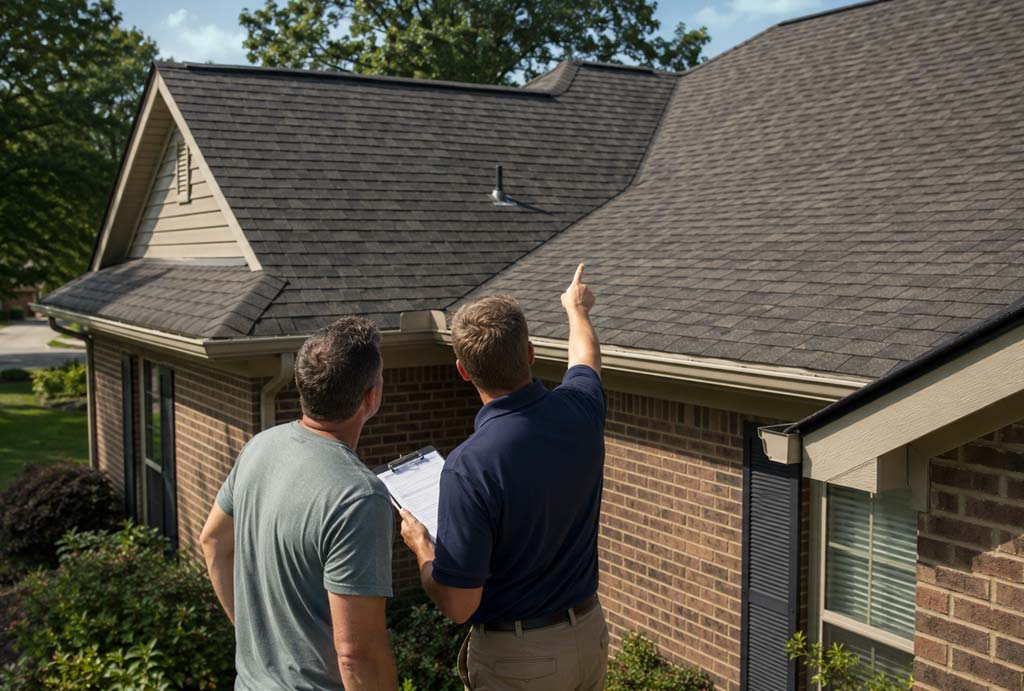
If you recently purchased a home or cannot find your roofing records, you may be asking, “How old is my roof?” The most reliable answer usually comes from installation invoices, permits, insurance documents, or a professional roof inspection.
Knowing your roof’s age helps you plan maintenance, evaluate problems, understand insurance requirements, and prepare for eventual replacement. However, age is only part of the story. Installation quality, ventilation, storm damage, repairs, and Indianapolis weather can all affect how long a roof remains dependable.
Here are seven ways to investigate your roof’s history.
1. Review Your Home-Purchase Documents
Start with the paperwork you received when buying the house. The seller’s disclosure, property listing, appraisal, and home inspection report may mention when the roof was installed.
Look for phrases such as “new roof,” “roof replaced,” or “estimated roof age.” Remember that an inspector may have estimated the age based on appearance rather than verified records. If a specific year is listed, check whether the report names the source.
You can also contact your real estate agent or the previous owner. They may still have an invoice, warranty, or contractor’s name.
2. Search Local Permit Records
A roof replacement may appear in local permit records if a permit was issued for the work. Indianapolis and Marion County residents can research permit history through the city’s official Accela Citizens Access Portal.
Search by your property address and look for roofing, reroofing, structural, or exterior-improvement permits. A permit date can provide a strong clue, but a missing record does not prove the roof is original. Older records may be incomplete, and not every past project will appear in the system.
Homeowners outside Marion County should check with their city or county building department.
3. Check Insurance Records
Your homeowners insurance application may include the roof’s estimated installation year. If the roof was replaced after a storm, previous insurance claim records may also help establish its age.
Contact your insurance agent and ask what roof age is listed on your policy. If you recently purchased the home, review the insurance documents prepared during closing. The Insurance Information Institute explains that roof age and condition can affect coverage, making accurate records increasingly important.
Do not change the roof age on an insurance application without documentation or a qualified evaluation.
4. Look for Invoices, Warranties, and Product Information
Search old files, appliance folders, basement shelves, garage cabinets, and digital records for roofing documents. Useful items may include:
- Installation invoices
- Material receipts
- Workmanship warranties
- Manufacturer warranty registrations
- Repair estimates
- Before-and-after photographs
A warranty’s issue date may help narrow down the installation year. However, a warranty may have been registered after the work was completed, so confirm the date when possible.
If you find the contractor’s name, the company may still have archived project records.

5. Ask Longtime Neighbors
Neighbors who have lived nearby for many years may remember when roofing crews worked on your house. This is especially helpful in established Indianapolis neighborhoods where residents know the history of nearby properties.
Ask whether they remember a full tear-off, material delivery, dumpster, or major storm-related project. Their answer may not provide an exact date, but it could narrow the installation to a two- or three-year period.
Historical street-view or aerial images may also show when the roof’s color or appearance changed.
6. Examine the Roof’s Physical Condition
A roof’s appearance cannot reveal its exact age, but it can provide clues. From the ground, look for:
- Curling, cracked, or missing shingles
- Uneven shingle colors
- Heavy granule accumulation near downspouts
- Exposed fiberglass
- Rusted flashing
- Repeated patches or mismatched repairs
- Sagging or uneven roof areas
Do not climb onto the roof yourself. Walking on an older or damaged roof can be dangerous and may cause additional damage.
Physical wear also does not always match calendar age. A younger roof with poor ventilation or storm damage may look older, while a properly installed and maintained roof may remain in good condition longer.
7. Schedule a Professional Roof Inspection
When records do not provide a clear answer, a professional roof inspection is the safest next step. An experienced roofer can evaluate shingle style, wear patterns, flashing, previous repairs, ventilation, decking, and other system components.
An inspection may not identify the exact installation date, but it can provide an estimated age range and something even more useful: an assessment of the roof’s current condition and remaining service life.
Roof Age Does Not Automatically Determine Replacement
An older roof does not always require immediate replacement. It may only need maintenance or a focused roof repair. On the other hand, a newer roof with widespread storm damage, poor installation, or trapped attic moisture may have serious problems.
At Stay Dry Roofing, we consider the complete roofing system before recommending a solution. If your roof is approaching the end of its useful life, we can explain your roof replacement options and help you plan ahead.
Finding your roof’s age is a good starting point. Understanding its condition is what helps you make the right decision for your Indianapolis home.
Frequently Asked Questions
How can I find out when my roof was replaced?
Review your closing documents, seller’s disclosure, inspection report, insurance records, permits, invoices, and warranties. If those sources do not provide an answer, schedule a professional inspection for an estimated age range.
Can a roofer tell exactly how old my roof is?
Usually not without installation records. A roofer can often estimate the roof’s age by examining its materials, wear, repairs, and overall condition, but the estimate may cover several years.
Does a home inspection report show the roof’s age?
Many home inspection reports list an estimated roof age or remaining service life. Check whether the inspector verified the date through records or estimated it from the roof’s appearance.
How long do asphalt shingle roofs last in Indianapolis?
Many asphalt shingle roofs provide approximately 15 to 25 years of service. Actual performance depends on the product, installation, ventilation, maintenance, sun exposure, and damage from wind, hail, snow, ice, and temperature changes.
Should I replace my roof just because it is 20 years old?
Not automatically. A 20-year-old roof should be inspected closely, but its condition matters more than age alone. Some roofs may remain serviceable, while others may need replacement earlier because of damage or installation problems.