

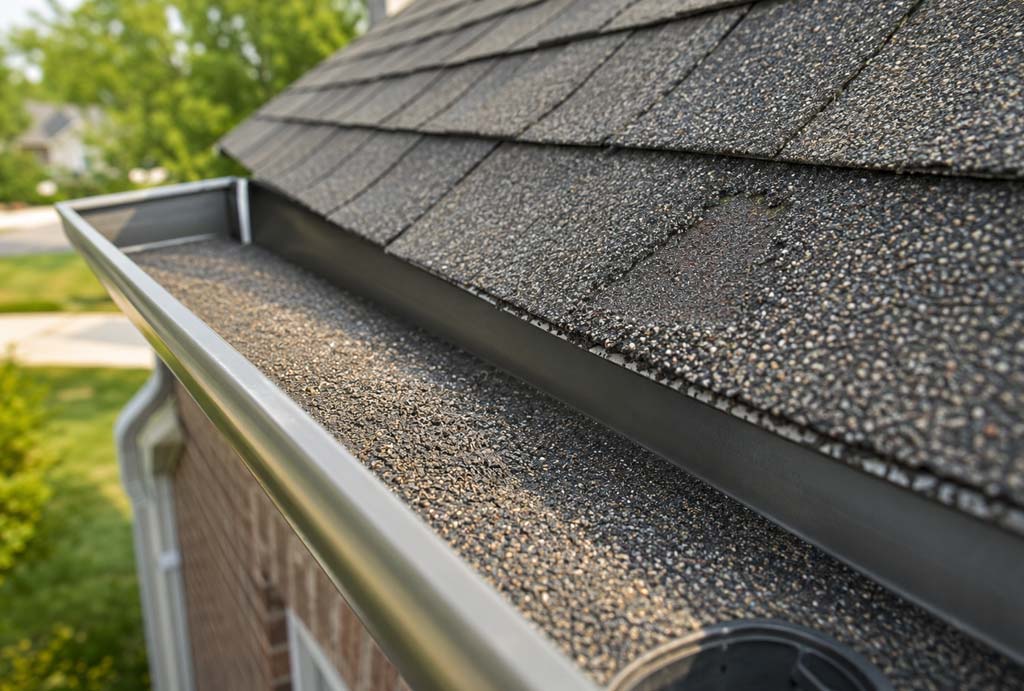
Finding small, sand-like particles in your gutters or around your downspouts can be concerning. Are your shingles falling apart? Did a recent storm damage your roof? Or is a small amount of granule loss normal?
The short answer is that some roof granules in gutters are normal, especially after a new roof installation or as asphalt shingles gradually age. However, a sudden increase in granules, visible bare spots, or granule loss after a hailstorm may indicate roof damage.
At Stay Dry Roofing, we help Indianapolis-area homeowners determine whether granule loss is routine wear, an isolated repair issue, or a warning that the roof is approaching the end of its service life. Here is what you should know before making any decisions.
What Are Asphalt Shingle Granules?
Granules are the small, colored mineral particles attached to the surface of asphalt shingles. They give shingles their color, but their purpose goes far beyond appearance.
Roofing granules help:
- Protect the asphalt layer from ultraviolet radiation
- Reduce heat exposure
- Improve resistance to weather and impact
- Add texture and color to the roof
- Slow the natural aging of the asphalt
The Asphalt Roofing Manufacturers Association explains that mineral granules protect asphalt shingles from damaging ultraviolet light, moisture, and ozone.
When too many granules come loose, the asphalt underneath can become exposed. That exposure may cause shingles to dry out, become brittle, crack, and deteriorate more quickly.
Is It Normal to Find Roof Granules in Gutters?
Yes, a small amount of granule loss is usually normal. Asphalt shingles do not hold every granule throughout their entire service life. Rain, wind, temperature changes, and ordinary weathering gradually loosen some of the particles.
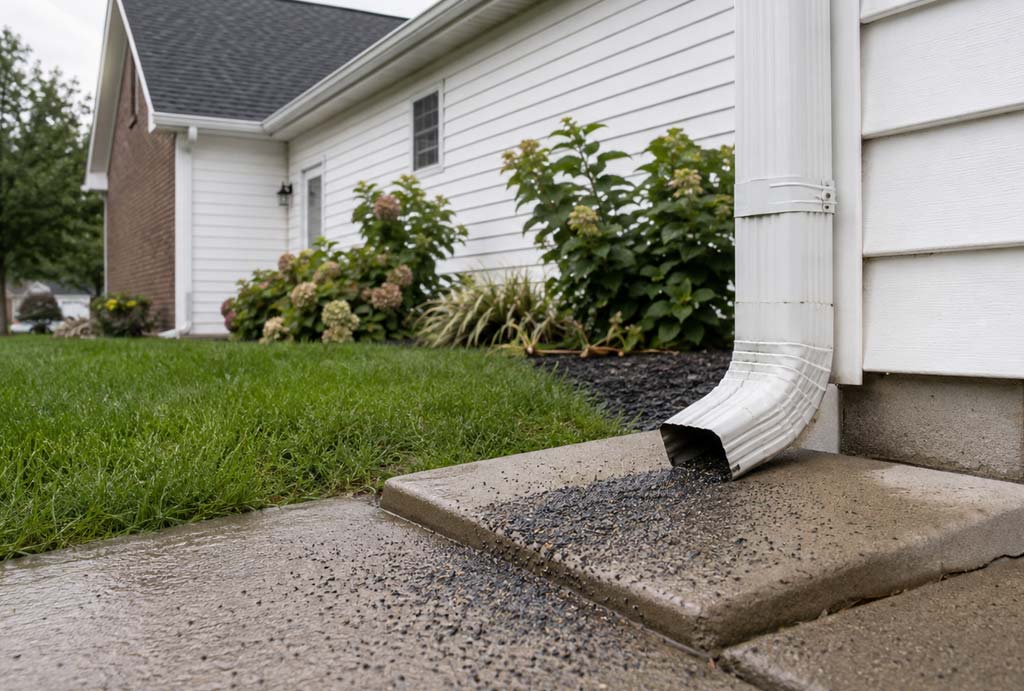
Granules also tend to collect in gutters because rainwater carries them down the roof. They may eventually wash through the downspouts and form small piles near the discharge points.
The amount, timing, and pattern of granule loss matter more than the simple presence of granules.
A light coating of particles at the bottom of a gutter may not indicate a serious problem. Several handfuls of granules, repeated buildup after every rain, or visible changes across the roof deserve closer attention.
When Granule Loss May Be Normal
There are several situations in which homeowners can expect to see some granules without having a damaged roof.
Shortly After a New Roof Installation
Manufacturers apply more granules than the asphalt surface can permanently hold. Some loose particles remain after manufacturing, shipping, and installation. These extra granules often wash into the gutters during the first few rains.
According to GAF’s guidance on new-shingle granule loss, this initial shedding normally decreases over time and does not automatically indicate premature shingle aging.
New-roof shedding should become less noticeable after the roof has been exposed to several months of weather. Contact your roofing contractor if heavy granule loss continues, shingles begin changing color, or bare areas appear.
Gradual Aging Over Many Years
All asphalt shingles lose some granules as they age. Indianapolis roofs face summer heat, freezing temperatures, rain, snow, wind, and repeated freeze-and-thaw cycles. Over time, these conditions affect the bond between the granules and asphalt.
Slow, even granule loss across an older roof can be part of normal aging. It does not necessarily mean the roof is leaking or requires immediate replacement. It does mean the roof should be monitored for additional signs of deterioration.
Our guide to how long a roof lasts in Indiana’s climate explains why installation quality, ventilation, maintenance, and weather exposure can be just as important as the roof’s age.
When Granules in Your Gutters May Signal Roof Damage
Granule loss becomes more concerning when it is sudden, heavy, uneven, or accompanied by other roofing problems.
Granule Loss After a Hailstorm
Hail can strike shingles hard enough to dislodge granules and bruise or fracture the asphalt beneath them. Damage may appear as dark circular spots, dents, or irregular areas where the protective surface is missing.
Even smaller hail can have a cumulative effect. Research from the Insurance Institute for Business & Home Safety found that repeated small-hail impacts can remove protective granules and speed up shingle aging.
Finding many granules immediately after a Central Indiana hailstorm does not prove that the roof needs replacement. However, it is a good reason to schedule an inspection. Hail damage can be difficult to evaluate accurately from the ground.
Bare or Dark Areas on the Shingles
Look at the roof from a safe location on the ground. If sections appear darker, smoother, or noticeably different from the surrounding shingles, the granules may have worn away enough to expose the asphalt.
These areas absorb more ultraviolet radiation and heat, which can accelerate deterioration. A few isolated spots might be repairable. Widespread bare areas usually indicate a more advanced condition.
Uneven Granule Loss
Normal aging often affects a roof gradually. Damage tends to create concentrated or irregular patterns.
One roof slope may wear faster because it receives more sunlight. Water flowing from an upper roof onto a lower section may also erode granules in a narrow path. Tree branches, pressure washing, foot traffic, and improperly placed equipment can create localized damage as well.
Uneven wear should be evaluated to identify the cause and determine whether the affected shingles can be repaired.
Other Signs of Shingle Deterioration
Granules tell only part of the story. Schedule an inspection if granule buildup appears along with:
- Cracked, curled, or brittle shingles
- Missing or lifted shingles
- Exposed asphalt or fiberglass
- Dark spots following a storm
- Loose flashing
- Water stains on ceilings or walls
- Shingle pieces in the yard
- An older roof with repeated repairs
Our Indianapolis roof repair team can evaluate these conditions and determine whether the problem is limited to one area or affects the larger roofing system.
What Should You Do If You Find Granules?
Start by considering what recently happened. Is the roof new? Did Indianapolis experience hail or strong wind? Have the granules slowly increased over several years?
Next, look for visible roof changes from the ground. Binoculars may help you identify bare spots, missing shingles, or uneven color. Check the attic and upper-floor ceilings for moisture stains, but do not assume the roof is healthy simply because you do not see a leak.
Avoid walking on the roof. Foot traffic can loosen more granules, especially when shingles are hot, cold, or already brittle. It also exposes you to an unnecessary fall risk.
Take photos of the granules, gutters, downspout areas, and any visible changes. Then arrange a professional roof inspection if the amount seems excessive, appeared after a storm, or continues to increase.
Does Granule Loss Mean You Need a New Roof?
Not always. Granule loss is one condition a roofing contractor considers alongside roof age, shingle flexibility, storm damage, flashing, ventilation, leaks, decking condition, and previous repairs.
Limited damage may require only targeted shingle replacement. If granule loss is widespread and the shingles are brittle, cracked, or nearing the end of their useful life, replacement may provide better long-term value.
The goal of an inspection is not to assume the most expensive answer. It is to determine what happened, how much of the roof is affected, and whether repair can restore dependable protection. If replacement is recommended, our Indianapolis roof replacement cost guide can help you understand the factors that influence pricing.
Get a Clear Answer About Your Roof
A few granules in your gutters may be harmless. A sudden pile after an Indianapolis hailstorm may be an early warning. The difference is difficult to judge by the granules alone.
Stay Dry Roofing serves homeowners throughout Indianapolis, Carmel, Fishers, Noblesville, Greenwood, and surrounding Central Indiana communities. We can inspect the shingles, document visible damage, and explain whether your roof needs monitoring, repair, or replacement.
If you are finding excessive roof granules in your gutters or around your downspouts, contact Stay Dry Roofing to schedule an inspection.
Frequently Asked Questions About Roof Granules
What do roof granules in gutters mean?
Roof granules in gutters usually mean asphalt shingles are shedding part of their protective mineral surface. A small amount can result from new-roof installation or normal aging. Heavy, sudden, or uneven loss may indicate hail damage, advanced wear, or another roofing problem.
How many roof granules in a gutter are too many?
There is no single measurement that applies to every roof. Several handfuls, thick sediment covering the gutter bottom, repeated piles near downspouts, or a noticeable increase after a storm should be professionally evaluated.
Can a roof leak because it is losing granules?
Granule loss does not usually create an immediate leak by itself. However, exposed asphalt can deteriorate faster under sunlight and weather. As shingles become brittle or cracked, the risk of water intrusion increases.
Do roof granules in gutters mean I have hail damage?
Not necessarily. New shingles and aging roofs can both shed granules. Hail damage is more likely when the loss begins suddenly after a storm and appears with dark impact spots, dents, cracked shingles, or damage to gutters and other exterior surfaces.
Can damaged shingles with missing granules be repaired?
Individual damaged shingles can often be replaced when the surrounding roof remains in good condition. Widespread granule loss across an aging or storm-damaged roof may make replacement the more practical option. A roof inspection is the best way to determine the proper scope of work.