

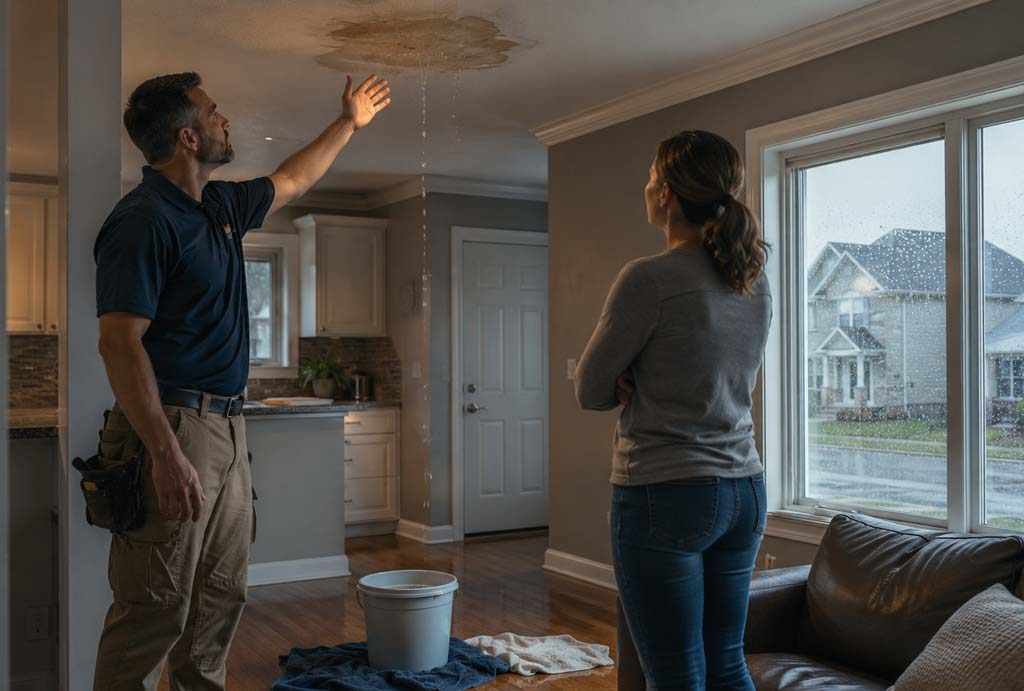
When heavy rain, strong wind, or hail hits Indianapolis, your roof can go from “probably fine” to “we need help now” pretty quickly. Sometimes the damage is obvious. You may see missing shingles, water coming through the ceiling, a fallen tree limb, or roofing material in the yard.
Other times, the damage is less dramatic but still urgent. A lifted shingle, loose flashing, cracked vent boot, or small leak can quickly turn into interior water damage during the next storm.
At Stay Dry Roofing, we help homeowners throughout Indianapolis and surrounding Central Indiana communities with emergency roof repair, storm damage roof repair, roof inspections, and roof replacement when needed. If your roof was damaged by heavy rain, wind, or hail, the most important thing is to act quickly, safely, and with the right information.
What Counts as a Roofing Emergency?
A roofing emergency is any situation where your home may be exposed to active water, structural damage, or fast-spreading roof problems. Not every emergency looks the same.
You may need emergency roof repair if water is leaking into your home, shingles are missing, flashing has pulled away, a tree limb has hit the roof, hail has damaged the shingles, or wind has opened part of the roof system. You may also need help if you see sagging, ceiling stains, damp insulation, or water dripping near lights, vents, or walls.
Even a small leak can be urgent if rain is still falling or more storms are expected. Once water gets under the roofing system, it can move into the attic, insulation, drywall, framing, and electrical areas.
That is why we always recommend getting roof damage checked as soon as possible after a serious storm.
What Should You Do First If Your Roof Is Leaking?
If water is coming into your home, start by protecting the inside of the house. Move furniture, electronics, rugs, and valuables away from the leak. Place a bucket, bowl, or container under the dripping water.
If you see a ceiling bulge, be careful. That may mean water is collecting above the drywall. Do not stand directly under it. A soaked ceiling can break open and release water all at once.
Next, take photos of the visible damage if you can do so safely. Photograph ceiling stains, wet areas, missing shingles from the ground, fallen branches, or damaged gutters. Do not climb onto the roof. Wet shingles, storm debris, and hidden damage can make the roof dangerous.
Then call Stay Dry Roofing for emergency roof repair in Indianapolis. We can inspect the roof, identify the source of the problem, and help stop further water from getting inside.
Heavy Rain Can Expose Weak Spots Fast
Heavy rain does not always create the roof problem. Many times, it reveals a problem that was already there.
Older flashing, worn shingles, loose pipe boots, clogged valleys, damaged vents, and weak roof edges can all allow water to enter during a hard July storm. A roof may handle light rain without an issue, then leak during heavy rain because water is moving faster and collecting in vulnerable areas.
Common leak points after heavy rain include chimneys, skylights, roof valleys, attic vents, plumbing vents, bathroom exhaust vents, and areas where a roofline meets a wall.
If your roof only leaks during heavy rain, that still matters. It usually means there is a weakness somewhere in the system that should be repaired before the next storm.
Wind Damage Is Not Always Easy to See
Strong winds can lift, curl, crease, or remove shingles. Once shingles are lifted, they may not seal back down properly. That can leave your home exposed to future water damage.
Wind can also loosen flashing, tear off ridge caps, damage gutters, and push debris across the roof surface. Sometimes you may find shingles in your yard. Other times, the shingles may still be on the roof but no longer sealed the way they should be.
From the ground, wind damage can be hard to spot. You might notice uneven shingles, a wavy roof surface, missing pieces along the ridge, or loose material near the roof edge. If something looks off after a storm, it is worth having the roof inspected.
Hail Can Damage a Roof Before It Leaks
Hail damage is one of the biggest reasons homeowners call for storm-related roof inspections. The challenge is that hail damage does not always cause an immediate leak.
Hail can bruise shingles, knock away protective granules, dent vents, damage flashing, and weaken parts of the roofing system. Over time, those damaged areas can wear down faster and become more likely to leak.
If hail recently hit your neighborhood in Indianapolis, Carmel, Fishers, Noblesville, Greenwood, Avon, Brownsburg, Plainfield, Westfield, or Zionsville, your roof should be checked. This is especially true if you see dented gutters, damaged downspouts, granules near the downspouts, or neighbors scheduling roof inspections after the same storm.
When Temporary Repairs May Be Needed
In some emergency situations, a temporary repair may be needed before a permanent repair can be completed. This may include covering an exposed area, securing loose roofing materials, or stopping active water intrusion until the weather clears and the roof can be repaired safely.
Temporary repairs are not meant to be long-term solutions. They are used to protect the home from more immediate damage. Once conditions are safe, the damaged roofing materials should be properly repaired or replaced.
At Stay Dry Roofing, we focus on finding the source of the problem, explaining the damage clearly, and helping you understand the best next step.
Should You Repair or Replace the Roof?
Not every storm-damaged roof needs to be replaced. In many cases, a focused repair may be enough. That could include replacing missing shingles, repairing flashing, fixing a roof vent, sealing a vulnerable area, or correcting a small leak.
However, replacement may need to be discussed if the roof is older, the damage is widespread, many shingles are missing or damaged, the roof has repeated leaks, or the roofing system is near the end of its useful life.
The best answer comes from a professional inspection. We do not believe in guessing from the driveway. We look at the roof, check the damage, and help you understand whether emergency roof repair, storm damage repair, or roof replacement makes the most sense.
Why Fast Roof Repair Matters
Waiting too long after a storm can make the problem worse. Water can move behind walls, soak insulation, damage roof decking, and create stains or soft spots inside the home. A small opening in the roof can become a bigger leak during the next round of rain.
Fast roof repair helps protect your home, your belongings, and the structure underneath the roof. It also gives you peace of mind. Instead of wondering whether the next storm will make things worse, you will know what is happening and what needs to be fixed.
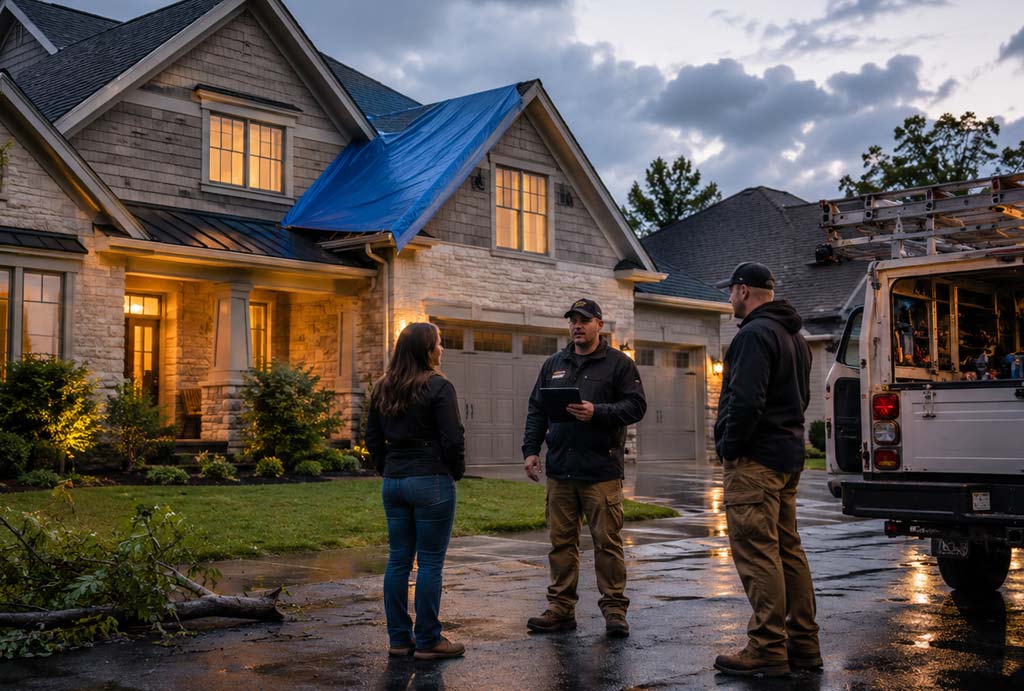
Stay Dry Roofing Is Here When Storm Damage Happens
We know how stressful roof damage can be. Nobody wants to deal with water coming into the house, shingles in the yard, or the uncertainty of not knowing how serious the damage is.
Stay Dry Roofing provides emergency roof repair in Indianapolis and throughout surrounding Central Indiana communities. We help homeowners with storm damage inspections, leak repair, hail damage repair, wind damage repair, and roof replacement when repairs are no longer the right option.
Our team is local, experienced, and focused on helping you protect your home with clear answers and dependable roofing work.
Common Questions About Emergency Roof Repair
What should I do if my roof starts leaking during a storm?
Protect the inside of your home first. Move valuables away from the leak, place a bucket under dripping water, and avoid standing under sagging ceiling areas. Do not climb on the roof. Call a roofing professional as soon as possible so the damage can be inspected and controlled.
Is a small roof leak an emergency?
A small leak can become an emergency if rain continues or more storms are expected. Even minor leaks can damage insulation, drywall, wood decking, and attic areas. It is best to have the leak checked quickly before it spreads.
Can wind damage my roof even if no shingles are missing?
Yes. Wind can lift or loosen shingles without fully removing them. Lifted shingles may not seal properly afterward, which can allow water to get underneath the roof during future storms.
Should I call for emergency roof repair after hail?
Yes, especially if you see dents, granules near downspouts, damaged gutters, or neighbors having roof inspections. Hail damage may not leak right away, but it can weaken shingles and shorten the life of your roof.
Does Stay Dry Roofing serve areas outside Indianapolis?
Yes. Stay Dry Roofing serves Indianapolis and surrounding communities, including Carmel, Fishers, Noblesville, Greenwood, Avon, Brownsburg, Plainfield, Westfield, Zionsville, and nearby Central Indiana areas.
Call Stay Dry Roofing for Emergency Roof Repair in Indianapolis
If heavy rain, wind, or hail damaged your roof, do not wait for the next storm to make the problem worse. Stay Dry Roofing can inspect the damage, help stop active leaks, and recommend the right repair for your home.
Call Stay Dry Roofing today to schedule emergency roof repair in Indianapolis or the surrounding Central Indiana area.