

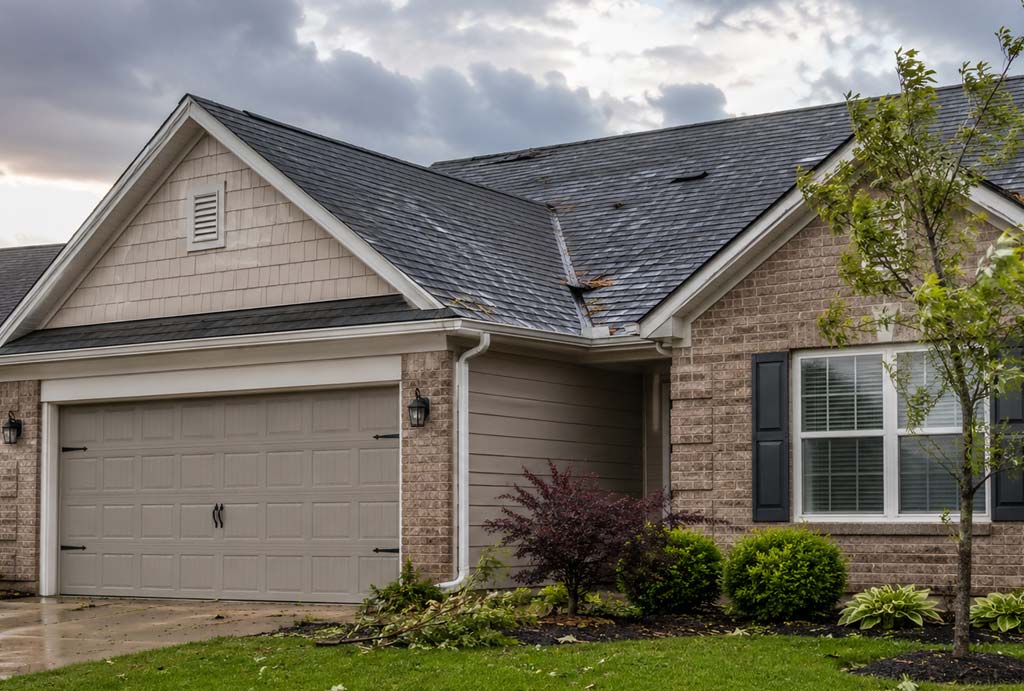
July weather in Indianapolis can be rough on your roof. One day it is hot, humid, and sunny. The next day, heavy rain, strong wind, hail, and flying debris can move through Central Indiana and leave behind roof damage that is not always easy to see from the ground.
At Stay Dry Roofing, we help homeowners across Indianapolis, Carmel, Fishers, Noblesville, Greenwood, Avon, Brownsburg, Plainfield, Westfield, Zionsville, and nearby communities repair storm-damaged roofs before small problems become larger ones.
The tricky part is that roof storm damage does not always look dramatic right away. You may not see a tree through the roof or water pouring into the living room. Sometimes the first signs are small: a missing shingle, loose flashing, granules in the gutters, a ceiling stain, or a leak that only shows up during the next heavy rain.
That is why knowing what to check after a July storm is so important.
Why July Storms Can Be Hard on Indianapolis Roofs
July storms often bring a rough mix of heat, humidity, heavy rain, hail, wind, and sudden temperature changes. Your roof is already working hard during the summer. Asphalt shingles expand in the heat, sealant strips soften, attic temperatures rise, and older roofing materials can become more vulnerable.
When a strong storm hits, wind can lift shingles or loosen roof edges. Hail can bruise shingles and knock away protective granules. Heavy rain can expose weak spots around vents, chimneys, skylights, valleys, and flashing. Falling branches can damage shingles, gutters, soffit, fascia, and roof decking.
Even if your roof looks fine from the driveway, there may be hidden damage that needs attention.
What Should You Check First After a Storm?
The first rule is simple: do not climb on your roof. A wet or damaged roof can be dangerous, especially after wind, rain, or hail. Instead, start with a safe visual check from the ground.
Walk around your home and look for anything that seems different. Check for shingles on the lawn, pieces of flashing, loose gutters, bent downspouts, broken branches, or debris near the roofline. If you see roofing material on the ground, that is a clear sign your roof should be inspected.
Next, look at the roof surface from a safe distance. You may notice missing shingles, lifted shingles, uneven areas, dark patches, exposed underlayment, or damaged ridge caps. These issues can allow water to get under the roofing system during the next storm.
Also check your gutters and downspouts. If you see a large amount of shingle granules collecting near the bottom of the downspouts, hail or aging shingles may be the reason. Granules help protect asphalt shingles from sun and weather. Once they are knocked loose, the shingles can wear down faster.
Look Inside Your Home Too
Some roof damage shows up inside before it becomes obvious outside. After a July storm, take a few minutes to check your attic, ceilings, and upper-level rooms.
Look for water stains, damp insulation, musty smells, bubbling paint, peeling drywall, or light coming through the roof boards in the attic. Pay close attention to areas around chimneys, skylights, bathroom vents, attic vents, and roof valleys.
If you notice a fresh stain on the ceiling, do not ignore it. A small roof leak can spread into insulation, drywall, wood framing, and electrical areas if it is not handled quickly.
Common Types of July Storm Roof Damage
Every storm is different, but we commonly see several types of storm damage on Indianapolis-area homes.
- Wind damage can lift, curl, crease, or remove shingles. Once shingles are lifted, they may no longer seal properly. That can make the roof more vulnerable during the next round of heavy rain.
- Hail damage can leave bruises, dents, missing granules, or soft spots on shingles. Hail can also damage vents, flashing, gutters, and metal roof components.
- Heavy rain damage often shows up around weak points. Flashing, valleys, pipe boots, chimneys, and skylights are common leak areas.
- Debris damage can happen when branches, limbs, or loose outdoor items hit the roof during high winds. Even a small puncture or cracked shingle can create a water entry point.
When Should You Call for a Roof Inspection?
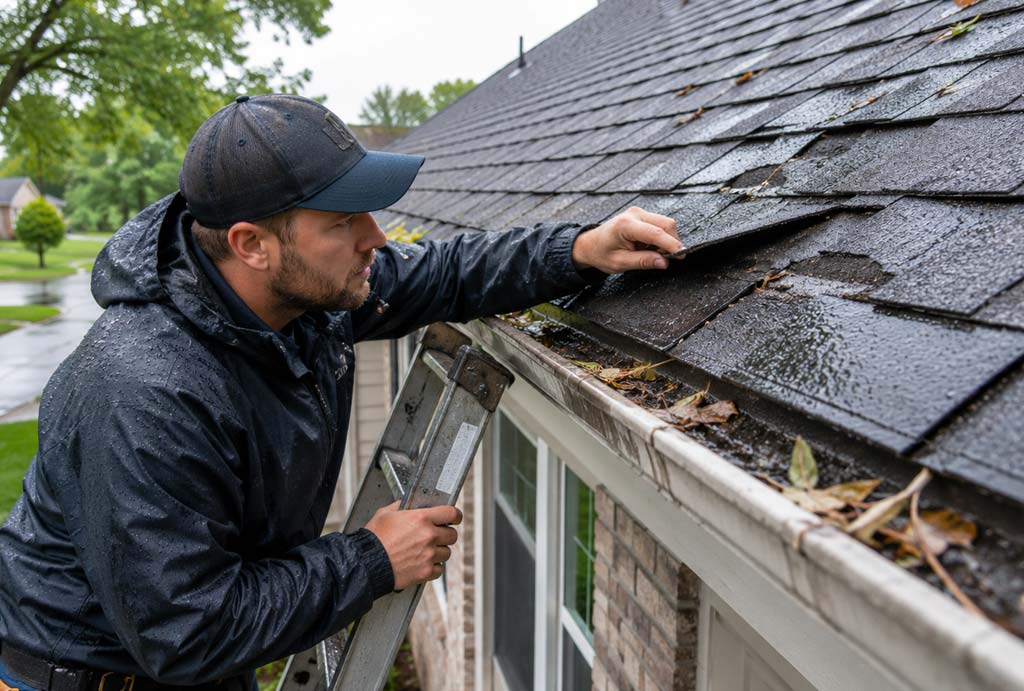
You should schedule a roof inspection after a strong July storm if you notice missing shingles, roof debris, hail marks, gutter damage, water stains, or any sign of a leak. You should also call if several homes in your neighborhood are having roof work done after the same storm.
That last point matters. Storm damage often affects several homes in the same area. If neighbors in Indianapolis, Carmel, Fishers, Greenwood, or Noblesville are finding hail or wind damage, your roof may have been hit too.
A professional inspection gives you a clear answer. At Stay Dry Roofing, we look at the full roofing system, not just one spot. That includes shingles, flashing, vents, valleys, gutters, roof penetrations, and the areas where leaks commonly start.
Should Storm Damage Be Repaired Right Away?
Yes, storm damage should be checked and repaired as soon as possible. That does not mean every roof needs major work. Sometimes a roof only needs a small repair, shingle replacement, flashing repair, or leak fix.
But waiting is where homeowners can get into trouble. A lifted shingle today can become a roof leak during the next storm. A small flashing gap can lead to ceiling stains. Hail damage can shorten the life of your shingles. Moisture can also move into the attic before you ever see water inside the home.
The sooner you know what is going on, the easier it is to protect your home.
What Should You Do If Water Is Coming In?
If water is actively leaking into your home, try to limit interior damage first. Move furniture, electronics, and valuables away from the area. Place a bucket or container under the drip. If the ceiling is bulging, avoid standing directly under it because trapped water can break through.
Then call a roofing professional. Emergency roof repair may include locating the entry point, stopping active water intrusion, replacing damaged shingles, repairing flashing, or using a temporary solution until permanent repairs can be made safely.
Stay Dry Roofing provides emergency roof repair for homeowners in Indianapolis and surrounding Central Indiana communities. When your roof is leaking, fast action matters.
Why Choose Stay Dry Roofing After a July Storm?
We know Indiana weather. We know how quickly summer storms can move through the Indianapolis area, and we know how to find the kind of roof damage that homeowners often miss from the ground.
Our team handles roof repair, emergency roof repair, hail damage repair, roof inspections, and roof replacement. We work with homeowners throughout Indianapolis, Carmel, Fishers, Noblesville, Greenwood, Avon, Brownsburg, Plainfield, Westfield, Zionsville, and nearby areas.
Most importantly, we keep the process clear. We inspect the roof, explain what we find, and help you understand whether your roof needs a simple repair, a larger repair, or replacement. Our goal is not to make the situation more stressful. Our goal is to help you protect your home with honest answers and dependable roofing work.
Common Questions About July Storm Damage Roof Repair
How do I know if my roof has storm damage?
You may see missing shingles, lifted shingles, granules in the gutters, dented vents, damaged flashing, gutter damage, or water stains inside your home. Some damage is hard to see from the ground, so a professional roof inspection is the safest way to know.
Can a small roof leak wait?
A small leak should not be ignored. Even minor water entry can damage insulation, drywall, wood decking, and attic areas. If you notice a leak after a July storm, it is best to schedule roof repair quickly.
Should I get my roof inspected after hail?
Yes. Hail damage can be difficult to spot from the ground. Even if your roof is not leaking right away, hail can damage shingles and shorten the life of the roof.
Schedule July Storm Damage Roof Repair in Indianapolis
If a July storm recently moved through your neighborhood, do not wait for a small roof problem to become a bigger one. Stay Dry Roofing is here to help with roof inspections, storm damage roof repair, hail damage repair, emergency roof repair, and roof replacement throughout Indianapolis and surrounding Central Indiana communities.
Call Stay Dry Roofing today to schedule your roof inspection and get trusted local help after hail, wind, heavy rain, or storm damage.