

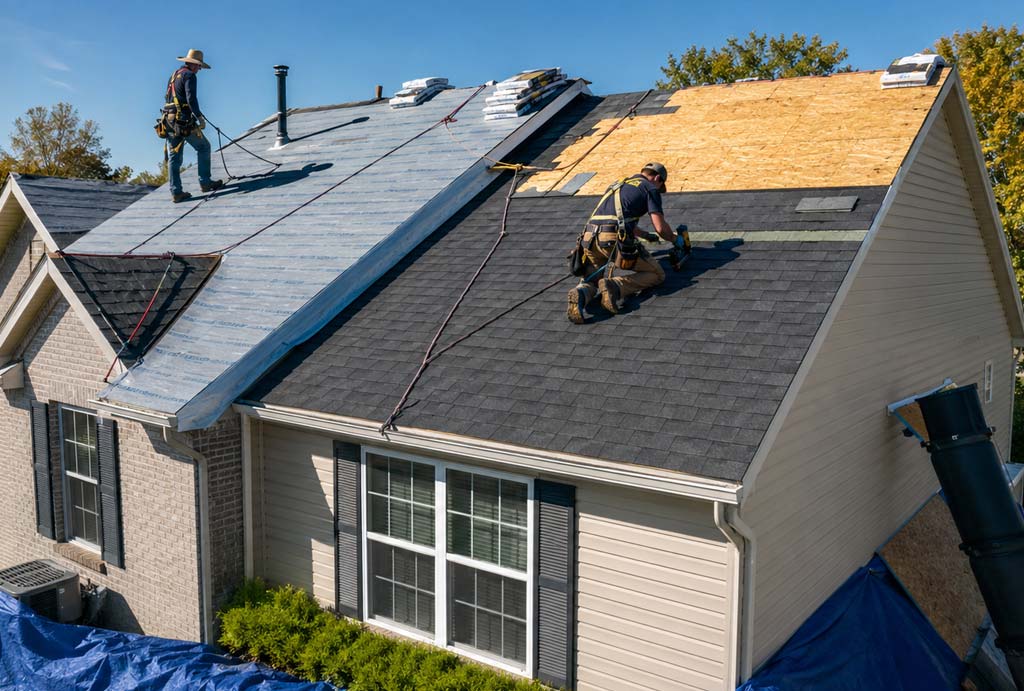
To prepare for roof replacement day, move vehicles away from the driveway, clear items from around the house, protect belongings in the attic, secure fragile wall decorations, make arrangements for children and pets, and remain available if your contractor discovers concealed damage.
Roof replacement is an active construction project. There will be noise, vibration, roofing materials, crew vehicles, and debris removal around your home. A little preparation can help protect your property, reduce delays, and make the experience more comfortable for your family.
Confirm the Schedule and Project Details
Before installation day, confirm when the crew is expected to arrive, where materials will be delivered, and where a dumpster or dump trailer will be positioned.
You should also verify your selected shingle color and roofing system before installation begins. If satellite dishes, solar panels, antennas, or other roof-mounted equipment must be removed, confirm who is responsible and when that work will occur.
If you are still reviewing the scope, use our guide to what a roof replacement estimate should include before authorizing the project.
Indianapolis weather can affect installation schedules, so make sure the roofing contractor has your current phone number and preferred method of communication.
Move Vehicles and Protect Driveway Access
Move vehicles out of the garage and driveway before the crew arrives. Material deliveries, trailers, ladders, and debris-removal equipment may limit access throughout the project.
Parking away from the work area also helps protect vehicles from dust or falling debris. Do not assume you can retrieve a car from the garage once tear-off has started.
Ask where heavy equipment will be placed and whether any driveway precautions are needed. If your driveway has existing cracks, decorative surfaces, or areas of concern, point them out before equipment arrives.
Clear the Area Around Your Home
Remove patio furniture, grills, toys, hoses, planters, yard decorations, and other movable items from around the home. Your contractor can tell you how much clearance is needed based on the roof’s height, pitch, and layout.
Mark sprinkler heads, landscape lighting, invisible-fence components, drainage systems, or delicate plants that may be difficult to see. Unlock gates and make sure the crew can safely reach all sides of the property.
The GAF homeowner roofing-project checklist also recommends discussing material and dumpster placement, moving exterior belongings, protecting landscaping, and identifying items that require special care.
At Stay Dry Roofing, property protection is part of an organized roof replacement process. The exact setup will depend on your home and surrounding landscape.
Prepare the Attic and Interior
Tear-off and shingle installation create vibration. Dust, small particles, or loose material may fall inside an unfinished attic or garage.
Cover stored attic belongings with tarps or move valuable items to another location. Protect vehicles, tools, and other possessions kept in a garage, especially when the garage ceiling is unfinished.
Inside the home, remove or secure fragile objects attached to walls and ceilings. Pay particular attention to:
- Mirrors and framed artwork
- Shelves with breakable objects
- Hanging light fixtures
- China cabinets and display cases
- Items positioned against upper-level walls
- Delicate decorations near exterior walls
Roof replacement should not normally damage your interior, but securing vulnerable belongings is a sensible precaution against vibration.
Plan for Noise, Children, and Pets
Roof replacement is loud. Nail guns, compressors, foot traffic, tear-off tools, and debris removal can be disruptive inside the home.
If you work remotely, hold online meetings, or require a quiet environment, consider working elsewhere during the most active portion of the project. Let household members know when work is scheduled to begin.
Pets may become anxious or attempt to escape through an open gate or door. Keep them indoors in a secure area or arrange for them to stay somewhere quieter. Children should remain away from the work zone, equipment, ladders, and debris containers.
The Occupational Safety and Health Administration explains that fall protection is critical during residential roofing. Homeowners should allow trained crews to manage the work area and should never climb onto the roof to check progress.
Stay Available for Concealed-Condition Decisions
Some roof conditions cannot be fully evaluated until the old shingles and underlayment are removed. The crew may discover deteriorated decking, previous repairs, damaged flashing, or other concealed problems.
Before work begins, confirm how the contractor will document unexpected conditions and obtain approval for additional work. Stay reachable by phone so the project is not delayed while waiting for a decision.
The contractor should explain what was found, why it requires attention, and how it affects the agreed price or schedule. Additional work should be handled according to the change-order process in your contract.
Understand What Happens During Installation
Once the property is protected, the crew removes the existing roofing materials and examines the exposed deck. Unsuitable wood is addressed before the new system is installed.
The installation generally proceeds through roof-deck protection, leak barriers, edge components, flashing, starter shingles, field shingles, ridge-cap shingles, and required ventilation. The precise process depends on the home and selected roofing system.
For a closer look at timing, read our guide to how long roof replacement takes in Indianapolis. Some projects move quickly, while larger roofs, complex designs, weather changes, or concealed damage can require additional time.
Complete a Final Property Review
After installation, the crew should remove excess materials and roofing debris, clean gutters when included, and sweep the surrounding property for nails.
Walk around the home after cleanup and report any concerns. Confirm that patios, landscaping, driveways, and access areas have been cleared. You should also receive applicable warranty information, project records, and instructions for any remaining municipal inspection.
Stay Dry Roofing serves homeowners throughout Indianapolis, Carmel, Fishers, Noblesville, Brownsburg, Greenwood, Plainfield, and nearby communities. Our goal is to keep your project organized, communicate clearly, and leave your property ready to enjoy once the new roof is complete.
Frequently Asked Questions
Do I need to leave my home during roof replacement?
Usually not, but the work will be loud and may create vibration. Working elsewhere may be more comfortable, especially if you have young children, noise-sensitive pets, or virtual meetings.
Should I move cars out of the garage?
Yes. Move vehicles before the crew arrives. Roofing equipment or material deliveries may block the garage, and dust or debris may enter garages with unfinished ceilings.
What should I remove from my walls before roof replacement?
Secure mirrors, artwork, hanging decorations, fragile shelving, and other items that could shift because of vibration. Focus on upper floors and walls near the roofline.
What happens if rain is expected on installation day?
Your contractor should monitor conditions and decide whether work can begin safely. The schedule may be adjusted to avoid leaving exposed areas vulnerable or requiring crews to work in unsafe weather.