

If you’ve ever requested a roofing estimate and wondered why prices vary so much between contractors, you’re not alone. Many Indianapolis homeowners are surprised to discover that two roofing estimates for the same home can differ by thousands of dollars. While it may be tempting to choose the lowest number, doing so without understanding what is included can lead to unexpected costs, lower-quality materials, and future roofing problems.
At Stay Dry Roofing, we believe homeowners should know exactly what they are paying for before making an investment in roof repairs or replacement. A roofing estimate is more than just a price. It is a detailed breakdown of materials, labor, workmanship, warranties, and services that all contribute to the performance and longevity of your roof.
Understanding roofing estimates can help you make informed decisions, compare proposals accurately, and ensure you receive the best value for your investment.
Why Roofing Estimates Can Vary So Much
One of the biggest misconceptions homeowners have is that every roofing estimate covers the same work.
In reality, roofing proposals can differ significantly based on:
- Material quality
- Installation methods
- Labor costs
- Warranty coverage
- Roof complexity
- Existing roof conditions
- Cleanup procedures
- Insurance requirements
Two estimates may appear similar at first glance, but the details often reveal major differences.
The goal should not be finding the cheapest estimate. The goal should be understanding which estimate provides the best long-term value and protection for your home.
The Roof Inspection Comes First
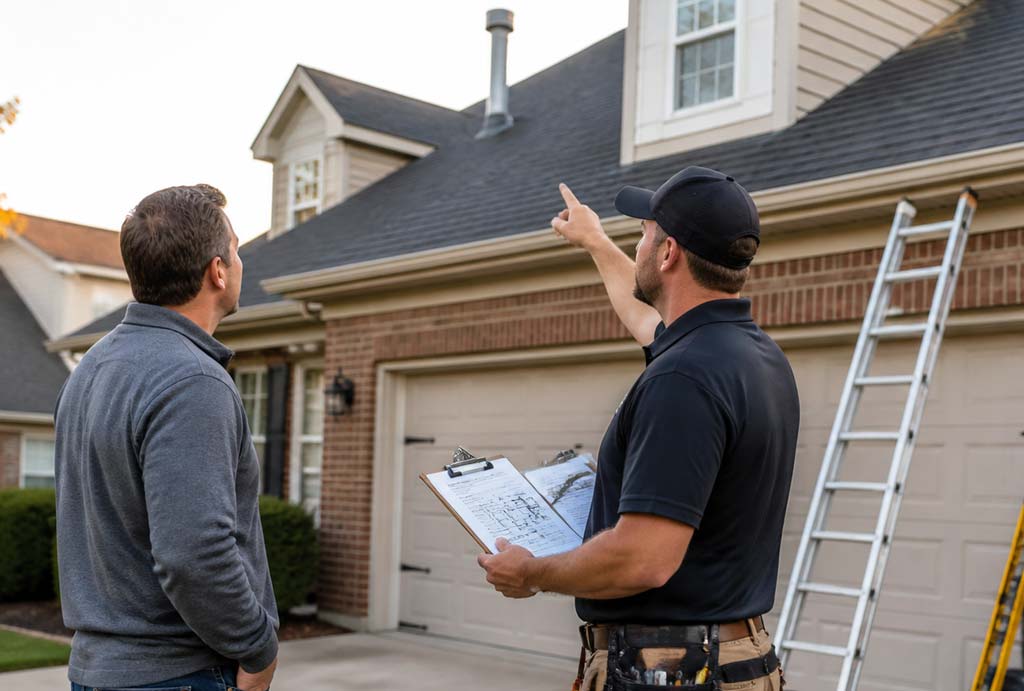
Before an accurate estimate can be created, a professional inspection is necessary.
A thorough roof inspection allows contractors to evaluate:
- Roof age
- Shingle condition
- Flashing condition
- Ventilation systems
- Roof decking condition
- Storm damage
- Existing leaks
- Roof measurements
Without a proper inspection, estimates are often based on assumptions that may lead to unexpected costs later.
At Stay Dry Roofing, we believe every roofing recommendation should begin with a complete assessment of the roof’s current condition.
Roofing Materials: A Major Part of the Cost
One of the largest sections of any roofing estimate involves materials.
Not all roofing materials are created equal, and the products selected can have a significant impact on both cost and performance.
Asphalt Shingles
Asphalt shingles remain the most popular roofing material in Indianapolis due to their affordability, durability, and appearance.
However, even within the asphalt shingle category, there are significant differences.
Options may include:
- Basic three-tab shingles
- Architectural shingles
- Premium designer shingles
- Impact-resistant shingles
Higher-quality products generally offer better durability, longer warranties, and improved curb appeal.
Underlayment
Underlayment serves as an additional layer of protection beneath the shingles.
Depending on the roofing system, estimates may include:
- Traditional felt underlayment
- Synthetic underlayment
- Ice and water shield protection
The type and amount of underlayment included can influence overall pricing and long-term roof performance.
Flashing Components
Quality flashing installation around chimneys, skylights, vents, and valleys is essential for preventing leaks.
Some estimates include replacement of flashing materials, while others may assume existing flashing can remain in place.
This difference can significantly affect both cost and future leak prevention.
Labor Costs Matter More Than Many Homeowners Realize
Materials are only part of a successful roofing project.
Professional installation is equally important.
Labor costs typically reflect factors such as:
- Crew experience
- Training
- Licensing
- Insurance coverage
- Safety practices
- Installation quality
Choosing a contractor based solely on price may result in shortcuts that compromise the roof’s lifespan.
A properly installed roof can last decades, while poor workmanship may lead to repairs much sooner than expected.
Tear-Off vs. Roof Overlay
One area that frequently causes confusion is whether the estimate includes a complete tear-off.
Full Tear-Off
A tear-off involves removing the existing roofing materials before installing a new roofing system.
Benefits include:
- Inspection of roof decking
- Identification of hidden damage
- Improved performance
- Longer lifespan
Roof Overlay
An overlay installs new shingles over existing shingles.
While overlays may cost less initially, they can hide underlying problems and may not perform as well over time.
Many homeowners prefer complete tear-offs because they provide a fresh start and allow contractors to inspect the entire roofing structure.
Roof Decking Repairs
Many estimates include language regarding potential decking repairs.
The reason is simple.
The condition of the roof deck cannot always be fully evaluated until old roofing materials are removed.
If sections of decking show:
- Rot
- Water damage
- Structural weakness
replacement may be necessary before new roofing materials can be installed.
A quality estimate should explain how unforeseen decking repairs are handled and priced.
Ventilation Is Often Overlooked
Proper attic ventilation plays a major role in roof performance.
Unfortunately, ventilation is one of the most commonly overlooked aspects of roofing estimates.
A roofing proposal may include:
- Ridge vents
- Intake vents
- Exhaust vents
- Ventilation improvements
Good ventilation helps:
- Reduce attic temperatures
- Minimize moisture buildup
- Extend roof life
- Improve energy efficiency
If ventilation is not addressed, even a new roof may experience premature aging.
Warranty Coverage Explained
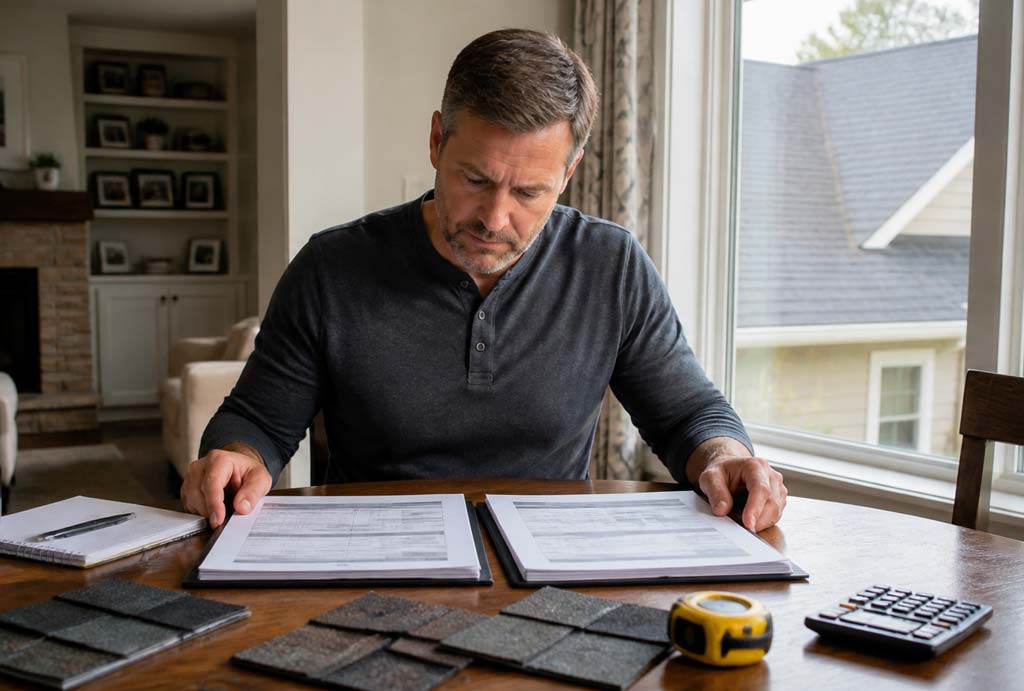
Roofing warranties can be confusing because there are often multiple types involved.
Manufacturer Warranty
This protects against defects in roofing materials.
Coverage varies by manufacturer and product type.
Workmanship Warranty
This covers installation-related issues.
A strong workmanship warranty demonstrates confidence in the quality of the installation.
When comparing estimates, homeowners should carefully review warranty details rather than focusing solely on price.
Cleanup and Property Protection
A professional roofing project involves more than installing shingles.
Quality estimates should also address cleanup and site protection.
This may include:
- Landscape protection
- Magnetic nail sweeps
- Debris removal
- Dumpster management
- Final site inspection
A contractor’s commitment to cleanup reflects their overall professionalism and attention to detail.
Insurance and Licensing Costs
Properly insured roofing contractors often have higher operating expenses than uninsured competitors.
However, those costs provide important protection for homeowners.
A reputable roofing contractor should carry:
- General liability insurance
- Workers’ compensation coverage
- Appropriate licensing where required
These protections help minimize risk during the roofing project.
Questions Homeowners Should Ask About Roofing Estimates
When reviewing estimates, consider asking:
What materials are included?
Specific product information helps ensure accurate comparisons.
Is the estimate based on a full tear-off?
Understanding the scope of work prevents surprises later.
What warranties are included?
Warranty coverage can vary substantially between contractors.
Will damaged decking be replaced if necessary?
Knowing how hidden issues will be handled is important.
Does the estimate include cleanup?
Complete project costs should include site restoration.
Are permits included?
Certain roofing projects may require permits depending on local requirements.
These questions help homeowners compare proposals fairly and confidently.
Why the Lowest Estimate Isn’t Always the Best Value
Every homeowner wants a fair price.
However, the lowest estimate often achieves that price by reducing something.
Potential reductions may involve:
- Lower-quality materials
- Limited warranties
- Reduced labor costs
- Minimal ventilation upgrades
- Fewer flashing replacements
- Less comprehensive cleanup
While lower pricing may seem attractive initially, it can lead to higher repair and maintenance costs over the life of the roof.
The best roofing estimate balances quality, durability, workmanship, and value.
The Importance of Working With a Trusted Local Roofing Contractor
Choosing a roofing contractor involves more than comparing numbers on paper.
A reputable local contractor understands:
- Indianapolis weather conditions
- Local building requirements
- Storm damage concerns
- Regional roofing challenges
They also remain available after the project is completed should questions or warranty issues arise.
Trust, communication, and experience should all factor into the decision-making process.
Trust Stay Dry Roofing for Honest and Transparent Roofing Estimates
At Stay Dry Roofing, we believe homeowners deserve clear, detailed, and transparent roofing estimates. We take the time to explain every aspect of your proposal so you understand exactly what is included and why it matters.
Our team provides professional roof inspections, roof repairs, storm damage assessments, and roof replacement services throughout Indianapolis and surrounding communities. We focus on delivering quality workmanship, durable materials, and exceptional customer service designed to protect your home for years to come.
If you’re comparing roofing estimates or considering a roof replacement, we’re here to help you make an informed decision. Understanding what you’re really paying for today can save you significant money and stress in the future.
Contact Stay Dry Roofing today to schedule a professional roof evaluation and receive an estimate you can trust.