

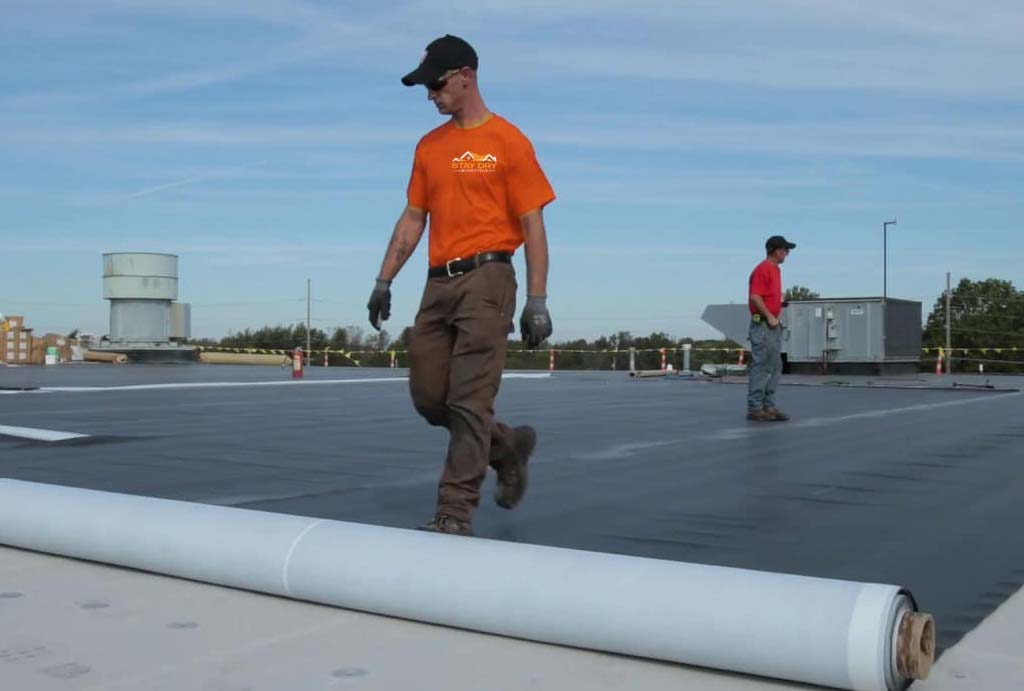
Keeping a commercial flat roof watertight is one of the smartest, highest-ROI moves a property manager can make. At Stay Dry Roofing we see the same problems over and over: clogged drains, ignored seams, and deferred maintenance that turns a $2,500 repair into a $25,000 replacement. This guide lays out clear, practical steps you can take to protect asset value, control operating expenses, and stretch every maintenance dollar including material pros/cons, a leak-prevention checklist, the truth about extended-life coatings, budgeting guidance, and the tax & financing realities you need to plan for.
Why proactive maintenance pays (the ROI argument)
A well-maintained flat roof lasts longer, costs less in emergency repairs, and reduces tenant disruption. Routine inspections catch small issues failed flashing, seam splitting, membrane wrinkles, or blocked drains before they lead to leaks that damage interiors, equipment, and rent rolls. Regular maintenance lowers lifetime cost of ownership; small annual investments prevent premature replacements and protect rental income. Local roofing pros recommend an inspection cadence and preventive work as the foundation of flat-roof stewardship.
Common flat-roof materials pros and cons
When you’re forecasting ROI, material choice matters. Here’s a simple rundown we use when advising property managers:
TPO (thermoplastic polyolefin)
Pros: Energy-reflective white options, good seam welding, mid-range cost.
Cons: Quality varies; poor installation or cheap membranes shorten life.
EPDM (rubber)
Pros: Proven, flexible, good for severe temperature swings.
Cons: Seams are glued (not welded) so seam integrity and flashing details are critical.
PVC
Pros: Chemical-resistant, welded seams, excellent long-term performance on many commercial roofs.
Cons: Typically higher material cost up front.
Modified Bitumen / BUR (built-up roof)
Pros: Heavy-duty, multi-ply options for long life.
Cons: Heavier; installation can be disruptive; ponding water accelerates wear.
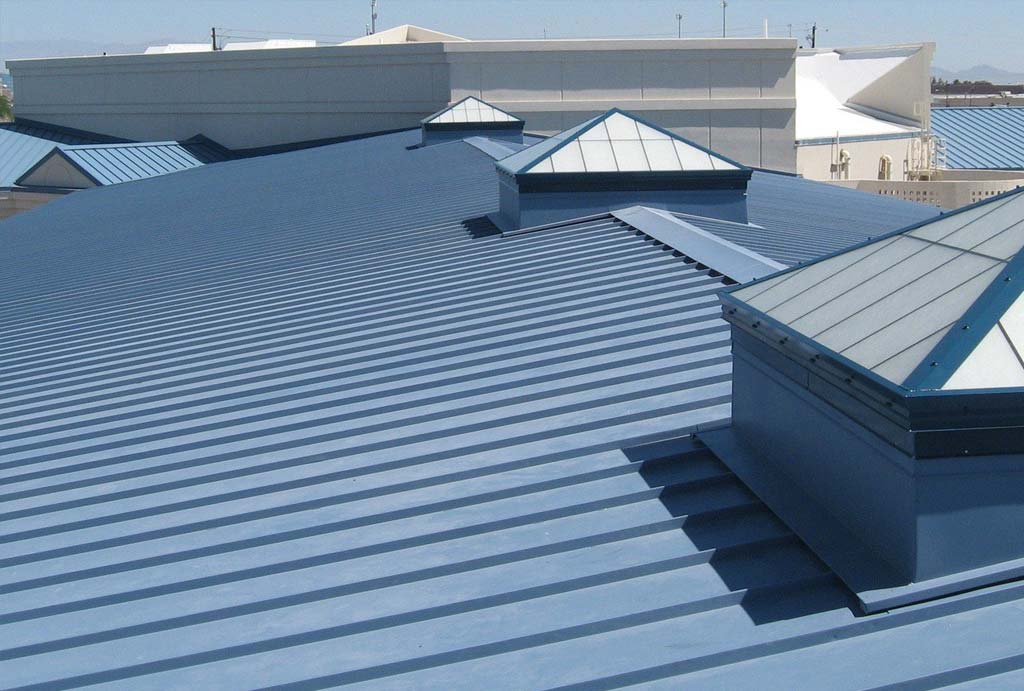
Metal (low-slope)
Pros: Long life, recyclable, low maintenance on certain profiles.
Cons: Flashing and penetrations need careful detailing; not ideal for every building.
Your property’s best choice depends on building use, rooftop equipment, load constraints, and lifecycle budget. We’ll help you weigh upfront cost vs. expected lifespan and maintenance needs.
The leak-prevention checklist (use this monthly/after storms)
Carry this checklist in your management portal and run through it monthly and after every big storm:
- Walk the roof (or schedule a professional walk) to inspect seams, flashings, penetrations, and drains.
- Clear roof drains, scuppers, and gutters of debris. (Standing water is a killer.)
- Look for membrane blisters, punctures, or seam separation.
- Verify rooftop units’ curbs and seals HVAC curbs are common leak sources.
- Check flashings at parapets, roof-to-wall joints, and expansion joints.
- Replace or re-secure loose fasteners and pipe collars.
- Document and photograph defects; log dates, actions, and contractor notes.
- Schedule infrared or moisture-scan if you suspect hidden wet insulation.
- After winter: check for freeze–thaw damage, ice dam locations, and roof-edge integrity.
Following this checklist reduces surprise claims and keeps repair costs predictable.
Extended-life coatings: what they do and when they make sense
Roof coatings (silicone, acrylic, or polyurethane-based systems) can be a powerful life-extension tool when applied to suitable substrates. Properly selected and installed coatings:
- Seal small gaps and provide a seamless membrane over existing materials.
- Improve reflectivity (reducing HVAC loads on white, reflective systems).
- Buy you years of service often 5–10 years from a high-quality coating project.
Important cautions:
- Not every roof is a candidate. Coatings work best on roofs with good drainage and no active leaks.
- A coating that merely restores function can sometimes be expensed as maintenance, but a coating that materially extends life may be treated as a capital improvement for tax purposes. Confirm classification with your CPA.
Short example ROI scenario (step-by-step math)
We use simple, clear math so managers can make quick comparisons.
Example: your building needs either a full membrane replacement priced at $120,000, or a high-quality silicone coating to extend the current roof 8 more years priced at $18,000. Assume a full roof life expectation of 20 years after replacement.
- Replacement annualized cost: $120,000 ÷ 20 years = $6,000 per year.
- Coating annualized cost: $18,000 ÷ 8 years = $2,250 per year.
- Annual savings by coating = $6,000 − $2,250 = $3,750 per year.
That $3,750/year is cash you can redeploy to other capital needs or to extend inspection frequency. Coating often wins when the roof is structurally sound and drainage is good; replacement wins when the membrane or decking is failing. We’ll run these numbers for your building and include sensitivity to energy savings from reflectivity when applicable.
Budgeting, reserves & lifecycle planning
Treat roofing as a capital lifecycle issue, not an emergency line item.
- Create a roof reserve schedule: estimate remaining life, set aside a portion of expected replacement cost annually (for example, replacement cost ÷ remaining useful years).
- Use your inspection reports to update reserves an infrared scan that finds hidden wet insulation should accelerate budgeting.
- Prioritize predictable, scheduled work (flashings, drains, small patches) over deferred reactive fixes predictable spend proves better in tendering and warranty claims.
We help property managers set 5- and 10-year roof reserve projections based on material, local weather, and building use.
Taxes & financing: what property managers need to know
Tax treatment depends on whether work is a repair/maintenance (generally deductible in the year paid) or a capital improvement (capitalized and depreciated). For nonresidential real property, major improvements like a full roof replacement are generally depreciated over 39 years under MACRS. The IRS also provides tangible property rules to help distinguish repairs from capital expenditures; use them and your CPA’s advice when classifying big projects.
Some practical takeaways:
- Patch and maintenance work is usually current-year deductible as routine repairs.
- Full roof replacements are typically capitalized and depreciated over 39 years for commercial buildings.
- Certain energy-related upgrades or qualified improvements may have special incentives; always check current federal and state programs and consult a tax pro.
Financing options: many property owners prefer staged financing combining operating dollars for maintenance with longer-term financing for major replacements. We offer contractor financing options and can help package projects, so banks or equipment lessors see predictable ROI and lower risk. (Ask us for current terms and partners.)
How we work with property managers
We provide inspection reports you can share with accounting and facilities teams, prioritized repair lists, and transparent quotes so you can plan capital calls instead of chasing emergencies. We also help manage permitting and local code concerns when projects move from maintenance to replacement. (Permits are often required for major commercial roofing work in our area.)
Final checklist. What to do this quarter
- Schedule a professional roof inspection and a drain cleaning.
- Photograph and log all roof issues in your asset-management system.
- Run the ROI example on coating vs replacement for your building (we’ll run it with your numbers).
- Talk to your CPA about classification (repair vs improvement) for any planned coatings or replacements.
- Confirm reserve funding line items for the next fiscal year.
Need a roof health score and a clear budget?
If you’d like, we’ll perform an on-roof inspection, moisture scan (if needed), and deliver a one-page roof health score and a 5-year cost projection tailored to your building. No jargon just the numbers your CFO and board need to make a confident decision.