

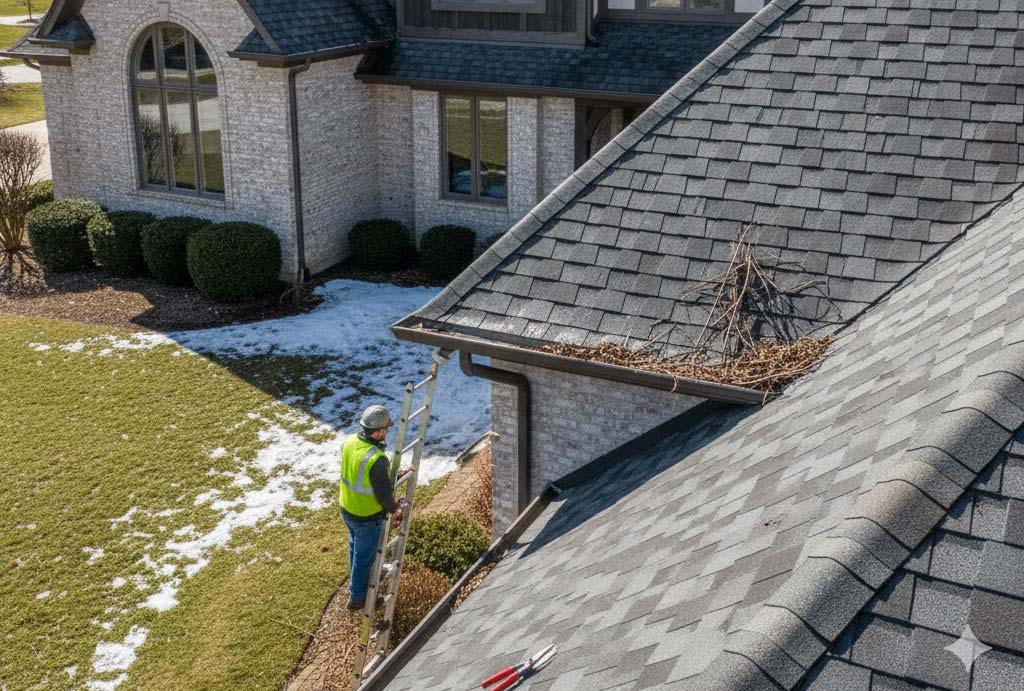
Spring is right around the corner! Late February into March is the perfect time for Indianapolis homeowners to check their roofs for hidden winter damage. Ice, snow, hail, and February wind storms may have left behind subtle problems what we at Stay Dry Roofing call “hidden fatigue.” Ignoring it now could lead to leaks, mold, or costly repairs down the line.
Here’s our 5‑point guide to get your roof ready for spring.
1) Spot “Shingle Bruising” After Winter Hail
Even small hailstones can leave damage. Shingles may have shallow dimples, darker spots, or missing granules. Bruised shingles can’t shed water properly, putting your roof at risk.
What to do:
- Look for dark depressions or granules in gutters.
- Take ground photos or use binoculars; never climb an icy roof.
- Schedule a professional inspection if you see potential hail damage.
Local tip: Indianapolis and surrounding areas often experience hail in late February storms documenting now can save headaches later.
2) Check for “Gutter Fatigue” After Heavy Snow
Packed snow and ice can pull gutters away from their supports. This “gutter fatigue” leads to sagging, leaks, and even water seeping behind siding.
DIY inspection:
- Look for sagging or bent gutters.
- Run water from a hose or wait for rain to check drainage.
- Note any overflow or splashing behind the gutter.
Pro tip: Even minor sagging can turn into costly water damage if left unchecked.
3) Clear “Clippers” from Roof Valleys and Gutters
February wind storms leave small debris we call “clippers” twigs, leaves, and wind-blown roofing bits. Clippers trap moisture and dirt, accelerating shingle wear.
How to handle it:
- Clear gutters, downspouts, and roof valleys.
- Use proper safety precautions or let Stay Dry Roofing handle it.
- Inspect for water pooling after clearing.
Why now: Debris left through spring rain can worsen hidden fatigue and create mold risk.
4) Inspect Flashing, Valleys, Chimneys, and Penetrations
Shingle damage is obvious; flashing failures are not. Winter’s expansion and contraction can crack sealants, loosen step flashing, and compromise roof penetrations.
Checklist for homeowners:
- Check step and counter flashing around chimneys and walls.
- Look for cracks or deformation in valleys.
- Inspect pipe and vent boots.
- Check roof transitions at dormers or siding.
Even tiny gaps can allow water into your attic catching them now prevents mold, rot, and insulation damage.
5) Document, Schedule an Inspection, and Plan Next Steps
After your DIY checks, take photos of all suspect areas. Include dates to support any potential insurance claims.
Next steps:
- Schedule a free exterior inspection with Stay Dry Roofing.
- Get a clear recommendation: monitor, repair, or replace.
- Document any damage for peace of mind.
Hidden fatigue matters: Small winter damage can shorten a roof’s lifespan over time. A timely inspection is a small investment to prevent big problems.
Quick Homeowner Checklist
- Photograph roof and gutters from the ground.
- Look for shingle bruising and granules in gutters.
- Check for sagging gutters.
- Clear roof debris if safe.
- Call Stay Dry Roofing for a free exterior inspection.
Local Weather & Storm Context
Indianapolis winters often bring late February snow, ice, hail, and gusty winds. These conditions can cause hidden fatigue in shingles, gutters, and flashing. Checking now gives you time to repair damage before spring rains arrive.
FAQ: Post-Winter Roof Recovery
What is hidden fatigue?
It’s subtle damage from winter weather small hail dents, sagging gutters, loose flashing that weakens your roof over time.
Can I check my roof myself?
You can do a basic ground inspection for shingles, gutters, and debris, but climbing a roof is risky. Professionals catch hidden issues safely.
How do I know if hail damage needs repair?
Look for bruised shingles, missing granules, and exposed underlayment. Photos and a professional inspection help decide if repair or insurance filing is needed.
When is the best time for a professional inspection?
Late February into March is ideal snow and ice are melting, but you’re ahead of spring rain.
Why Choose Stay Dry Roofing
We help Indianapolis homeowners protect their homes from hidden winter damage:
- Free exterior inspections with photo documentation.
- Clear recommendations: monitor, repair, or replacement.
- Assistance with insurance documentation if needed.
- Experienced, local technicians familiar with Indiana weather patterns.
Call us at (317) 308‑7773 or schedule a free inspection online to ensure your roof is ready for spring.