

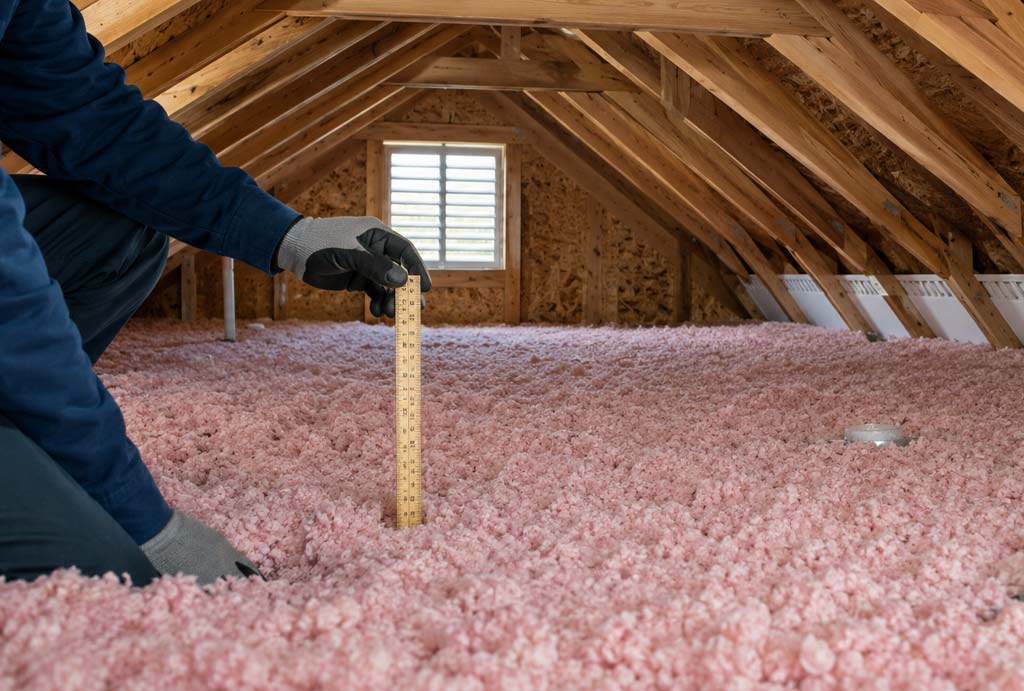
For most Indianapolis homes, the attic insulation target should be approximately R-49 to R-60. The exact amount you need depends on the insulation already present, its condition, the material being used, and whether the attic has been properly air sealed.
R-value measures how well insulation resists heat flow. A higher R-value provides greater resistance, but adding material without addressing air leaks, moisture, or blocked ventilation may not produce the expected results.
September is a practical time to evaluate an Indianapolis attic. The weather is generally manageable, contractors are not yet responding to peak winter problems, and improvements can be completed before heating demand increases.
What R-Value Is Recommended for Indianapolis Attics?
Indianapolis is within Climate Zone 5. For this zone, ENERGY STAR’s recommended insulation levels call for:
- R-60 in an attic that currently has no insulation
- Adding enough insulation to reach approximately R-49 when an attic already has three to four inches
Because homes and attic assemblies differ, R-49 to R-60 is a useful planning range rather than a one-size-fits-all installation specification. A professional should account for what is already in the attic instead of assuming every home needs the same amount added.
How Many Inches of Attic Insulation Is That?
R-value and insulation depth are related, but they are not interchangeable. Different materials provide different insulating values per inch.
According to ENERGY STAR’s attic-insulation guidance, approximate values include:
- Loose-fill fiberglass: about R-2.5 per inch
- Fiberglass batts: about R-3.2 per inch
- Cellulose: about R-3.7 per inch
- Rock wool: about R-2.8 per inch
These numbers are useful for an initial estimate. However, settled, compressed, wet, or uneven insulation may not perform like newly installed material.
For example, 14 inches of one product may provide a different R-value than 14 inches of another. Product density and installation specifications also matter. That is why a professional insulation plan should be based on the current R-value and the manufacturer’s coverage chart—not depth alone.
Stay Dry Roofing installs blown-in attic insulation that can be distributed across irregular spaces and adjusted to achieve the intended R-value.
How Can You Tell If Your Attic Needs More Insulation?
One quick visual clue is the height of the insulation compared with the attic floor joists.
If the tops of the joists are clearly visible across much of the attic, the insulation level is probably low. If the joists are fully covered and the insulation is evenly distributed well above them, the attic may already have an adequate amount.
Homeowners may also notice:
- Rooms that are difficult to keep warm
- Large temperature differences between floors
- Drafts near ceiling penetrations or the attic access
- Higher-than-expected winter heating costs
- Insulation that has settled or shifted
- Bare areas around the eaves or attic perimeter
- Snow melting unevenly across the roof
- Recurring ice buildup along the roof edge
These symptoms do not prove that insulation is the only problem. Duct leakage, older windows, HVAC issues, air leakage, and improper ventilation can create similar comfort or energy concerns.
ENERGY STAR provides a helpful attic-insulation checking guide, but attic access requires care. Exposed joists, roofing nails, electrical components, and unsupported ceiling drywall create safety risks. Older vermiculite insulation should not be disturbed until it has been properly evaluated for possible asbestos.
Air Sealing Should Come Before Additional Insulation
Insulation slows heat flow, but it does not necessarily stop warm indoor air from escaping through openings in the attic floor.
Common leakage points include:
- Plumbing and electrical penetrations
- Recessed lights
- Bathroom exhaust penetrations
- Gaps around chimneys or flues
- Open wall cavities
- The attic hatch or pull-down stairs
If these openings are not sealed first, warm air can continue moving into the attic through or around the new insulation. This reduces efficiency and can carry indoor moisture toward cold roof components.
Certain penetrations, combustion equipment, and heat-producing fixtures require special clearances and fire-safe materials. These areas should be evaluated before insulation is added.
Insulation and Ventilation Must Work Together
More insulation should not be used to cover soffit vents or restrict airflow at the eaves. In a conventional vented attic, outside air generally enters through soffit vents and exits near the roof ridge.
Baffles or ventilation chutes help preserve that airflow while allowing insulation to extend toward the attic perimeter. Without them, loose insulation can drift into the eaves and block intake ventilation.
Stay Dry Roofing’s guide to ridge vents and roof ventilation explains how intake and exhaust vents work together throughout the year.
Insulation helps keep indoor heat below the attic floor. Ventilation helps manage heat and moisture that reach the attic. One should not be treated as a substitute for the other.
Can Attic Insulation Help Prevent Ice Dams?
Adequate insulation can reduce the heat escaping from the home into the attic. This helps keep the roof surface closer to the outdoor temperature during winter.
When too much heat reaches the roof deck, it can melt snow on the upper roof. Water then runs toward the colder eaves and refreezes, potentially forming an ice dam. Water trapped behind the ice may move beneath the shingles and into the roof assembly.
Insulation is an important part of prevention, but it is not the complete solution. Air sealing, balanced ventilation, roof design, snow conditions, and outdoor temperatures also affect ice-dam formation.
What Should Be Checked Before Adding Insulation?
New insulation should not be installed over an unresolved roof leak or moisture problem. Before adding material, the attic should be checked for:
- Wet, stained, or compressed insulation
- Darkened roof decking or active dripping
- Damaged bathroom exhaust ducts
- Blocked soffit vents
- Inadequate ventilation baffles
- Unsafe wiring or recessed fixtures
- Signs of pests or contamination
- Unsealed attic-floor penetrations
Wet or contaminated insulation may need to be removed rather than buried. Any active leak should be corrected through a proper roof repair before the insulation upgrade proceeds.
Prepare Your Indianapolis Attic Before Cold Weather
The right insulation level can improve indoor comfort, reduce unwanted heat movement, and support the overall performance of the roofing system. The goal is not simply to install the greatest possible depth. It is to create a continuous, dry insulation layer with proper air sealing and unobstructed ventilation.
Stay Dry Roofing helps homeowners throughout Indianapolis, Carmel, Fishers, Greenwood, Noblesville, and surrounding communities evaluate attic insulation, ventilation, and roof conditions. If you are unsure what your attic needs, an evaluation can establish the current level and identify improvements before winter arrives.
Frequently Asked Questions
What R-value should an Indianapolis attic have?
For Indianapolis and Climate Zone 5, homeowners should generally plan for an attic insulation level around R-49 to R-60. The appropriate target depends on the amount and condition of the insulation already installed.
Can new insulation be added over old insulation?
Yes, new insulation can often be installed over existing material if the old insulation is dry, clean, and in acceptable condition. Air leaks and moisture problems should be corrected first.
Does attic insulation lose effectiveness as it settles?
Loose-fill insulation can settle over time, reducing its depth. Compression, gaps, moisture, and disturbance can also reduce performance, which is why both coverage and condition should be evaluated.
Should attic insulation touch the roof decking?
In a traditional vented attic, insulation is normally installed at the attic floor, with airflow maintained beneath the roof deck. Some properly designed unvented assemblies place insulation at the roofline, but that is a different building system.
Will adding insulation eliminate ice dams?
Insulation can reduce the heat loss that contributes to ice dams, but it cannot guarantee they will never form. Air sealing, ventilation, roof geometry, snow accumulation, and weather conditions also play important roles.