

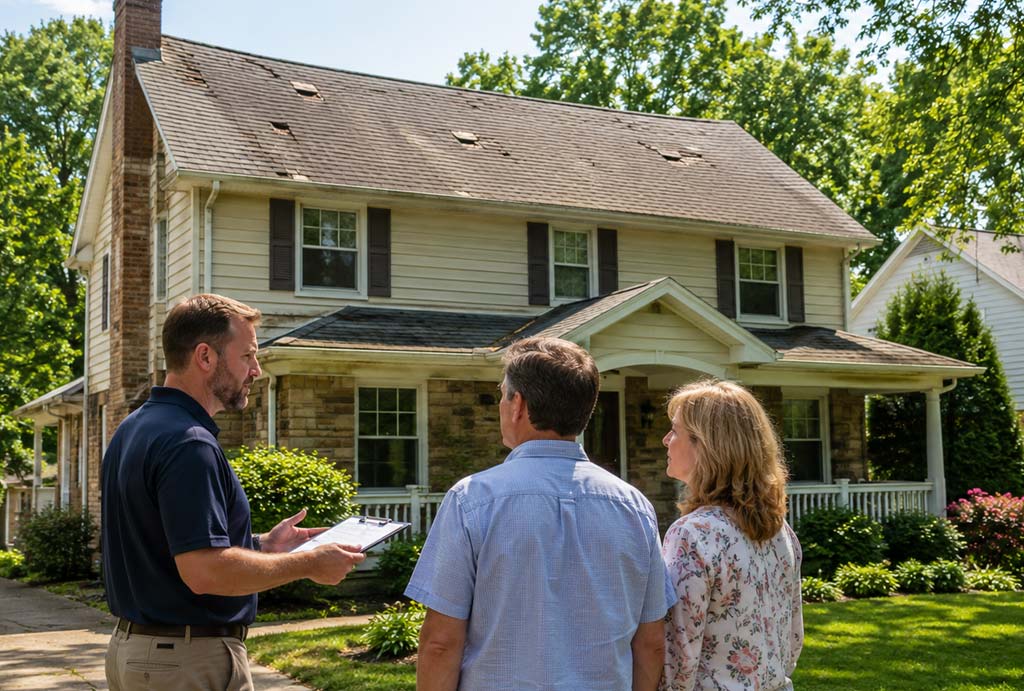
After a strong storm moves through Central Indiana, one of the first questions homeowners ask is simple: Can my roof be repaired, or does it need to be replaced?
It is a fair question. Heavy rain, hail, wind, falling branches, and flying debris can all damage a roof in different ways. Sometimes the answer is obvious. If a few shingles are missing or one small area is leaking, a roof repair may be enough. Other times, the damage is more widespread, the roof is older, or the same problems keep coming back. In those cases, roof replacement may be the better long-term choice.
At Stay Dry Roofing, we help homeowners throughout Indianapolis, Carmel, Fishers, Noblesville, Greenwood, Avon, Brownsburg, Plainfield, Westfield, Zionsville, and nearby Central Indiana communities understand the condition of their roof after storm damage. Our goal is not to push you into the biggest project. Our goal is to inspect the roof, explain what we find, and help you make the right decision for your home.
Why Storm Damage Is Not Always Easy to Judge
Storm damage can be tricky because the worst problems are not always the most visible ones.
You might see shingles in the yard and know right away that something is wrong. But hail bruises, lifted shingles, loosened flashing, damaged pipe boots, and small punctures can be harder to spot from the ground. A roof can look fine from the driveway and still have damage that allows water to get under the roofing system during the next heavy rain.
That is why the repair-or-replacement decision should start with a professional roof inspection. Guessing can lead to two bad outcomes. You might replace a roof that only needed a repair, or you might repair a roof that is already too damaged or worn out to protect your home properly.
When Roof Repair May Be Enough
Roof repair is often the right choice when the damage is limited to a specific area and the rest of the roofing system is still in good condition.
For example, if wind removed a few shingles from one slope of the roof, those shingles may be replaced. If a leak is coming from a damaged vent boot, loose flashing, or one vulnerable roof valley, that area may be repairable. If a branch scraped or punctured a small section of shingles, a focused repair may solve the issue.
Roof repair may also make sense when the roof is newer, the shingles still have a strong seal, there is no major granule loss, and the roof decking underneath is still solid.
In many cases, a repair can stop the immediate problem and help extend the life of the roof. That is especially true when the damage is caught early.
Signs Your Roof May Need More Than a Repair
Sometimes storm damage is too widespread for a small repair to make sense. If hail damaged many areas of the roof, wind lifted shingles across multiple slopes, or water has already reached the roof decking, replacement may need to be discussed.
Age matters too. A roof that is already near the end of its expected life may not respond well to patchwork repairs. Older shingles can become brittle, lose granules, and fail to reseal after wind damage. In that situation, repairing one section may only buy a little time before another problem shows up.
You may need to consider roof replacement if you notice widespread missing shingles, repeated leaks, major hail impact marks, heavy granule loss, damaged decking, sagging areas, or multiple repairs within a short period of time.
The key is not just asking, “Can this be repaired?” The better question is, “Will this repair protect the home long enough to be worth it?”
Roof Age Plays a Big Role
Two roofs can have the same storm damage but need different solutions because of age.
A newer roof with a few missing shingles after a windstorm may only need a repair. The materials are still fresh, the seal may still be strong, and the rest of the system may be in good shape.
An older roof with the same missing shingles may be a different story. If the shingles are curling, cracking, losing granules, or becoming brittle, repairing one damaged area may not solve the bigger problem. The storm may have simply exposed that the roof was already wearing down.
That is why Stay Dry Roofing looks at the full condition of the roof. We check the storm damage, but we also look at the age, material condition, ventilation, flashing, valleys, roof penetrations, and signs of previous repairs.
Hail Damage Can Change the Decision
Hail damage is one of the most common reasons homeowners in Central Indiana need a roof inspection after a storm. The challenge is that hail damage does not always create an immediate leak.
Hail can knock protective granules off asphalt shingles, bruise the shingle surface, dent metal vents, damage flashing, and weaken the roof system. Over time, those damaged areas can age faster and become more vulnerable during future storms.
If hail damage is minor and limited, a repair may be possible. But if hail damage is spread across multiple roof slopes, replacement may be the smarter option. A roof with widespread hail damage may not perform the way it should, even if it is not leaking today.
Wind Damage Can Be Worse Than It Looks
Wind damage is another reason homeowners call us after storms in Indianapolis and the surrounding suburbs. Strong wind can tear shingles off, but it can also lift shingles without fully removing them.
That is where the problem can hide. A lifted shingle may settle back down and look normal from the ground. But once the seal is broken, that area can be more likely to leak during future rain.
If only a small section is affected, repair may work. If wind has damaged several slopes, loosened many shingles, or affected the roof edges and ridge areas, replacement may need to be considered.
What About Active Leaks?
If your roof is actively leaking after a storm, the first priority is to stop water from getting into the home. That may mean emergency roof repair, temporary protection, or a focused repair to control the leak.
But after the immediate problem is handled, the larger question still matters. Was the leak caused by one damaged area, or is the roof showing signs of a bigger issue?
A single flashing problem may be repairable. A leak caused by widespread storm damage, older shingles, poor ventilation, or failing roof materials may point toward replacement.
At Stay Dry Roofing, we help homeowners understand both the short-term fix and the long-term solution.
Repair Cost Versus Replacement Value
It is natural to think about cost first. Roof repair usually costs less upfront than roof replacement. If the damage is small and the roof is still in good condition, repair can be the most practical choice.
But if repairs keep adding up, replacement may offer better long-term value. A new roof can improve protection, reduce repeated leak problems, refresh curb appeal, and help your home stand up better to future Indiana weather.
The best choice depends on the condition of your roof, the amount of storm damage, the age of the materials, and your long-term plans for the home.
Why an Inspection Should Come First
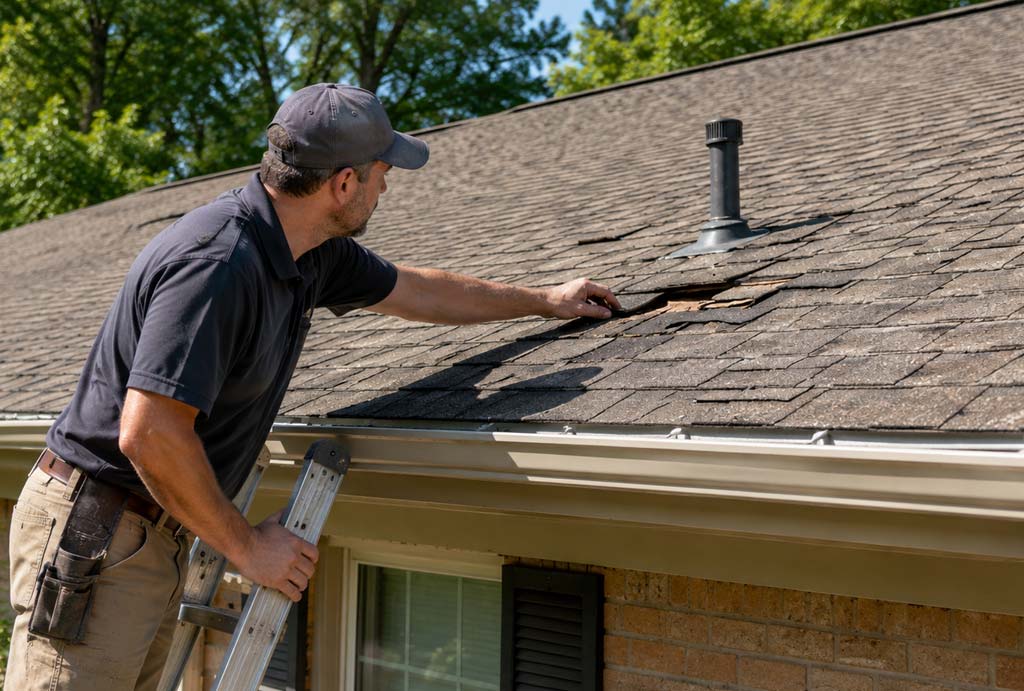
The repair-or-replacement decision should never be based on guesswork. A roof inspection gives you the information you need to make a smart choice.
During an inspection, Stay Dry Roofing checks for missing shingles, lifted shingles, hail bruising, granule loss, flashing damage, vent damage, gutter issues, soft spots, exposed areas, roof leaks, and other signs of storm damage.
We also explain what we find in plain language. If your roof only needs a repair, we will tell you. If replacement should be considered, we will explain why. You should never feel confused about what is happening on your own roof.
Common Questions About Roof Repair or Replacement After Storm Damage
How do I know if storm damage can be repaired?
Storm damage may be repairable if it is limited to a small area, the roof is not too old, the shingles are still in good condition, and there is no major decking or widespread hail damage. A professional inspection is the best way to know.
When is roof replacement better than repair?
Roof replacement may be better when damage is widespread, the roof is near the end of its life, shingles are brittle or heavily worn, hail damage covers multiple slopes, or leaks keep returning after previous repairs.
Can hail damage be repaired?
Yes, minor or limited hail damage may be repairable. However, if hail has damaged large areas of the roof, caused major granule loss, or weakened many shingles, replacement may be the stronger long-term option.
Should I replace my roof if only a few shingles are missing?
Not always. If the rest of the roof is in good shape, replacing a few missing shingles may be enough. But if the roof is older or wind damage is more widespread than it appears, an inspection is important.
Does Stay Dry Roofing inspect roofs after storm damage?
Yes. Stay Dry Roofing provides roof inspections, storm damage roof repair, emergency roof repair, hail damage repair, and roof replacement throughout Indianapolis and surrounding Central Indiana communities.
Schedule a Storm Damage Roof Inspection in Central Indiana
If your roof was damaged by hail, wind, heavy rain, or falling debris, do not guess whether you need repair or replacement. Stay Dry Roofing can inspect your roof, explain the damage, and help you decide the best next step for your home.
Call Stay Dry Roofing today to schedule a storm damage roof inspection in Indianapolis, Carmel, Fishers, Noblesville, Greenwood, Avon, Brownsburg, Plainfield, Westfield, Zionsville, or the surrounding Central Indiana area.