

Spring in Indianapolis can turn fast. One day the roof looks fine from the driveway, and the next day hail, wind, and heavy rain have already done quiet damage that does not show up right away. That is exactly why we believe drone-first inspections are essential for the 2026 spring storm season. At Stay Dry Roofing, we start with a better view of the roof so we can spot damage sooner, document it more clearly, and help homeowners make smarter decisions before small problems become expensive repairs.
What a drone-first inspection actually means
A drone-first inspection is exactly what it sounds like: instead of starting with a ladder and a walk across the roof, we start with high-resolution aerial imagery. That gives us a full view of the slopes, valleys, ridges, flashing, vents, and other details that matter most after a storm. It also lets us inspect more quickly, which is a big advantage when storm damage is active across a neighborhood and time matters. Modern drone systems can capture roof measurements in minutes, and AI can help flag damage such as missing shingles, hail bruising, lifted shingles, and subtle problem spots that the naked eye can miss.
That matters because a roof does not have to fail loudly to be in trouble. Some of the most serious storm-related issues begin as small, hard-to-see changes in the roof surface. Drone imagery gives us a clearer starting point, and that means we can focus our attention where it is actually needed instead of guessing our way across the roof.
Safety is not a side benefit. It is part of the service
Roof inspections have always carried risk, especially when the roof is steep, damaged, wet, or aging. OSHA states that falls are the leading cause of work-related injuries and deaths among roofers, and that workers exposed to six feet or more above a lower level face serious fall risk. The FAA also requires proper certification and compliance for drone operations under Part 107, which is one reason professional drone inspections are a real process, not a shortcut. Starting with a drone keeps the first look on the ground, where it is safer for both the crew and the property.
That is especially important after a spring storm. A roof can be slick, brittle, or partially loosened by hail and wind. Walking it too early can create unnecessary danger and can even worsen damage in certain areas. A drone-first approach reduces that risk while still giving us the detail we need to make the right call.
AI catches the small damage that becomes the big repair
One of the biggest reasons we use drone-first inspections is precision. Traditional roof checks can miss small damage patterns, especially when the issue is granule loss on asphalt shingles. EagleView notes that hail damage is often hard to spot because it can dislodge individual granules, and that AI-powered drone damage detection can automatically flag anomalies like hail damage. EagleView also says drone-based measurements can detect damage not visible to the human eye. That matches what we see in the field: the roof may look “mostly fine” from below, but the imagery tells a different story.
Granule loss matters because it is not just cosmetic wear. It is one of the early signs that a shingle has taken on stress from weather, age, or impact. On our inspection checklist, we specifically look for worn surface granules, broken or missing shingles, curling or buckling shingles, flashing wear, cracks in underlayment or sheathing, pipe boot problems, chimney issues, and gutter condition. Drone-first inspections help us find those issues faster and with better documentation.
Why this matters in Indianapolis and surrounding communities
Indianapolis weather can be rough on roofs. Stay Dry Roofing’s local storm content points out that hail, wind, and sudden storms can damage shingles without immediate symptoms, and our service pages show that we work across Indianapolis and nearby communities including Brownsburg, Carmel, Fishers, Greenwood, Noblesville, and Plainfield. We also maintain multiple Indianapolis locations and provide roof repair, roof replacement, roof inspection, and storm damage restoration services for residential and commercial properties.
That local reality is why we do not treat spring inspections like a routine box to check. In Central Indiana, storm season can move quickly, and the damage can be just as fast. A drone-first inspection gives us a better chance to catch the roof at the right moment, before water intrusion, decking damage, or interior staining starts to spread.
What we look for from the air
When we perform a drone-first inspection, we are looking for the kind of storm damage that often hides in plain sight. That includes missing shingles, lifted edges, impact marks, damaged flashing, worn granules, disturbed ridge lines, soft spots, and sections where water may already be trying to enter the system. Stay Dry Roofing’s inspection process is built around those same concerns, and our own website highlights that we check the roof carefully enough to catch small problems before they turn into larger repairs.
The advantage is simple: the drone gives us a broad, detailed map of the roof, and the AI helps us sort through the images more efficiently. That means less guesswork, faster reporting, and a clearer explanation for the homeowner. It also helps create better records for storm damage claims because the evidence is visual, specific, and easy to understand.
Why we believe drone-first will become the new normal
By 2026, drone and AI roof inspections are no longer just a nice upgrade. Stay Dry Roofing’s 2026 content already frames drone plus AI as a standard tool for forward-thinking roofers, helping flag missing shingles, granule loss, and subtle storm damage that the naked eye might miss. That is where the industry is headed: safer inspections, better data, and faster decisions.
We also believe homeowners deserve more than a quick guess from the ground. A roof is too important for vague answers. When you are dealing with spring storms, you need a method that sees more, documents more, and protects people in the process. Drone-first inspections do exactly that.
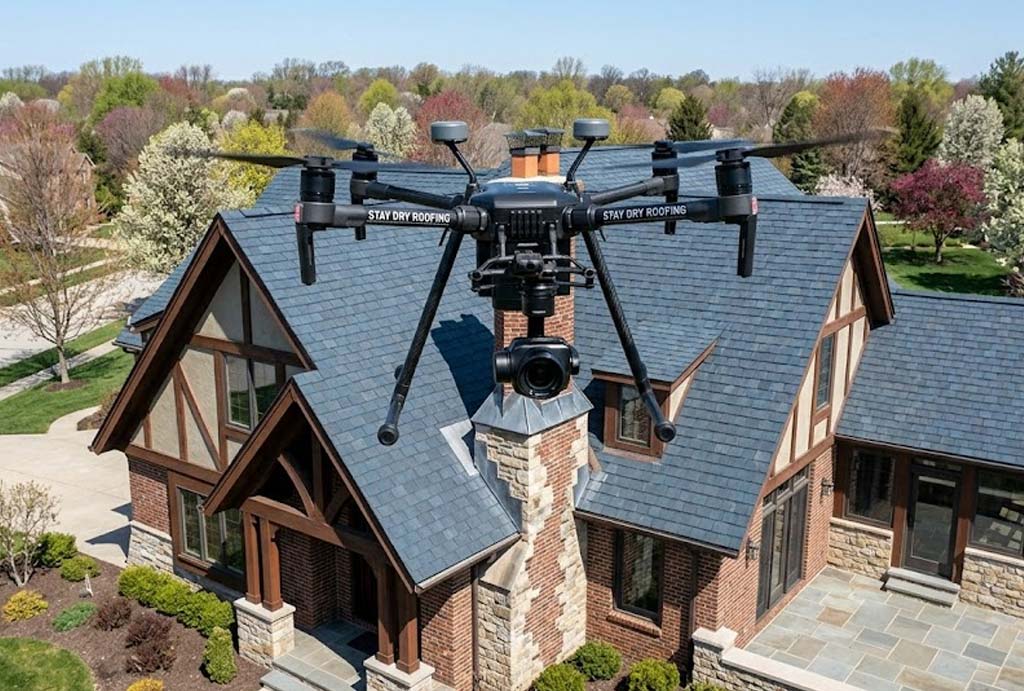
Our approach at Stay Dry Roofing
At Stay Dry Roofing, we are an Indianapolis roofing company that puts quality, safety, and customer care first. Our website highlights our local locations, our residential and commercial roofing services, our roof inspection services, and our commitment to thorough work for homeowners across the area. We also emphasize honest communication, strong workmanship, and detailed inspections that help people make informed decisions about repairs and replacement.
That is why we use drone-first inspections in the 2026 spring storm season. We are not trying to make roofing feel flashy. We are trying to make it safer, clearer, and more accurate. When the storm hits, the roof deserves a closer look than a driveway glance and a risky climb.
Frequently asked questions about drone-first roof inspections
Are drone inspections good after hail?
Yes. Hail damage can be subtle, and it often shows up as granule loss, bruising, or small impact marks that are hard to see from the ground. Drone imagery makes those patterns easier to document and review.
Can a drone spot granule loss?
A drone can capture the close-up images needed to identify areas of wear, and AI tools can help flag the kinds of anomalies that signal granule loss or hail impact. Stay Dry Roofing also specifically checks for worn surface granules during roof inspections.
Do you still need someone on the roof?
Sometimes, yes, but only when it is actually necessary. The point of drone-first is to begin with safer, more complete visual data so any follow-up roof access is targeted, not routine.
Why is spring such an important time for inspections in Indianapolis?
Because spring storms can bring hail, wind, and sudden weather changes that damage shingles without obvious signs right away. In our area, catching that damage early can prevent bigger repairs later.
Spring storm season does not wait, and neither should your roof inspection. A drone-first approach gives you safer access to the roof, sharper documentation, and a better chance to catch storm damage while it is still manageable. At Stay Dry Roofing, that is the standard we believe homeowners in Indianapolis and the surrounding communities deserve.