


Indianapolis winters are beautiful from the street but up on your roof, that same snow and freeze-thaw cycle can create serious problems: ice dams, hidden leaks, and surprise repair bills. At Stay Dry Roofing, we want you to stay warm, safe, and leak-free this season. Below is a practical, Indy-focused survival guide for remainder of 2025 that explains what causes ice dams, the steps you can take right now to prevent them, and what to do if you spot trouble. We’ll keep it simple, local, and honest.
What are ice dams and why should Indianapolis homeowners care?
An ice dam is a ridge of ice that forms at the roof’s edge when warm attic air melts roof snow, the meltwater runs down and refreezes at the cold eave, and the trapped water backs up under shingles. That trapped water can seep into roofing underlayment, flashings, and into your home causing stains, rot, insulation damage, and costly repairs. Local news coverage in early 2025 flagged rising ice-dam incidents in Indiana after cycles of heavy snow and quick temperature swings, so this problem is real for Indy homes.
The three things that must be fixed to stop ice dams
To prevent ice dams, you must address all three of these conditions:
- Roof snow: less snow at the eaves means less water to refreeze.
- Heat loss into the attic: warm attic air melts roof snow.
- Cold roof edge: the eaves stay cold and refreeze melting snow.
Fixing just one of these rarely solves the problem long-term. The correct approach combines attic air sealing, proper insulation, and balanced ventilation. Experts and local roofing pros recommend this combined strategy as the most reliable defense.
Quick pre-winter checklist
These are actions you can take now fast, effective, and either DIY-friendly or simple to hire out.
- Clean gutters and downspouts. If water can’t drain, it will freeze at the eave. Clean them in late fall and check again after fall leaf drop.
- Inspect shingles, flashing, and roof details. Replace missing or damaged shingles and repair cracked flashings around chimneys and skylights common leak points.
- Seal attic air leaks. Recessed lights, attic hatches, plumbing stacks and wiring penetrations all leak warm air into your attic. Use weatherstripping and caulk to seal them.
- Add or upgrade insulation. Many older Indianapolis homes don’t meet modern R-value recommendations. Adding insulation to the attic floor keeps heat in your living space not in the attic.
- Balance intake and exhaust ventilation. Soffit vents (intake) and ridge or gable vents (exhaust) should work together so attic temperature tracks outdoor temps. A balanced system keeps the roof surface uniformly cold.
- Consider heat cable only as a last-line tool. Heat cables can prevent localized ice build-up but don’t replace proper insulation and ventilation. They’re best used selectively on problem rooflines.
If you’d like, Stay Dry Roofing can do a fast winter-readiness inspection and give a clear plan of what to fix first.
Safe ways to remove snow and ice
- Use a roof rake from the ground. Pull the top few feet of snow off the roof edge to reduce the amount that can melt and form ice at the eave. This is safe and effective for moderate snowfall.
- Never chip at an ice dam with a hammer. That can damage shingles, gutters, and be dangerous. Don’t climb on an icy roof.
- Calcium chloride in a nylon stocking (“sock”) can be used to melt channels through an ice dam from the roof edge but consider hiring a pro for large, stubborn dams to avoid damage.
What to do if you find a leak right now
- Protect belongings. Move furniture away and put tubs or tarps under the leak to catch drips.
- Document the damage. Take photos for insurance and repair quotes.
- Call Stay Dry Roofing for a temporary patch and full repair plan. Temporary tarps and targeted sealant can limit damage until permanent repairs are scheduled. Time matters, the longer water runs; the more secondary damage occurs.
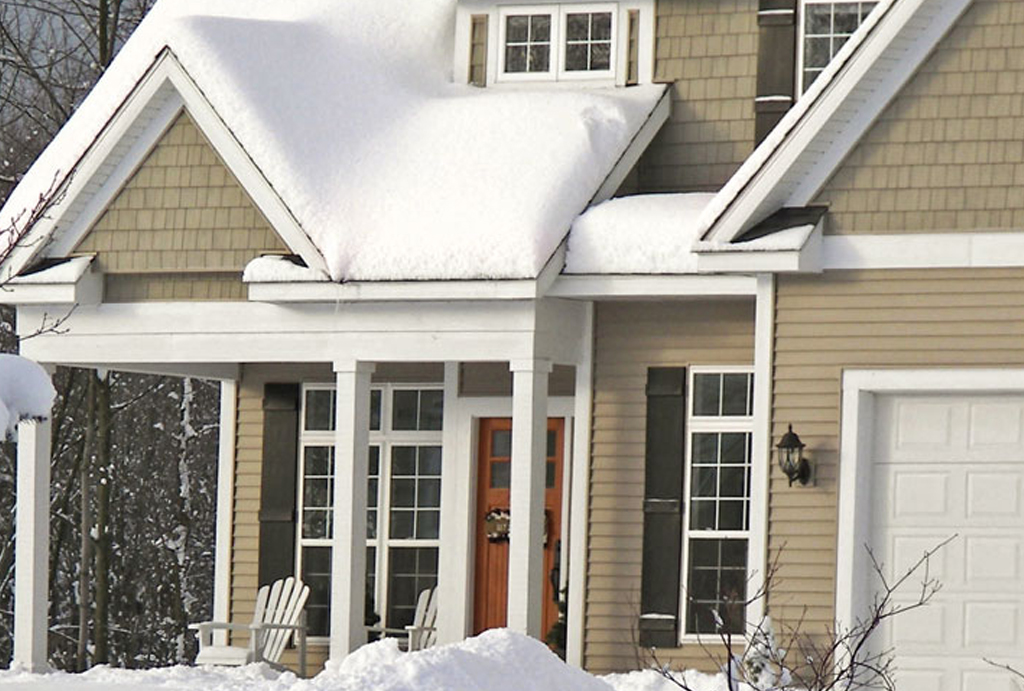
Why attic insulation and ventilation is the best investment
It’s tempting to think expensive external fixes (like heat cables) are the answer. The long-term, cost-effective strategy is to stop the warm air from reaching the roof in the first place and keep attic temperatures close to outside. That means:
- Proper insulation at the attic floor (continuous, without gaps).
- Fully air-sealed attic penetrations.
- Balanced soffit-to-ridge ventilation.
Homes that get this triad tend to have far fewer ice-dam incidents and lower heating bills, too. In many Indy homes, a focused insulation upgrade is the most budget-friendly step with the biggest payoff.
How much might this cost?
Costs vary by home size, attic access, and how much sealing or insulation is needed. As a rough guide:
- Gutter cleaning / minor repairs: low cost; do it every year.
- Attic air-sealing + insulation top-up: moderate cost, often the best return because it improves comfort and lowers heat loss.
- Ventilation improvements (adding soffit/ridge vents): moderate cost and vital for long-term protection.
- Heat cables / emergency measures: lower to moderate cost but should be considered temporary or targeted, not a primary solution.
We’ll give you a clear, written estimate and explain which steps pay back through energy savings and avoided repairs.
How Stay Dry Roofing helps Indianapolis homeowners
We know Indy roofs the construction styles, common attic problems, and how our winters behave. Our approach is simple: diagnose the true source of the problem, not just the symptom. That means we inspect, test attic airflow, check insulation levels, and then create a prioritized plan that prevents ice dams, stops leaks, and saves you money over time. You’ll get clear options and no pushy upsells just proven solutions. For examples of preventative tips and local guidance, we also recommend homeowners compare reputable resources and local pros; our team does that research, so you don’t have to.
Stay ahead of big bills
Ice dams and winter leaks are a pattern, not random bad luck. With a few preventive steps, clean gutters, proper attic air sealing, updated insulation, and balanced ventilation, most Indianapolis homes can avoid the worst of the winter roofing problems. If you already have a leak or you’re worried about your attic setup, call Stay Dry Roofing. We’ll inspect, explain your options plainly, and make sure you’re prepared for the rest of the 2025 winter season.
Stay safe, stay warm, and stay dry, that’s our promise.